Football and business

From Brescia to Taranto, fake tax credit scams pollute Italian football

Brescia risks relegation for offsetting tax and social security debts with non-existent bonuses, but the method used by clubs in liquidity crisis may be more widespread

by Marco Bellinazzo

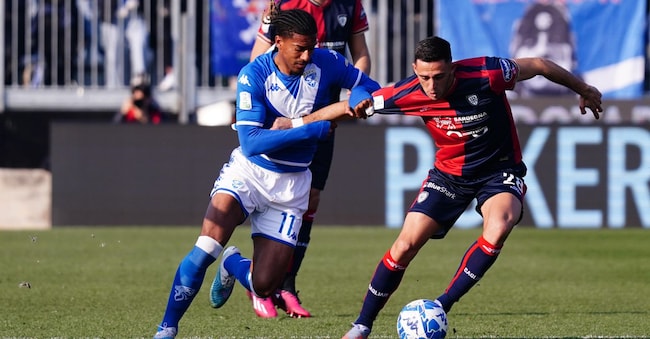
Brescia vs Cagliari. (Ansa)

4' min read

4' min read

Italian football in the whirlpool of fake tax credit scams. The case of Brescia, which risks a four-point penalty and relegation to Serie C for having offset its debts with the tax authorities and the Inps through tax credits purchased from a third company, which turned out to be null and void after the Inland Revenue Agency's checks, could be anything but isolated. Trapani has already declared last 18 May, the Sunday on which the Brescia affair came to the surface in the media, that it had purchased credits from the same third company. Like the Lombard club, the Sicilian team, which plays in Lega Pro and is owned by Valerio Antonini (also the owner of the Trapani Shark in the play-offs of Serie A basketball) has declared itself to be the victim of deception and is ready to file a lawsuit.

But in the recent past, at least two Serie C clubs have resorted to non-existent tax credits to settle tax debts: Reggina and Taranto. In both cases, the financial difficulties faced by their respective owners led to the teams' bankruptcy and disappearance from professional football.

Loading...

The case of Brescia

.

In February 2025, as the federal deadline of the 16th was approaching, Brescia acquired VAT tax credits of 2.4 million euros, against a payment of about 2 million by the club. An operation managed by the accountant and the third company holding these credits, which would, on paper, have provided all the guarantees required by the relevant regulations. Thus, the relative F24 forms were issued to settle the tax and social security debts for February with 1,439,676 euro and those for April with 445,485 euro.

The Trapani case

.

In the case of Trapani, the transactions were allegedly carried out to the tune of around 700,000 euros. Even the club FC Trapani 1905 in a note has made it known that "learned with dismay what happened to Brescia Calcio, to be also a victim of the same company that would have illegally compensated the tax credits of the Lombard Club" and says it is "absolutely sure to be in order and to have acted in perfect compliance with state regulations and sports that, if ever, in this matter is only and only injured party" and that in the coming hours "will protect its reasons by filing a detailed complaint with the competent companies.

Gruppo Alfieri Spv

.

It was the Alfieri Spv Group, a limited liability company based at 8 Via Monte Napoleone in Milan and with 25-year-old Gianluca Alfieri as its sole director, that sold credits worth over three million in Brescia and Trapani alone. This special purpose vehicle, whose activity is the securitisation of credits under Law 130/99, was registered in the companies' register on 15 October 2024 with a capital of EUR 25,000.

The Figc's position

.

Faced with these 'fiscal factoring' operations, through which clubs short of liquidity have acquired tax credits by paying them with discounts of even 20/25% in order to meet tax and social security deadlines, the FIGC believes it has acted correctly by asking - without 'weighing' the names of the clubs involved - as per practice through the Covisoc, the internal auditing body, the Revenue Agency to verify their correctness.

On the other hand, although checks and investigations by the Guardia di Finanza and the Revenue Agency on the issuing and transfer of fictitious tax credits, i.e. obtained without the real execution of the building works required to access the 110% facilitation, or on non-existent VAT credits, have been multiplying in recent times, these are compensation systems that the Federcalcio cannot prohibit, since they are contemplated by the laws of the State and practised in many territorial areas. It will therefore be up to sports justice (the first hearing of the federal prosecutor's office on the Brescia case is scheduled for 22 May) and criminal justice to establish who has been cheated and who has attempted to cheat. A decision that is not expected to be complex and in any case with timeframes that are difficult to reconcile with the timing of football championships.

Serie B in chaos

It was only on 9 May that the Inland Revenue Agency, urged at the end of February by the Covisoc, reportedly communicated the outcome to the FIGC, believing that the tax credits brought in compensation by Brescia were false. The consequent accusation of the FIGC Prosecutor's Office, which closed the investigation last Sunday, is that of not having provided for the regular payment of Irpef and Inps of the FIGC members (while salaries were paid regularly) on the due dates of February and April.

Brescia thus risks 2 penalty points for Irpef and 2 for Inps. Therefore, 4 points to be served this season immediately for the February deadline and another 4 for next season. Brescia could also try to plea bargain by halving the penalty, a solution that is far from obvious however.

On Thursday, 22 May, meanwhile, the Federal Court will evaluate the accusations of the Public Prosecutor's Office and a date will be set for the first instance hearing, between the end of May and the beginning of June.With the -4, Brescia, saved at the end of the championship, would find itself third-last and relegated to Serie C, Frosinone would be saved, Salernitana and Sampdoria, now in Serie C, would play the play-off. The date will be set at least after the first instance ruling, with the risk of playing and in mid-June. Brescia could continue its legal battle and if it is right it could 'return' to a B at that point enlarged to 21 or 22.

Copyright reserved ©

Brand connect

Loading...

Newsletter

Notizie e approfondimenti sugli avvenimenti politici, economici e finanziari.

Iscriviti

Tutto mercato WEB