Assocamerestero Survey

Brexit has not halted trade between Italia and the UK. Exports set to reach 27 billion by 2025

Transport costs, labour shortages and increased red tape are the main obstacles facing Italian businesses

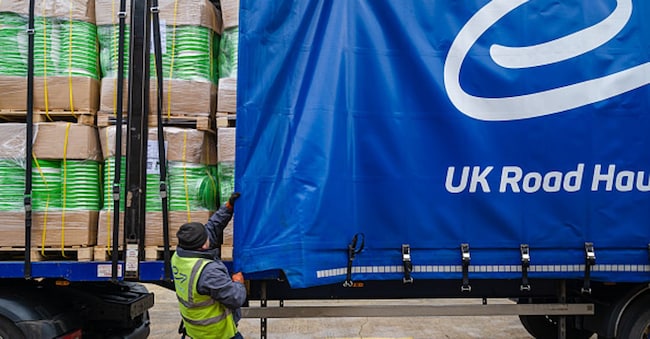
L’impatto spiù significativo di Brexit è stato su costi di trasporto, logistica e procedure amministrative (Photo by Aisha Nazar/Getty Images) Getty Images

3' min read

Translated by AI
Versione italiana

3' min read

Translated by AI
Versione italiana

It was Covid – or rather the rapid succession of the two events – that had a greater impact than Brexit. Italian companies operating in the UK have had to contend with various difficulties (particularly bureaucratic ones) following the country’s exit from the European Union. But listening to the accounts of business owners, many agree that the biggest problem was the combined effect of Brexit and the pandemic, which not only slowed down the British economy but, above all, led to a severe shortage (at least initially) of labour, particularly in sectors such as catering and logistics.

Trade volume remains stable at over 30 billion

Ten years on, however, the figures show that total trade has remained stable, at around 31–35 billion euros a year. The trade balance, which has consistently been in Italia’s favour, rose from 15.3 billion in 2021 to 19.5 billion in 2025, with the surplus increasing by over 27 per cent in five years despite, according to data provided by Assocamerestero based on sources from the Ministry of Foreign Affairs and International Cooperation (MAECI) and Istat.

Loading...

Assocamerestero itself, through its British affiliate, recently carried out a survey to understand how the UK’s exit from the EU has affected Italian companies operating in the UK.

A few figures to start with: according to the Reprint database (Istat/ICE), at the end of 2023, there were 2,234 Italian companies operating across the Channel, up from the 2,084 recorded the previous year, employing over 103,000 people and generating an aggregate turnover of 33.5 billion euros. The sectors with the highest representation are aerospace, energy, automotive, food and furniture.

As regards Italian exports to the United Kingdom (€26.9 billion in 2025), Italia mainly exports food and drink (€4.6 billion, 16.9 per cent of the total), followed by machinery (€3.8 billion), transport equipment (€3.6 billion), base metals (€2.9 billion), fashion (€2.2 billion) and pharmaceuticals (€1.9 billion).

Lessons ten years on from Brexit

“Ten years on from the referendum, the real lesson for Italian businesses is not how much the UK has changed, but how much we have changed in the way we engage with it,” observes Roberto Costa, president of the Italian Chamber of Commerce and Industry for the United Kingdom, which forms part of the network of 86 Italian Chambers of Commerce abroad, members of Assocamerestero. The Chamber works every day to ensure that this complexity becomes a competitive advantage, not an obstacle.”

The first disruption experienced by businesses, Costa adds, was ‘psychological rather than customs-related’. Even during the transition phase, many Italian SMEs, particularly in the food & beverage and textile sectors, adopted a wait-and-see approach, suspending or slowing down expansion projects that were already at an advanced stage. The main factor weighing heavily was the increase in bureaucracy, particularly in certain sectors, such as the food industry. In particular, the Trade and Cooperation Agreement, which came into force in January 2021, introduced rules of origin, sanitary and phytosanitary barriers, a doubling of customs formalities, and the fragmentation of logistics chains. These have resulted in additional costs and workload that less well-organised SMEs have been unable (or unwilling) to cope with, to the extent that many have abandoned the UK market or reduced their presence to occasional operations, according to the London Chamber of Commerce.

Testimonials

Larger companies found it easier to overcome these problems, although they certainly faced their share of difficulties. “For our sector, the most significant impacts have been in the areas of administration and the workforce,” explains Enzo Lamberti, CEO of LDH (La Doria), a subsidiary of the La Doria Group in the UK which operates there as an importer and distributor. “However, this country remains one of our group’s key overseas markets, as demonstrated by the significant investments made to build a new logistics hub, which was inaugurated in 2020.”

Marco Zerboni, co-owner with Giulio Temporin of Up on the Tables – which imports and distributes tableware throughout the UK but also acts as an agent for several Italian food brands – was more critical: ‘Brexit has been a disaster for the hospitality industry: transport costs have doubled, delivery times have lengthened, there’s a labour shortage and British consumers’ purchasing power has fallen. We’re doing well, but it’s a country that’s unrecognisable compared to the one I knew when I arrived here in the late 1990s and decided to make it my home.”

President Costa, however, sees the glass as half full: ‘Trade volumes have remained stable and, in recent years, we have seen the United Kingdom moving closer to the European Union. I don’t think there can be a reversal of Brexit, but there are some openings, such as the possibility of removing phytosanitary certificates for foodstuffs – which will be discussed over the summer – and the UK’s return to the Erasmus programme from 2027.”

Copyright reserved ©
Loading...
Loading...

Brand connect

Loading...

Newsletter

Notizie e approfondimenti sugli avvenimenti politici, economici e finanziari.

Iscriviti