
Britain and the EU to hold summit on Friday: Burnham pushes for a rapprochement following Brexit
The British Prime Minister is proposing a substantive dialogue to bridge the post-Brexit divides, with agreements on trade, youth mobility and an improved climate of trust

LONDON
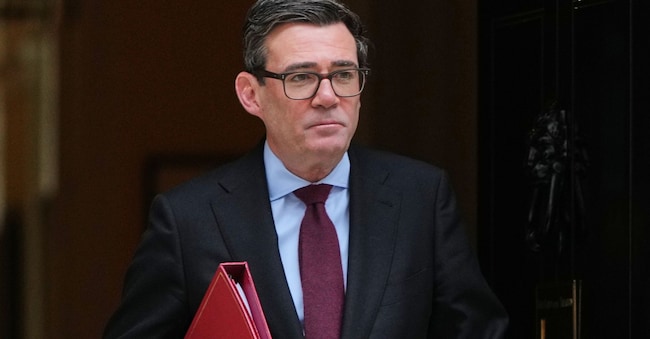
In Britain, there is great anticipation ahead of Friday’s summit with the European Union, but also a realisation that it is a starting point rather than a turning point. Prime Minister Andy Burnham has brought relations with the EU back to the centre of the political debate, arguing that a substantial rapprochement with what remains Britain’s largest trading partner is in the interests of the economy and the public. He stated in no uncertain terms that Brexit “has done more harm than good”, but has opted for a pragmatic rather than an ideological approach, aimed at supporting economic growth and strengthening national security at a time of heightened geopolitical tensions and realignment amongst the major powers.
The summit’s ambitions are, however, modest
Beyond the positive declarations of intent and the undoubted improvement in the climate of mutual trust, the summit’s ambitions are modest. The planned agreements are the result of long-running negotiations on the removal of non-tariff barriers to the import and export of agri-food products, on the harmonisation of the emissions market and on the relaunch of youth mobility, to give young people the opportunity to cross the Channel to study, work or volunteer for three years. There are still details to be finalised, such as the number of young people covered by the youth mobility agreement, which Brussels wants to be over 100,000, whilst London would prefer to limit it to 80,000 per year.
Other, more ambitious agreements will be discussed at the summit but, barring any surprises, will not be finalised – such as the participation of British companies, particularly car manufacturers, in ‘Made in Europe’, the programme aimed at protecting European industry from foreign competition. On the one hand, London fears European protectionism; on the other, it seems reluctant to impose tariffs on imports of Chinese electric cars. Another agreement that appears to have been postponed until 2027 is the one on reducing the university fees that European students must pay to attend British universities, a measure strongly backed by Brussels.
Developments in December
Burnham stated that, following the summit, he would take some time to reflect and then, in December, set out how he intends to strengthen relations with the EU, pledging to launch an “honest discussion” on the pros and cons of the various possible options.

