
Broadcom beats estimates, but the stock plummets on the stock exchange. Here's why
The US semiconductor group closed its fiscal fourth quarter with revenues of EUR 18.02 billion, against the expected EUR 17.5 billion

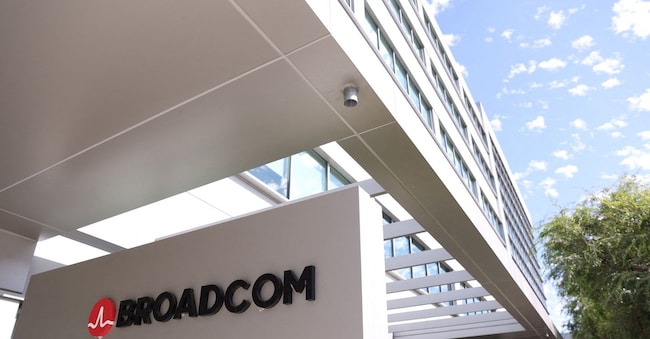
After Oracle's lower-than-expected results released two days ago, which had reinforced doubts about the narrative of still sustained demand for artificial intelligence-related infrastructure, the market reacted with new coldness to Broadcom's accounts (released last night), despite solid quarterly numbers and forecasts.
The US semiconductor group closed its fiscal fourth quarter with revenues of $18.02 billion, compared to the $17.5 billion expected by consensus, and adjusted earnings of $1.95 per share, higher than the $1.87 estimated. Guidance also exceeded expectations, with revenues expected to be $19.1 billion in the current quarter, compared to the $18.4 billion indicated by analysts, and with the announcement of a 10% dividend increase, to $0.65 per share from 2026.
Numbers, however, did not stand the test of the market. After an initial rise of around 3%, the share reversed course during the conference call. And, by today's trading day, it had surrendered over 9.8%. This reaction indicates that expectations were already largely built into the stock price, after a rise of almost 75% since the beginning of the year, compared to a +22% rise in the Nasdaq Composite.
The first element of pressure is the valuation. With multiples above 40 times earnings, Broadcom appears priced for smooth growth. 'At these levels, the stock does not tolerate surprises, even positive ones that fall short of the most optimistic expectations,' noted Jake Behan, head of capital markets at Direxion.
But the downturn also reflects a more critical reading of the composition of growth. Expansion remains heavily focused on artificial intelligence, while non-AI activities show signs of stagnation, reducing diversification of revenue sources. A profile that exposes the group to greater volatility if investments in advanced data centres slow down.


