
Ukrainian drone explodes in Bulgaria; Sofia summons Kiev’s ambassador
This was reported by the Bulgarian Prime Minister, Roumen Radev, who added that the explosion took place “in the immediate vicinity” of the Kardam border post, in the north-east of the country

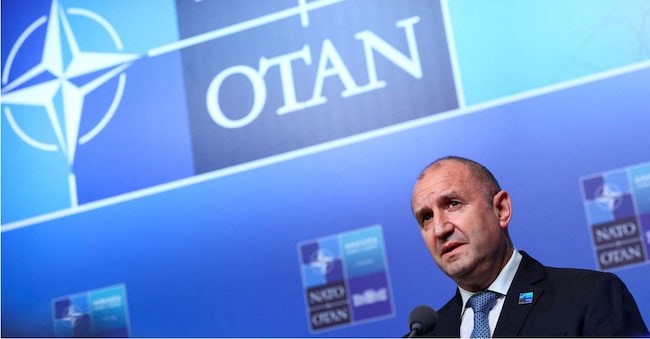
The Bulgarian Ministry of Foreign Affairs has announced that it has summoned the Ukrainian ambassador in Sofia for Monday, following the explosion of a drone identified as Ukrainian near a gas pipeline on Bulgarian territory. This has been reported by British and international media. The move is intended to seek clarification, although the Bulgarian government has already ruled out the possibility of a deliberate act by Ukraine – a claim that Kyiv has also swiftly denied.
The facts
A drone that entered Bulgarian territory from neighbouring Romania exploded this morning near the border between the two countries, close to the Trans-Balkan gas pipeline which links Turkey to Ukraine. This was reported by Bulgarian Prime Minister Roumen Radev, who specified that the explosion took place “in the immediate vicinity” of the Kardam border post, in the north-east of the country, about one kilometre from a gas pipeline compressor station. “There are no casualties,” Radev said in a video released by the government on social media.
Bulgaria convenes security council and examines debris
During an emergency meeting of the National Security Council convened ad hoc, the Bulgarian Prime Minister explained that local specialists from the army, the police and the border guard “are working to determine the type of drone” that exploded near the border with Romania, near the Black Sea, a short distance from a compressor station on the Turkish-Ukrainian-Romanian-Bulgarian Trans-Balkan gas pipeline. “There were no casualties, nor was there any damage to surrounding buildings,” confirmed Radev, emphasising that the explosion took place very close to the border: just 100 metres inside Bulgarian territory. The Prime Minister stated that “the sound of the drone was detected by the Romanian border police” immediately before the blast. According to Radev, however, there were no advance warnings from NATO’s monitoring systems. The area where the debris fell has since been cordoned off. Bulgarian sources clarified on the sidelines of the Sofia meeting that the incident will be investigated in depth and discussed within NATO at the next meeting of the North Atlantic Council, alongside recent similar incidents reported by countries such as Romania and Poland: in some cases, with suspicions openly directed at Russia, which is at war with Ukraine.
Bucharest’s denial
The Romanian Ministry of Defence has denied that the drone entered Romanian airspace, as claimed by the government in Sofia. According to Bucharest, military radar systems did not detect any aircraft travelling from Romania towards Bulgaria, nor, in the hours leading up to the explosion, any flight paths consistent with a crossing of Romanian airspace. These clarifications come after Bulgarian Prime Minister Rumen Radev stated that the drone had entered Bulgaria from Romania before exploding in a sunflower field, approximately 100 metres from the border and one kilometre from a compressor station along the Trans-Balkan gas pipeline. The drone is believed to have been carrying a substantial quantity of explosives. There were no casualties or damage to infrastructure. The Romanian Ministry of Defence has announced that it will continue to monitor the border area.

