

From Sinner to Paolini the race of sportsmen (even Jacobs) towards chiropractic care
Growing demand for licensed professionals in Italy with the aim of avoiding injuries, prolonging careers and, above all, improving performance

4' min read
Key points
4' min read
The number of requests from sports clubs to include a chiropractor in their technical staffs is rising sharply. Partly as a result of the success of Olympic sportsmen such as Marcell Jacobs, whose health team included chiropractor Renaud Dejean, the Italian Chiropractors' Association (AIC) has noted an increasing number of requests from sports clubs, both competitive and amateur, in recent years for information on qualified professionals in Italy. The common goal? To avoid injuries, prolong sporting careers and, above all, improve their performance in areas where the athlete's weight is increasingly measured by the considerable economic resources involved.
Italian Chiropractors at the World Games 2025 in Chengdu
Last August, a delegation of Italian sports chiropractors participated in the World Games in Chengdu, China. Renita Rasmann, Fabrizio Marino Patrick Murugan represented the Italian profession in the international health team made up of 50 colleagues from ten countries and supporting 4,500 athletes from 110 nations. Only a few days earlier, again the Italian chiropractors with Luisanna Ciuti from Milan had set the standard at the 32nd International Isokinetic Congress held in Spain at the Stadio Civitas Metropolitano in Madrid, where over 2,500 professionals from 80 countries were gathered to address central themes such as injury prevention, applied biomechanics and the evolution of rehabilitation techniques.
'The link between sport and chiropractic is profound,' comments John Williams, president of the AIC. 'It contributes to the prevention of injuries, to the maintenance of optimal health conditions for athletes, but also to the treatment of dysfunctions that ensure a more rapid recovery following injury events. Today, even in Italy, the major football teams in the national league have a chiropractor on staff, as do the most important sports clubs in basketball, athletics, up to rowing and Alpine skiing'.
And it is precisely those sports disciplines that require contact with non-biological equipment (racquets, skis, weights, etc.) that attract champions who try to leverage a mix of philosophical conceptions of the athlete and measurements of physical performance with state-of-the-art equipment.
Famous cases: when philosophy and science work on performance
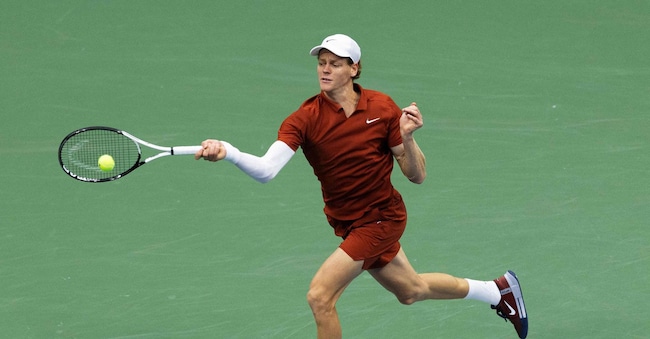
Athletes of the calibre of Jannik Sinner, Milos Raonic and Jasmine Paolini in tennis, or alpine skiing glories such as Alberto Tomba, Deborah Compagnoni and Federica Brignone, have in common the advice of Alfio Caronti, a chiropractor working in Como, who with his 40 years of experience and a publicity work behind him, has successfully tried to get them to overcome those 'hidden blocks' that can make all the difference. "Even small postural adjustments can change entire sports careers for the better. When an athlete finds his postural centring, he improves his performance by changing his way of perceiving the field, the opponent, and fatigue,' Caronti explains. 'The athlete's body is subjected to unparalleled stress, and in sporting activity any postural imbalance becomes immediately visible, easily turning into a drop in performance, recurring injuries, or seemingly inexplicable limitations. So the body speaks before the voice. You only have to observe how a sportsman walks after a race won or lost to realise how much emotion and movement are intertwined'.

