
This is why there is less and less fresh milk in the habits of Italians
In ten years, sales to the domestic market have fallen by 20% and only 14% of households drink it every day. By contrast, use by bars and for ice cream production is growing

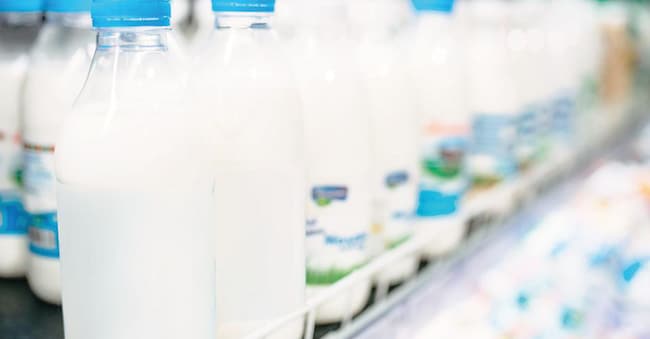
Not everything that looks fresh really is. Especially when it comes to milk. It is not enough that it is packaged in the classic transparent plastic bottles, nor that it has a well-known brand name, nor that it is in shop fridges. It must be labelled 'fresh', which by law is only reserved for milk pasteurised in a continuous flow at a minimum of 72 °C for at least 15 seconds. But this word is now found on very few packages: only nine out of the average 30 offered in a superstore like Esselunga.
Moreover, fresh milk is finding less and less of it, also because sales continue to fall. In the last 12 months, according to Niq, they fell by 2.7% in volume (against -1.4% for UHT milk), dropping below 418 million litres, 106 million litres less than in 2015 (-20%). And if, in value terms, turnover remains stable, at just under EUR 728 million, this is mainly due to the 2.3% increase in the average price, which has even gone beyond the psychological threshold of two euros per litre. And this also pushes the market towards UHT milk, which costs about 30% less.
Thus, fresh pasteurised milk is gradually disappearing from the market because it is no longer sustainable, especially economically. Producers have to thermise it within 48 hours of collection and leave it on the market for a maximum of six days, after which they have to collect it from shops at their own expense. A major commitment (and cost) for a product that is bought less and less frequently. While 85% of Italian families buy cow's milk, only 14% drink it every day, reveals a survey conducted by Nomisma for the 'Think Milk, Taste Europe, Be Smart!" project, and furthermore the lower birth rate continues to reduce the main target, that of families with young children. If in the mid-1960s the average annual consumption in Italy was 66 litres, now it is down to about 50 and the per capita average is 115 ml per day against the 375 ml recommended by nutritional guidelines.
This scenario has prompted producers to replace fresh milk with high-temperature pasteurised milk and Esl (Extended shelf life) milk, which, being heated from 80 to 135 °C for a few seconds, has the advantage of lasting up to 25-30 days. A solution that appeals to everyone: manufacturers and retailers can leave the product on the shelf longer, while consumers have more days to consume it without wasting it.
From 2023 Granarolo has chosen to produce only pasteurised milk with a longer shelf life and even a top product like Latte Fieno Stg, the emblem of the South Tyrolean farmers, has had to adapt to the market. "The fresh milk is mainly destined for the local market, where a short supply chain and daily distribution can be guaranteed, while in the rest of Italy, the 'more days' Esl Hay Milk arrives,' confirms Andreas Österreiche, head of food quality control at the South Tyrolean Dairy Federation.

