

Cairo reopens the Libyan dossier: energy and loans at the heart of the thaw
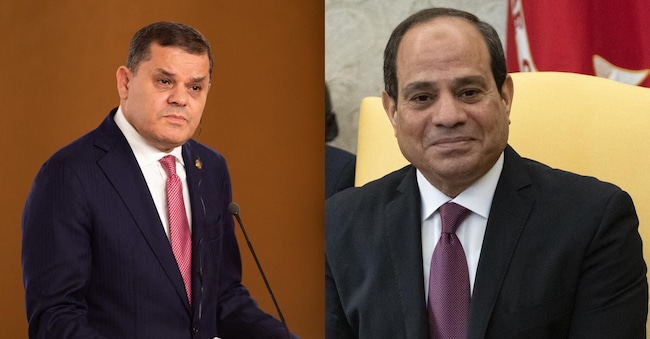
Talks between the Prime Minister of Tripoli and the Egyptian President ahead of a possible electoral overhaul. The focus is on energy infrastructure, oil exploration and a package of bilateral agreements to resolve the debt issue in Tripolitania

Key points
The visit to Cairo by the Libyan Prime Minister Abdul Hamid Dbeibah, marked by his meeting with the Egyptian President Abdel Fattah al-Sisi in El Alamein, marks a turning point in economic relations between the two countries after years of ties centred primarily on Libya’s eastern axis. The talks focused on energy infrastructure, electricity interconnection, oil exploration and a package of bilateral agreements that could redraw the investment landscape in the southern Mediterranean.
Energy issues between Cairo and Tripoli
In addition to the heads of government, the summit was attended by the Egyptian Ministers for Electricity and Renewable Energy, Mahmoud Esmat, and the Minister for Petroleum and Mineral Resources, Karim Badawi, highlighting the central role of the energy sector in the bilateral agenda. The Egyptian Prime Minister Mostafa Madbouly emphasised Cairo’s interest in structured cooperation on natural gas, the refining of petroleum products and the strengthening of the electricity interconnection network, setting out the objective of a shared timetable. The Chairman of the Libyan National Oil Corporation, Masoud Suleiman, also opened up the fertiliser sector as a new area for industrial collaboration, broadening the scope of shared economic interests beyond traditional hydrocarbons. The two sides also agreed to establish a Libyan-Egyptian economic forum, to be held on the sidelines of the next session of the Joint Higher Committee, with the participation of both governments and the private sector, aimed at announcing new projects and monitoring existing bilateral agreements.
Past credits
Behind the official rhetoric of cooperation, according to Egyptian and Libyan sources cited in the dossier, a significant financial issue remains unresolved: the Libyan Government of National Unity still owes Egypt debts accumulated over previous years, arising from projects carried out by Egyptian companies in Libya, the supply of electricity and infrastructure works such as bridge construction and reconstruction programmes. This economic aspect cannot be separated from political and security considerations, as Cairo regards stability in Libya as an essential condition for the recovery of its debts and for the continuity of Egyptian economic activities in the country. The El Alamein summit marks the culmination of a series of economic and diplomatic contacts initiated in recent months: Minister Badawi’s participation in the ‘Libyan Energy and Economy Summit’ held in Tripoli last December, the meetings of the Joint Consular Committee last April, and the intelligence talks between the head of the Egyptian intelligence services Hassan Rashad and Dbeibah in June. This progression suggests a strategic shift in Egypt’s approach, which is no longer focused exclusively on relations with the House of Representatives and the military command in eastern Libya, but is now geared towards a broader dialogue with the economic institutions in the west.
The implications for regional investment
The analyst Ashraf Abdullah, president of the Libyan Centre for Strategic Security Studies, told the Libyan media that Cairo’s shift in stance towards Tripoli is also linked to regional dynamics, including a rapprochement with Turkey, a key partner in the Libyan issue, and to the need not to be excluded from new economic and political arrangements currently being defined through the US-led initiative spearheaded by Massad Boulos. The timing of Egypt’s economic opening therefore appears to be carefully calibrated to ensure Cairo a negotiating role in Libya’s future institutional architecture, at a time when crucial issues such as oil, the budget and the distribution of financial resources remain hostage to tensions between the east and west of the country. For Italian and European economic operators active in the Mediterranean, the signal is twofold: on the one hand, a window of opportunity is opening up for infrastructure and energy projects within a context of greater regional coordination; on the other hand, a high political risk persists, linked to the fragility of Libyan governance, exacerbated by protests in Tripoli over deteriorating living conditions and by persistent doubts regarding the future of the Dbeibah government.

