The interview

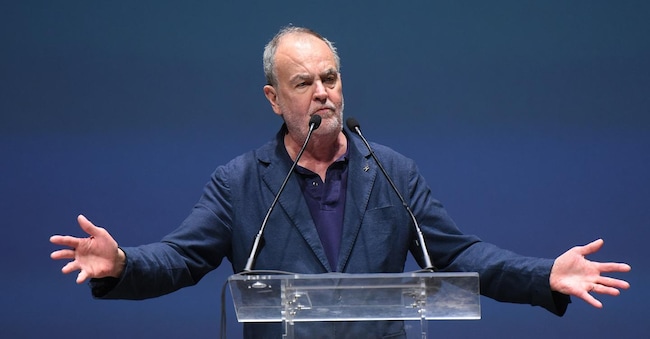
Calderoli: 'I explain where we will get the necessary funds for autonomy'

The Minister for Regional Affairs outlines the next steps: 'Between the end of September and the beginning of October the start of negotiations with four regions, by the end of the year the first essential levels of services'.

by Gianni Trovati

(Imagoeconomica)

8' min read

8' min read

"Between the end of September and the beginning of October, negotiations will officially begin with the four regions that have already requested the allocation of matters not related to the essential levels of services. And by the end of the year I would like to bring the first two or three LEPs on important competences to the Council of Ministers'. The political turmoil surrounding it does not stop the journey of differentiated autonomy. And they do not seem to make its pilot change course: the Minister for Regional Affairs and Autonomies, Roberto Calderoli, who in this interview with Il Sole 24 Ore agrees to openly discuss all the key issues agitating the debate on autonomy, starting with the political ones.

Minister, current events require us to start with the repeal referendum. What do you think?

Loading...

I have been collecting signatures for referendums for 30 years, so my assessment of the involvement of the people is always positive. The rules, however, must apply to everyone: in 2015 the referendum I promoted to repeal an article of the Fornero law had seen 650,000 signatures, but was then declared inadmissible because it touched on too many subjects and because the pension reform was linked to the manoeuvre. Autonomy is also linked to the budget law, so, without prejudice to the power of the Supreme Court to decide, this whole operation seems to me more media and political than a real referendum. Everyone also knows that the question calling for the abolition of the entire law is blatantly inadmissible, so much so that the regions opposed to autonomy have also chosen a different path with a partial question. Also because it should not be forgotten that we are talking about a law that is, so to speak, constitutionally necessary. Nor should it be forgotten that Article 116, third paragraph, of the Constitution (the one that provides for differentiated autonomy, ed.), letter m) of Article 117, first paragraph (the essential levels of services concerning civil and social rights) and 119 (the 'fiscal federalism', with ordinary and infrastructural equalisation) have been in force for 23 years but have not yet been implemented.

The fact remains that 500,000 signatures collected in just a few weeks does not seem a small signal.

The point is that this government proved to be the most sensitive on the referendum issue, activating the platform for online accessions that had been planned for years but had never started. With this in mind, perhaps the minimum thresholds of accessions to initiate referendums or citizens' initiative bills should also be reconsidered. The reform of the Senate's Rules of Procedure, which I promoted in the last legislature, provides for a substantial obligation to examine these proposals, but if collecting signatures is so easy, it could even lead to parliamentary paralysis. Then, since the devil makes pots and pans but not lids, the promoters will have to request the electoral certificates of the signatories from all the municipalities and have them validated, which is no easy feat.

But some stomach aches also run through the majority.

Look, so far I've only seen some distinguation from Forza Italia, but I'm not interested in declarations and I prefer to look at the facts. I asked for authorisation from Prime Minister Meloni, who granted it to me, to start talks with the regions that have made the first requests, and I have every interest in speeding up the process, also to break up the political fuss. It is precisely for this reason that I have asked the proposers not to give me a general indication of the subjects on which they are requesting additional competences, but also the details of the individual functions, so that specious polemics can be put down immediately. For example, I have seen some agitation around the ordering of professions, but all requests are obviously focused on non-ordering professions, certainly not on accountants or lawyers. Once the texts of the regional demands have been read out, there will be no fear either in the population or among the allies
of the government.

So far, proposals have come from Piedmont, Lombardy, Veneto and Liguria. What are they asking for?

In the first instance, work is being done on the subjects that are not subject to the identification of Lep, i.e. international and EU relations of the regions, foreign trade, professions, civil protection, complementary and supplementary pensions, coordination of public finance, regional savings banks, land credit institutions and the organisation of justice of the peace. But, I repeat, these definitions can be misleading because the point is the specific functions. Before the official start of the discussion, which will have to take place once the 60 days provided by law for the Ministries' assessments have elapsed, I cannot go into detail. But Veneto has asked for functions concerning all 9 subjects, Lombardy has asked for 8 (not the organisation of justice of the peace), Piedmont and Lombardy 6. On 27 July I sent all the competent ministries and the Mef the documents. Once 60 days have elapsed from that date we must begin the confrontation
with the regions.

But isn't there a fundamental problem with the list of transferable competences? What can regions concretely do about issues such as foreign trade or large energy and transport networks?

Of course. When I see some subjects in concurrent legislation, I think that some author of the 2001 constitutional reform raised the bar too high. In 2005 I tried to put things in order with devolution, which was rejected by referendum, but then I did not see any other major initiatives. What can be done now, therefore, is to use this constitutional framework cum grano salis, to identify the functions that can be carried out in practice more effectively by the regions than by the state. On the contrary, for example, the 2001 reform contemplates the possibility that the regions could assume exclusive legislative competence over 'general rules on education', but it is a hypothesis that does not seem feasible and therefore unlikely to be taken into consideration.

There will never be, in short, a 'Lombard school' or a 'Veneto school'?

But no, not a chance! If, however, within the individual subjects we identify with the caution of the good father of the family what can best be managed by the regions, and often these are administrative functions like the Bassanini laws to be clear, we are doing the country good, and those who fear locusts or all the seven plagues of Egypt
will be proved wrong.

But the elephant in the room is the Lep and their possible costs. Aren't they a mortgage on the whole reform?

I cannot accept that we have only now realised that the LEP are missing, and that therefore the civil and social rights provided for by the Constitution are not guaranteed everywhere. The territorial gaps do not stem from autonomy, which, if anything, has put them back at the centre of the debate, and I was the first to take the trouble to draw the boundaries of the subjects to be regulated by the essential levels.

Doesn't this risk being too expensive a 'courage'?

The Lep first of all can change the distribution of resources, but in different ways depending on the function. In some cases the deck shifts to the south, in others to the north, and proposals will have to be constructed to bring it back to the centre as far as possible. Will an extra margin be needed? Perhaps, but we must proceed step by step. A non-marginal share of Lep, however, is mainly regulatory, and may entail some administrative costs moving from the state to the region. It should be emphasised in particular that Lep must be matched with standard costs and requirements, an unavoidable mechanism so that the right to certain services does not turn into a pretext for unlimited expenditure. What would be at stake would be the budgetary balance and, in broader terms, the rights of the future generations, who would have to bear the possible debt incurred to sustain that unlimited expenditure. Moreover, the determination of standard costs and requirements removes the scientific and practical foundation for the thesis that Lep necessarily increases expenditure.

The problem of the Lep remains, however, which must be financed. How?

Enormous margins can come from a regional spending review that flushes out inefficiencies. For example, Veneto has 4.8 million inhabitants against Campania's 5.6 million, but spends almost half as much on personnel and about a fifth on the purchase of goods and services, including energy. These are differences that must be justified or eliminated. I do not want to take resources away from the people of Campania, I want that money to be spent better. Then if additional funds are needed, we will obviously not be able to put them all in immediately, but we need to start, and I want to reassure everyone: a starting point is already there, and it is right under our noses. In fact, I would like to remind you that public spending, according to Bankitalia data for 2023, is around 1,150 billion and that services are already being provided to citizens. The problem is precisely the fact that in some cases they are provided poorly, here lies the crux of the matter and the challenge towards efficiency. In essence,
the money is there, but it needs to be spent well, but perhaps some are afraid that they are not up to the task.

But has the technical work of defining Leps been started? Where do we stand?

We are working on it, very much so. We are far ahead on the environment, we are at a good level on job security and we have almost completed the analysis on land governance. I see it almost achieved. As far as health is concerned, then, with the Essential Levels of Care already defined, the bulk of the work is done.

The Lea, however, show that standards alone are not enough to create homogeneous healthcare from North to South.

The fact is that today the Lea are used for ex post verifications, not in advance for the distribution of the health fund, which is almost entirely based on the age-adjusted population. With the reform, on the other hand, they will also be used for the distribution, but it is clear that the distribution of the resources currently allocated to the various regions, which is the result of an agreement between the regions themselves, does not justify healthcare migration, which is due to inefficiency and denies many citizens the right to be treated at home. It is worth remembering, especially to those who pretend not to know, that the distribution of the national health fund sees an average per capita value of health expenditure of around 2,000 euros. And yet, despite this substantial balance in the distribution, there are more efficient realities than others. Having said this, apart from the big problem of waiting lists, our healthcare continues to be better than that of many other countries; but, even if Minister Giorgetti will curse me, I think that to bring it back to the top an extra point of GDP (about 20 billion, ed.) in the healthcare fund we will have to put in, progressively over time.


Copyright reserved ©
Loading...

Brand connect

Loading...

Newsletter

Notizie e approfondimenti sugli avvenimenti politici, economici e finanziari.

Iscriviti