

Campania: a focus on local healthcare to improve continuity of care
An integrated, person-centred model that is more closely aligned with national standards: this is how the Regional Executive is updating its community care services

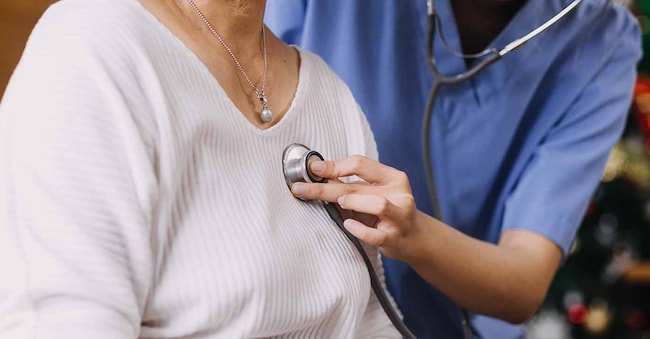
An addendum to support the transition towards an integrated model, centred on person-centred care, the strengthening of community-based healthcare, the integration of health and social care, and continuity of care between hospitals and the local community, in accordance with the principles of appropriateness, equity and sustainability. This is the document approved by the Campania Regional Executive, led by Roberto Fico, to supplement the 2019–2021 Regional Plan for the Local Healthcare Network, taking as its reference point the activities set out in the National Recovery and Resilience Plan (PNRR) as transposed by Ministerial Decree 77/2022.
Coordinating districts
This is a further step towards ensuring the targets of the Recovery and Resilience Plan, which has shifted the focus of the healthcare system from hospitals to the local community and introduced new care settings, including community care homes, community hospitals and local operational centres. The addendum brings the organisational model for community care in Campania into line with the standards set out in Ministerial Decree No. 77 and takes into account the changes resulting from various restructuring measures. The first point of the Addendum concerns the Primary Care District, which becomes the backbone of local governance and assumes a coordinating role for the new care settings; it must plan, implement, validate and coordinate actions for the provision of Essential Levels of Care (LEA). Furthermore, it must manage the network of social and healthcare services with a healthcare focus and the regional healthcare services. Campania currently has 73 districts spread across seven local health authorities.
Integration and widespread reach
As regards healthcare facilities, the system is moving from a network comprising first- and second-level outpatient clinics and community hospitals – without any coordinating structure – to three integrated organisational hubs: community centres where, in accordance with the hub-and-spoke model, outpatient clinics will be progressively integrated into the provision of specialist outpatient services for highly prevalent conditions, chronic conditions and highly complex cases; community hospitals, structurally integrated into the district network as an intermediate level of care and increased in number; local operational centres, established to organise and coordinate care transition pathways. Local Health Authorities (ASLs) will need to reorganise local services to ensure a structured and comprehensive system of local care provision.
The figures
There are currently 171 community centres planned (69 hubs and 102 spokes); in line with the standards set out in Ministerial Decree 77 and the investments under the National Recovery and Resilience Plan (PNRR), 47 community hospitals are to be built, of which 7 are already operational. There are, meanwhile, 79 local operational centres, 63 of which will be operational by the end of 2025. Based on the principle that the home becomes the primary place of care, integrated home care is central to the local healthcare system, as is the new professional role of the family and community nurse, who is responsible for monitoring patients at home and acts as the interface with the network of services. The standard set out in Ministerial Decree 77 stipulates at least one such nurse per 3,000 inhabitants, and the total requirement for Campania is estimated at 1,876 family and community nurses; according to a survey carried out in April, the health authorities anticipate 810. As for single-profession and multi-profession care groups – involving general practitioners and paediatricians chosen by patients, which until now were separate from the local healthcare network’s facilities – these will be based at community centres, where general practitioners, paediatricians of free choice will work in multi-professional teams alongside family and community nurses and outpatient specialists. By the end of 2025, 187 territorial functional clusters will be operational in the region.
The aim: continuity of care
To ensure continuity of care – which is currently provided mainly by the out-of-hours medical service at night and on public holidays – the system will use two tools. One is the Nea 116117 operations centre, i.e. the harmonised European number operating 24 hours a day, seven days a week, for all non-urgent health and social care services. In Campania, between 3 and 6 operational centres are planned, with the Salerno Local Health Authority (ASL) leading the way in trialling the regional model. The second tool, which effectively replaces the out-of-hours medical service, is the Community Care Operational Unit, comprising a team of one doctor and one nurse based at the community centre, which intervenes in complex clinical cases that cannot be managed locally. The Department of Prevention will also become a cross-cutting component of the integrated territorial network, whilst telemedicine will evolve from a support tool into a structural component of patient care. This will also require the integration of accredited private facilities and greater involvement of general practitioners, paediatricians chosen by patients and pharmacies, particularly in rural areas. This objective must be supported, first and foremost, by an advanced regional digital platform.

