
Campi Flegrei: a new amnesty is also included in the 1 billion plan
To make buildings in the Campi Flegrei safe, the recently published decree allocates one billion over ten years. There is a tight deadline for submitting applications for amnesty

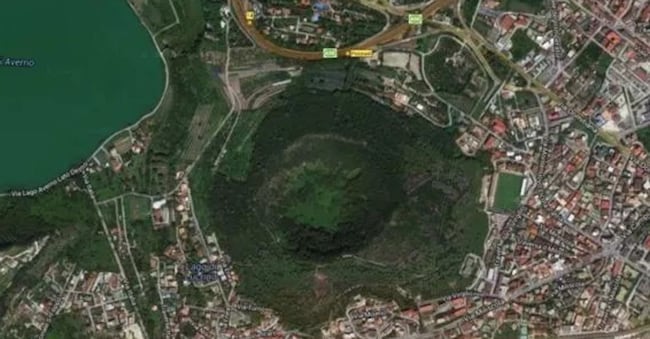
One billion over ten years to make buildings in the Campi Flegrei safe, a single commissioner, and the option for those with a damaged home to use the grant to buy another property outside the at-risk area. But that is not all, as the measure also introduces an amnesty to regularise non-compliance and works carried out without planning permission in uninhabitable properties. It also establishes a fast-track process for the resolution of pending amnesty applications. These are the key measures of the decree on bradyseism published in the Official Gazette (No. 263 of 11 November), which entrusts the President of the Campania Region with the oversight of the interventions until 31 December 2036.
The ten-year plan
From 2027 to 2036, the decree allocates 100 million per year to the repair of damaged buildings and to reducing their seismic vulnerability. The resources, drawn from state funds already earmarked for reconstruction, will be divided equally between public and private buildings. The appointment of a sole commissioner, as explained in the technical report, aims to ‘ensure the unified coordination of the assessment, planning and implementation of interventions’, as set out in the technical report, and to guarantee the continuity of support for the population. The President of the Region will take over from the current commissioner for public works and will assume the functions that the decree transfers from the Region and the local authorities. He will have two deputies: one for public buildings, infrastructure and services, and the other for private properties and support for households and businesses. The organisation will be able to draw on a maximum of 93 staff members.
Contributions
‘To reduce the urban development pressure in the project area’, the technical report continues, those entitled to the grant to repair or make their property safe may use it to move house. They may purchase an existing property or a plot of land on which to build, either in the same municipality or in a neighbouring one. In both cases, the new home must be located outside the intervention area and in an area free from bradyseismic risk. The grant will be capped at the amount that would have been payable for the works, net of demolition costs. In the case of blocks of flats, all eligible residents must submit a joint application. The local authority will acquire the site on which the old building stands free of charge and will arrange for its demolition. The commissioner will issue an order identifying the area in which relocations are to be prioritised, based on scientific data regarding exposure to volcanic, seismic and bradyseismic risks, as well as emissions of harmful gases.
Bagnoli
The decree also allocates 200 million for the reclamation and urban regeneration of Bagnoli-Coroglio. Spending limits will increase by 100 million in 2026 and by the same amount in 2027, with a corresponding reduction in the following two-year period. The programme’s total budget remains at 1.218 billion.
Earthquake in Central Italia
The decree extends the special administration for post-flood reconstruction until 31 March 2027. The measure applies to Emilia-Romagna in relation to the events of May 2023 and September and October 2024, as well as to Marche and Tuscany in relation to May 2023. The costs for 2027 amount to 3.7 million.


