

Cancer, the map of treatment centres and clinical trials to apply for arrives
Oncologists work on a search engine to allow patients to find out about ongoing clinical trials and apply

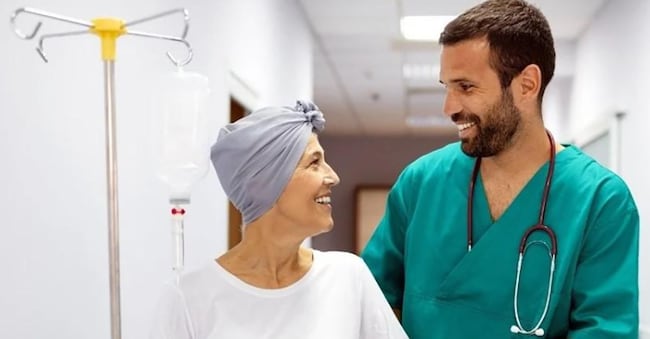
A map updated in real time and 'in the clear' will enable cancer patients and their families to consult the clinical characteristics of treatment centres in Italy and research activity, but also to find their way around the trials to which they can apply, thanks to the link with the official European register of approved clinical trials and with the information made available by Aifa, the Italian Medicines Agency. When fully operational - by spring at the latest - people with cancer will therefore increasingly be the protagonists of their own health history.
The Platform
The integrated online platform is being set up by Aiom, the Italian Association of Medical Oncology, which has so far produced a white paper, in collaboration with the Federation of Oncologists Doing Independent Research (Ficog). "We are not at year zero," explains president Massimo Di Maio, "Aiom has already been offering a search engine for clinical trials for years, but the most important step change will take place with a snapshot of the trials available for each centre, whose services and activities we also update. Information in 'living' mode: in other words, each facility will be able to review it constantly, with the health directorates' bulletins".
This innovation is in line with World Cancer Day on 4 February, under the motto 'Unite by Unique' chosen for the three-year period 2025-2027: "Research," Di Maio emphasises, "is not a chapter in itself but an integral part of healthcare provision, and for this reason every opportunity for patients and their families to participate must be maximised.
Declining mortality
After all, it is also thanks to the fundamental support of scientific research that Italy and Europe are gaining ground on the disease: in our country, between 2020 and 2025, the reduction in cancer mortality rates is estimated at 14.5% in men and 5% in women, better data than the continent (-3.5% in men and -1.2% in women on average) and those of the main EU countries such as France (-10.4% and -2.8%), Germany (-9.5% and -8.1%) and Spain (-7.7% and -1.8%). Overall in Europe between 1989 and 2025, 6.8 million lives will be saved, while for Italy the latest data speak of 268 thousand cancer deaths avoided in the 2007-2019 period. This success can be attributed on the one hand to therapeutic innovation, thanks to which oncological pathologies have become increasingly 'chronic', and on the other to prevention through improved lifestyles and screening.
Save search
But in all these areas there is still room for improvement. "This is why we hope to double the number of lives saved in the next few years, imagining a component linked to more effective treatments not only for advanced disease but also for earlier stages," Di Maio goes on to explain. "Today we have perioperative, neoadjuvant and adjuvant therapies for many cancers, and we expect this to translate into a further drop in deaths. However, two knots must be addressed: a return to funding independent research, which today is a sore point, and making the centres increasingly competitive for industry to conduct studies as well. Otherwise, as a country-system we risk being less attractive than in other parts of the world, and this has a direct impact on the opportunities offered to patients'. Just look at the dramatic figure of -57% in 15 years of not-for-profit clinical trials, which in Italy have gone from 40.3% in 2009 to 17.3% in 2023.

