

Cancer: once upon a time there was chemotherapy; new frontiers in treatment have opened up

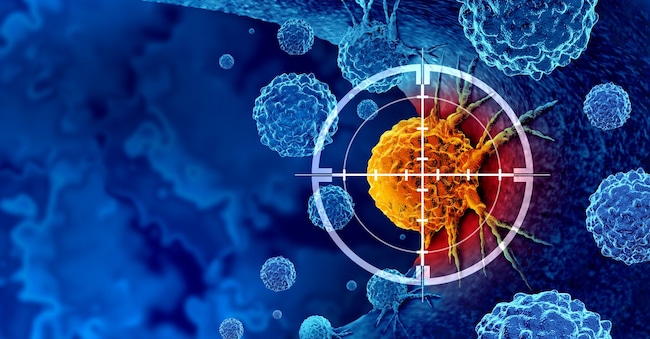
Once upon a time. Once upon a time, there was cancer. Or rather: it’s still here, but it’s no longer like the villain in fairy tales; it’s a little less frightening. What was, not so long ago – less than a generation – an unmentionable disease is now, in many cases, even curable. This is borne out by survival rates for many types of cancer. And there have been decisive advances even in those considered complicated, such as bowel or lung cancer, and perhaps even pancreatic cancer. Getting this far hasn’t been easy, and there’s still a long way to go: let’s just say the path is less winding. Over the past ten years, perceptions of cancer have changed, as has the language used to describe it.
Innovative treatments
Once upon a time, there was chemotherapy. Nowadays, treatments are based on monoclonal antibodies in combination with genetic inhibitors, antibody-drug conjugates – which recognise the surface proteins of diseased cells – immunotherapies, CAR-T therapies and vaccines. Rossana Berardi, Professor of Oncology at the Polytechnic University of the Marche and President-elect of the AIOM, is well aware of the value of this progress. “True innovation,” she points out, however – and this is no trivial point – “is that which reaches the patient. Currently in Italia, there are almost 3.7 million people living with a cancer diagnosis, including those who have recovered: twenty years ago, the figure was 2.44 million. Behind these numbers lie lives, relationships and plans that continue.”
“Over the last ten to fifteen years,” continues Prof. Berardi, “we have witnessed a profound change: the classification of cancers based on their organ of origin has been complemented by an understanding of their molecular characteristics. It has thus become possible to distinguish between seemingly similar diseases and to select treatments capable of targeting their specific vulnerabilities. Molecularly targeted therapies, immunotherapy, and antibody-drug conjugates and bispecific antibodies have broadened the range of treatment options.”
The challenges ahead
Progress, however, has not been uniform. Breast, lung, colon and, more recently, pancreatic cancers illustrate both the achievements and the challenges that remain. In breast cancer, the results of increasingly innovative therapies, together with early diagnosis and integrated multimodal treatments, have long since changed the course of the disease and the prospects for recovery. Among other treatments, CDK4/6 inhibitors, when used in combination with endocrine therapy, have produced responses in hormone receptor-positive tumours. Drug-conjugated antibodies, which deliver a cytotoxic drug to cells expressing a specific target, have opened up further opportunities in addition to those already provided by immunotherapy and other biological drugs.” Personalised treatment has thus become increasingly sophisticated. In lung cancer, the transformation has been even more significant. “The identification of alterations such as those in EGFR and ALK allows the use of targeted drugs, providing even prolonged control of the disease in selected groups of patients. Immunotherapy has offered lasting responses to some people with advanced disease. This change also applies to resectable stages: targeted therapies and immunotherapy, used in the appropriate indications before or after surgery, are increasing the chances of avoiding a relapse.” In colorectal cancer, molecular characterisation has become crucial in guiding treatment. “RAS and BRAF alterations help to identify different therapeutic strategies. Immunotherapy has changed the outlook for patients with tumours characterised by high microsatellite instability or defects in DNA repair systems. This represents a minority of metastatic cases, but the findings demonstrate how important it is to recognise the subgroup that may benefit from a specific therapy: the same treatment can have very different levels of efficacy depending on the biology of the disease. For pancreatic cancer, where the need for new treatments remains high, the therapeutic revolution is, in all likelihood, now emerging with RAS inhibitors.”
Future prospects
What can we expect in the coming years? “We expect oncology to become increasingly capable of tailoring treatment decisions to the progression of the disease. One of the most promising developments,” concludes Rossana Berardi, “is liquid biopsy: by analysing tumour DNA circulating in the blood, we can identify alterations that inform treatment choices and study the emergence of resistance. Following surgery, the search for residual molecular traces could help identify which patients require further treatment and which could avoid unnecessary interventions. For these applications, however, it must be demonstrated, across different clinical contexts, that modifying treatment based on the test actually improves outcomes. New drugs targeting RAS, therapeutic vaccines and combinations capable of making tumours more sensitive to the immune response are other important lines of research. The first encouraging signs require confirmation before they can be translated into widespread treatments. “The aim will be to increase remissions and achieve long-term control of the disease, whilst also learning to reduce the intensity of treatments where this can be done without compromising their effectiveness.”

