

Capillaries and varicose veins: the health of the whole body depends on the legs
The diseased vein can alter the vascular balance of the entire organism and shares with the arteries a common biological denominator: chronic inflammation

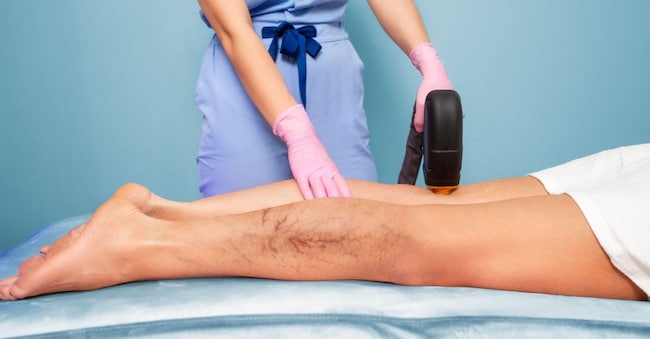
Up to one in two people in Italy live with chronic venous disease (CVD). An extremely widespread condition in Western countries, caused by an alteration in the mechanisms of blood return from the periphery towards the heart, which affects mainly women but does not spare men, particularly in more advanced stages.
Visible capillaries, varicose veins, and swelling are the most obvious signs of the disease, often perceived as mere blemishes or annoying discomfort, but lacking any real clinical relevance. In reality, they represent the expression of a much more complex condition, destined to progress if not addressed properly, up to more severe pictures such as persistent oedema, skin changes, ulcers and venous thrombosis. These manifestations are associated with symptoms such as pain and heaviness in the legs, cramps and itching, which should not be underestimated not only because they affect patients' quality of life, but because they signal the activation of a deeper pathological process.
Inflammation in venous disease
The common thread of chronic venous disease is in fact inflammation: a mechanism that tends to feed itself over time and is often accompanied by the loss of venous valve function.
And this is where a fundamental paradigm shift comes in. For years, veins and arteries were considered separate systems: arteries at the centre of attention for their role in cardiovascular diseases such as heart attack and stroke, veins often relegated to a secondary level. Today, this separation appears to have been overcome by scientific evidence. This is also shown by the results of one of our recent studies, which show that in patients with advanced venous disease there are markers of endothelial dysfunction, an expression of chronic inflammation of the inner layer of blood vessels. A finding that clearly suggests systemic involvement.
In other words, the diseased vein is not a localised problem: it can alter the vascular balance of the entire organism. If in the past it seemed far-fetched to assume that treating veins could contribute to cardiovascular prevention, we now know that venous and arterial disease share a common biological denominator: chronic inflammation.

