
Caporalato, who are the 13 brands at the centre of the investigation and what do they risk?
From D&G to Prada, from Adidas to Versace via Gucci: the Milan Public Prosecutor's Office sent a request for documentation for security and controls

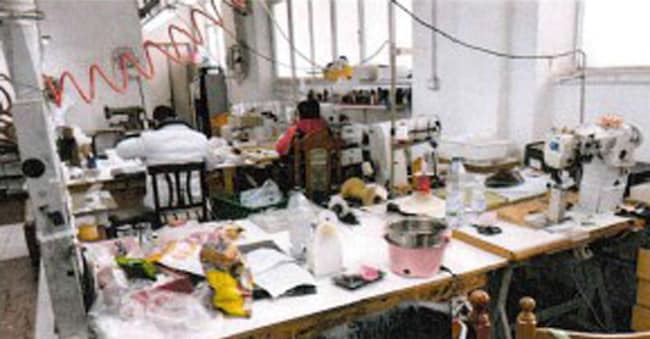
Fashion in the crosshairs again. Another 13 large groups end up under the lens of the Milan public prosecutor's office. Late in the evening of Tuesday, 2 December, the carabinieri of the work protection nucleus, on a warrant from the prosecutor Paolo Storari, raided company headquarters asking for documentation proving that safety and legality checks had been carried out along the supply chain. Within a few days, the companies will then have to provide the investigators with what was requested, and, on that basis, the public prosecutor's office will assess what requests to make to the judge: whether a judicial administration, on the basis of the Anti-Mafia Consolidation Act, or an outright accusation of caporalato, on the basis of Law 231. Missoni, Off White operating, Adidas Italy, Yves Saint Laurent manifatture, Givenchy Italia, Ferragamo, Versace, Gucci, Pinko, Prada, Coccinelle, Dolce&Gabbana, Alexander McQueen.
The public prosecutor's office found numerous episodes of 'use of ethnic Chinese labour in conditions of heavy exploitation' in all the investigations carried out, who had 'lent their activity' to the listed companies. In the many factories visited in various Italian regions (mainly Lombardy, Tuscany, Marche), testimonies were collected and situations of illegality and risk were detected. There were many names of underpaid workers listed in the requests for delivery, exploited for many hours a day, forced to work in precarious hygienic situations and without protection systems, without recognition of contributions and overtime, in fragile conditions because they were often under the blackmail of illegality.
Large brands are therefore asked to hand over: Chamber of Commerce visas, contracts, organisation charts, descriptions of company functions, minutes of board meetings from January 2023 to date, minutes of boards of auditors from January 2023 to date. Added to this are documents on internal control systems, showing procedures for the accreditation and selection of suppliers of raw materials, goods and services and the plan of internal audit activities and their results, monitoring and traceability plans, the list of suppliers and the 2023-2024 financial statements (plus the sustainability one). What we essentially seem to read between the lines is the public prosecutor's call for independent 'compliance' on the part of the companies.
The investigations aimed at uncovering and stopping procurement and subcontracting chains characterised by serious exploitation are not stopping. The first big brands to be commissioned were Alviero Martini, Armani operations, Valentino Bags, Manifacture Dior. The same request had also arrived for Tod's, but in this case the judicial administration was denied by the court for reasons of territorial jurisdiction (the investigations are in Lombardy and Marche) and for questions of merit relating to the early stages of the investigation (aimed essentially at the manufacture of internal uniforms and not of products for sale on the market). Then, however, the investigation continued, culminating in the first real accusation of 'caporalato' directed at managers of the fashion house itself, and no longer only at the factories of the supply chain.
Apart from the Tod's case, which is having unprecedented developments, the judicial administrations do not start from the accusation of caporalato aimed at the big brands, but from the observation that insufficient and effective controls were carried out along the chain of suppliers and subcontractors, thus in fact allowing serious cases of illegality to be ignored if not actually tolerated. The judicial administration, which in some cases has already been overcome, is therefore aimed at creating a 'healthy' register of suppliers. The accusation of caporalato, for which the possibly accused managers must answer personally in the courtroom, within the framework of a possible trial, is another matter.


