
Mandatory bottle caps: for companies, costs outweigh benefits
Mandatory from 3 July, in compliance with the European Directive on single-use plastics. For the water industry 'a nonsense that forces more material to be used'
3' min read
3' min read
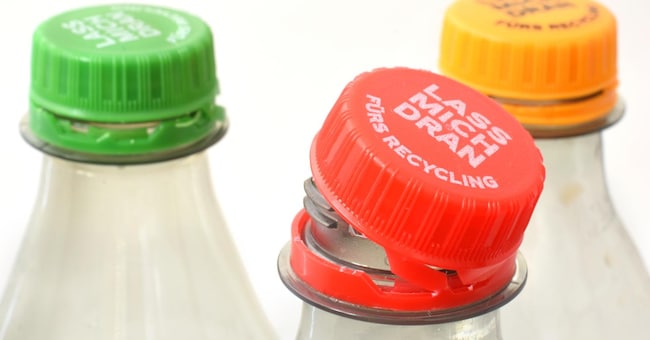
Tethered bottle caps (tethered cap) compulsory from 3 July 2024: this is the entry into force of the part of the European directive on single-use-plastic, which requires Member States to place on the market "beverage containers with a capacity of up to three litres, i.e. containers used to hold liquids, e.g. beverage bottles and their caps and lids, as well as composite beverage packaging and their caps and lids [.... only if the caps and lids remain attached to the containers for the duration of the intended use of the product'. Sup, European Directive 904 of 5 June 2019 on 'reducing the impact of certain plastic products on the environment', was transposed in Italy by dl 196/2021.
"This directive contains a paradox that is the result of an ideological and unscientific view of sustainability, and this is said by someone who represents an industry that has been investing for decades and continues to do so in reducing its environmental impact. In Italy, for example, we have the lightest Pet bottles in Europe, the result of years of investment in ecodesign and high technology, which have led to a reduction in weight. In the last 15 years, while market volumes have increased by around 35-40%, we have been putting the same amount of plastic on the market,' comments Ettore Fortuna, vice-president of Mineracqua, the association that brings together the water companies that, as bottlers, have had to comply with the measure.
New bottles with more plastic
.Fortuna also emphasises another aspect: 'European technical standardisation bodies have set a minimum cap strength of 25 Newtons, a technical reference value much higher than what could be applied to our bottles. With such a high standard, the obligation to tethered cap will create the paradox of having to increase the amount of plastic used (in some cases by up to +10% compared to what is currently used), a real nonsense when one considers that the directive aims to reduce plastic consumption'.
Costs exceed benefits
.The industry confirms its criticism of the measure and also quantifies the costs incurred to adapt machines to the new caps. "This measure does not make sense if you evaluate it under the cost-benefit ratio. The cost for the company is much higher than the benefit that the European rule wants to achieve: from the separate collection we know that the vast majority of bottles already return with the cap, so the problem of leakage is overestimated. This is why it is an ideological standard that does not make a direct contribution to sustainability, if not a cosmetic one," says Armando Fontana, CEO of Fonte Tavina, who continues: "We have had to sustain investments to update the capping machines on the lines, not to mention the greater quantity of plastic that we thus put on the market. Sustainability, in which we believe and in which we have been investing for some time, is the real thing that lightens the average weight of bottles, is good for the environment and creates savings opportunities for companies".
Supply problems
."This new tethered technology, in addition to causing an increase in the use of plastics, which is necessary for its implementation with a return in terms of post-consumer packaging recovery that has yet to be evaluated, also creates a major problem from an industrial point of view: In fact, the supply of new caps capable of meeting the right requirements for efficient use on the line is not immediate, and at a particularly delicate time for the sector such as the summer, a peak period for demand, it is a complication that puts the entire mechanism in a quandary," adds Marco Pesaresi, Ferrarelle's general manager.


