
CO2 capture and storage: the government focuses on Ravenna
The Eni-Snam joint venture project at the centre of the Italian plan. The enabling act awaited in the Unified Conference before being examined by Parliament

Key points
Il governo vuole accelerare lo sviluppo della filiera della cattura, utilizzo e stoccaggio del carbonio (Ccus), considerata uno snodo cruciale per la decarbonizzazione, soprattutto con riferimento a quei settori industriali (leggi hard to abate, dal cemento all’acciaio) nei quali l’emissione di CO2 è una tessera ineludibile del processo produttivo. Per questa ragione, il ministro dell’Ambiente e della Sicurezza Energetica, Gilberto Pichetto Fratin, in prima linea sul dossier, intende imprimere una sterzata alla definizione di un quadro legislativo che regoli il comparto dopo il primo, significativo, step raggiunto a fine giugno con il via libera del Consiglio dei ministri al disegno di legge delega. Provvedimento che spiana la strada al percorso che condurrà a una disciplina organica, a valle della quale è previsto un procedimento unico per il rilascio dei titoli abilitativi allo svolgimento delle attività della filiera. Il ddl delega è ora alla bollinatura della Ragioneria generale dello Stato e d
Lights on Ravenna
The goal is to speed up the process so as to ensure a full take-off of the Ccus as soon as possible and to launch an assistance to operators. The government's gaze is turned, in particular, to Ravenna, where the joint venture launched by Eni in tandem with Snam is called upon to achieve the 4 million tonnes per year by 2030 of CO2 capture and injection storage capacity that were included in black and white, albeit as a non-binding objective, in the National Integrated Energy and Climate Plan sent to Brussels in June last year.
The first step of the initiative
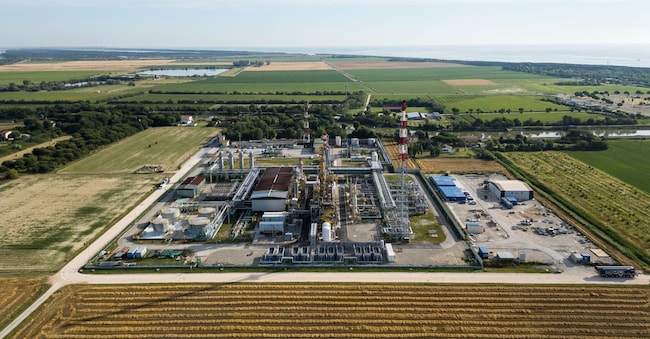
In August 2024, just 18 months after the final investment decision (Fid), the industrial-scale phase 1 of the project, for which, market sources report, the total investment amounts to €1.5 billion, was launched in the city of Romagna. This first step involves the capture of around 20,000 tonnes per year of CO2 from Eni's natural gas processing plant in Casalborsetti, near Ravenna, and its transport and storage in the Porto Corsini Mare Ovest depleted gas field, operated by the group led by Claudio Descalzi in the offshore Adriatic.
To ensure the power supply of the capture plant, the model brought forward by Eni - which, on the Ccus, boasts solid expertise having other important projects to its credit, from the United Kingdom to the Netherlands - relies on the recovery of self-produced thermal energy and electricity from renewable sources, with the result that the volume of CO2 captured actually corresponds to the quantity abated.
Project phase 2
Once the first step has been completed, the project will move on to phase 2 on a larger scale, the one that will make it possible to meet the target also included in the Pniec. But the growth projection in the following years exceeds even that bar: the project can, in fact, reach up to 16 million tonnes per year based on market demand and thanks to the total storage capacity of the depleted gas fields in the Adriatic, estimated at over 500 million tonnes to date.


