
Carinthia hotspot for the green economy
The region is among the protagonists of the emerging Hydrogen Valley, Europe's first platform dedicated to green hydrogen for industry

4' min read
4' min read
Southern Austria is preparing to play a leading role in the decarbonisation of European industry. The project of Europe's first Hydrogen Valley dedicated to industrial applications has been officially launched, involving three strategic Länder: Carinthia, Styria and Upper Austria.
It is an unprecedented initiative in terms of scale and impact: 17 coordinated projects, EUR 578 million of investments planned by 2030, and an initial funding of EUR 20 million already allocated by the European Commission. The aim is ambitious: to build a green hydrogen production ecosystem along the entire value chain, from production to transport, from storage to use in the industrial sectors most difficult to decarbonise.
Hydrogen at the service of industry: five projects in Carinthia
The Hydrogen Valley aims to develop an integrated and interregional system for the production and use of green hydrogen. In the three Länder involved - Carinthia, Styria and Upper Austria - new plants are planned for a total production over 10,000 tonnes per year, against an estimated demand of 13,000 tonnes by 2028. Of the 17 projects in total, five will be realised in Carinthia, strengthening the region's position in the European landscape of clean energy for industry.
European integration: the SoutH corridor
The project is part of a strategic continental context. Austria is among the promoters of the SoutH2 Corridor, the nearly 4,000 km hydrogen corridor that will connect North Africa to Germany via Italy and Austria. A joint declaration signed in Rome by Austria, Germany, Italy, Algeria and Tunisia recently relaunched its development. The Hydrogen Valley is proposed as a key node in this future low-emission energy axis.
An ecosystem ripe for sustainable economics
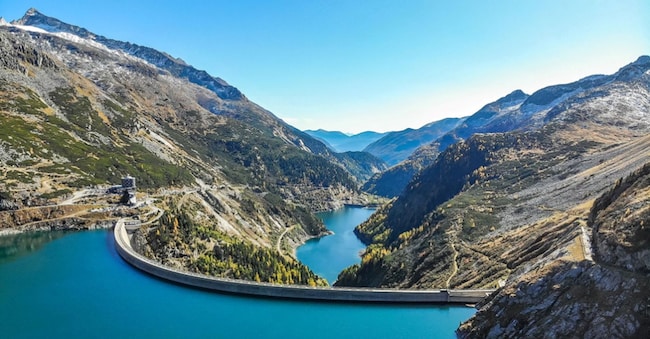
The Hydrogen Valley is set in a favourable context. In Carinthia, electricity is already 100% renewable, thanks mainly to hydropower. The region is characterised by a strong wood industry, a solid culture of cooperation between business and research and a growing specialisation in environmental technologies.
The core of this network is the Green Tech Valley Cluster, which connects more than 300 companies, start-ups and research centres in Carinthia and Styria. The companies that are part of it generate a total annual turnover of 7.6 billion euro and employ around 26,500 people, with a constant growth rate. According to estimates, the green sector in Austria could create up to 100,000 new jobs by 2028, in areas ranging from software to e-mobility, from renewable energies to recycling systems and emerging technologies such as carbon capture, i.e. the re-use of industrial CO₂ for the production of fuels and building materials.
While maintaining strong territorial roots, the Green Tech Valley has a clear international vocation: around 90% of production is exported, a far higher share than the national average (72%).
"Compared to its economic size, Carinthia has an extraordinary concentration of green tech companies. This makes it a hub of excellence in the ecological transition," says Bernhard Puttinger, director of the cluster.
Energy exchange and cross-border cooperation
Strengthening the regional network is also the Energieforum Kärnten, an association that has been active in promoting energy efficiency for 18 years. Created to advise private individuals, today it brings together some 400 companies committed to the green transition.
"We are a reference point for the Green Deal locally," explains Bernd Triebel, founder and president of the association.
The Energieforum organises annual Building and Energy Consulting Weeks and participates in cross-border initiatives, such as the new project with Slovenia to promote local networks dedicated to the circular economy.
Finance and innovation: the levers of the Carinthian model
Carinthia's green strategy is based on industrial vision, targeted public investment and applied innovation. The KWF Fund supports the transition with dedicated programmes:
- First Green: provides targeted and customised support for companies, also facilitating networking between companies to meet the challenges of the European Green Deal. It includes thematic workshops with experts and tailor-made advice.
- EFRE/JTF Invest: supports investments aimed at sustainable growth and efficient use of resources, through non-reimbursable grants.
- R&D Implementation: promotes free thematic R&D projects for companies of all sizes, with a focus on green, digital and resilient solutions. Collaborations between companies and research institutes are expressly encouraged.
And it is precisely from these synergies that concrete innovations arise. One example is the project developed by the Wood K plus competence centre in St. Veit an der Glan, which works on the application of composite materials derived from renewable sources. Current initiatives include the development of cellulose-based sensors for monitoring production processes: as thin as teabags, printed on paper instead of plastic, they are more sustainable, cost-effective and can be integrated into finished products.
These sensors can be used, for example, to detect cracks, moisture, expansion or cracks in materials, contributing to predictive maintenance in the automotive sector or to moisture monitoring in building components. This is a practical and efficient solution that makes industrial processes safer and more sustainable.
Another virtuous example is the SynCycle project, which aims to chemically recycle plastics in order to put them back into the value chain in a potentially infinite way. The pilot plant is being built in Völkermarkt by the Carinthian company KRUWE GmbH, in cooperation with partners from Upper Austria and Styria. The project, with a total value of EUR 3.9 million, is also supported by the KWF Fund. Initiatives such as this demonstrate Carinthia's desire to become an advanced industrial platform for the circular economy, capable of integrating research, production and green employment.
High education, high specialisation
Closing the circle is the role of educational institutions. The FH Kärnten in Villach, for example, stands out for its studies on lithium-ion batteries, which are crucial for electric mobility. The institute recently became part of the European University network and participates in the ACE² project, promoted by the European Union to strengthen applied research, innovation and entrepreneurship.
Alongside it, centres such as Wood K plus in St. Veit an der Glan. Veit an der Glan - which offers advanced training and applied research on sustainable materials and processes - and the Federal Technical College Euregio HTL in Ferlach - which offers a address dedicated to plastics technology and recycling - contribute to forming strategic skills for the circular economy and ecological transition.

