Tax authorities

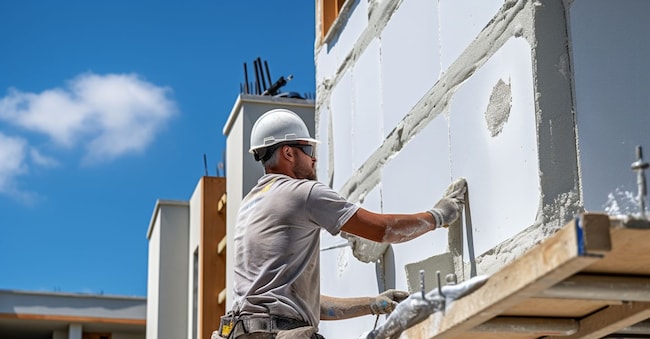
Housing: Leo opens the door to a 65 per cent eco-bonus for external insulation and solar panels

The Deputy Minister for the Economy: room for manoeuvre within the EU’s energy flexibility framework. Proposals for a tailored approach to improving the energy efficiency of public buildings. Inflation and interest on public debt pose obstacles to the budget measures

3' min read

Translated by AI
Versione italiana

3' min read

Translated by AI
Versione italiana

As regards energy saving, the return to the 65 per cent eco-bonus is more than just an open issue. Confirming that the intention is to raise the bar from 50 per cent is Deputy Minister for the Economy Maurizio Leo, speaking at a meeting with the executive committee of Confartigianato. The idea is to ‘tap into’ the resources for the scheme by making use of the EU’s energy flexibility clause.

The 65 per cent eco-bonus

According to the Deputy Minister for the Economy, ‘we must focus on incentives for energy efficiency because that is where we can raise the bar further and we have no budgetary issues’ with regard to the European flexibility clause.

Loading...

The proposal under consideration – as reported by *Il Sole 24 Ore* on 13 September – is to raise the current level of the tax relief set at 50 per cent for the main residence and at 36 per cent for second homes; moreover, even without legislative intervention, the rate is already set to fall to 36 per cent for the main residence and 30 per cent for second homes from 2027.

The limits of EU flexibility

This room for manoeuvre, explains the Deputy Minister, comes from the European Union: “We have the go-ahead for this 14 billion tolerance, 7 plus 7” for 2027 and 2028 under the EU’s energy flexibility clause, “but we need to identify the measures and work out how to proceed”.

Inclusion in the DPFP

To see whether the safeguard clause for defence and the ecological transition (NEC) will be included in the Public Finance Policy Document (DPFP), due to be discussed by the Council of Ministers on Friday 2 October, “we are working on it; we are now looking at the terms under which it can be included”, Maurizio Leo clarified on the sidelines of the meeting at Confartigianato.

Negotiations with Brussels are ongoing and concern, on the one hand, ‘which measures can be funded’ using the additional deficit already authorised. “Today we have this principle, which has been approved by the EU – the 14 billion for energy – and we need to see what measures will be taken; this is the negotiation that is currently taking place,” said Leo. As for defence, however, “we will see” how many resources to allocate.

Different measures for the private sector and the public sector

Leo has also outlined a proposal to adopt different measures for improving energy efficiency between the public and private sectors. In the private sector, “let’s try to raise the bar beyond 50 per cent”, for example for thermal insulation or solar panels, he suggests.

In the public sector, “one might consider efficiency improvements in healthcare facilities and educational establishments”.

The precedent set by the Superbonus

The memory of the 110 per cent scheme is still fresh, as the entire current government majority viewed it as a burden on the public finances for the policies of the entire parliamentary term. “We cannot set fixed percentages,” said Leo, “we must avoid repeating those pathological situations that arose in the past with the superbonus.”

“We’ve been a bit burned by the tax credit scheme. The cost to us of the superbonus” for next year “is 23 billion – just think of all the things we could have done!”, the Deputy Minister emphasised.

Loading...

A difficult budgetary manoeuvre due to inflation and public debt

“In all honesty, I must tell you that this will be a difficult Budget Bill. Because of inflation, because of the need to keep public finances in order, and because of the public debt when we issue government bonds,” Leo emphasised.

“Have you seen the spread? We’ve kept it under control all along, but due to the rise in energy prices, it’s now approaching 100. We hope the European Union understands this situation and will meet us halfway, giving us more flexibility, which will give us a bit more breathing space to carry out more targeted measures.”

Priority given to the 33 per cent IRPEF rate for incomes of up to 60,000 euros

Moving on to the broader scope of the budget, Leo reiterated that one of its priorities is to raise the threshold for the second IRPEF tax bracket from 50,000 to 60,000 euros.

‘We already helped part of the middle class last year because, for incomes between 28,000 and 50,000 euros, we reduced the tax rate to 33 per cent instead of 35 per cent. ‘We are planning to do another part of this now,’ the Deputy Minister also told Confartigianato, ‘through the Budget Bill, to cover taxpayers with incomes between 50,000 and 60,000 euros’ which would be reduced from the IRPEF rate of 43 per cent to 33 per cent.

Copyright reserved ©
Loading...

Brand connect

Loading...

Newsletter

Notizie e approfondimenti sugli avvenimenti politici, economici e finanziari.

Iscriviti