
Income tax set to rise to 33 per cent on earnings up to 60,000 euros. Here’s who will save what
The maximum tax saving could amount to around one thousand euros a year, excluding additional variables and deductions. The number of taxpayers affected may vary depending on the choices made regarding the income thresholds at which the effect is to be neutralised

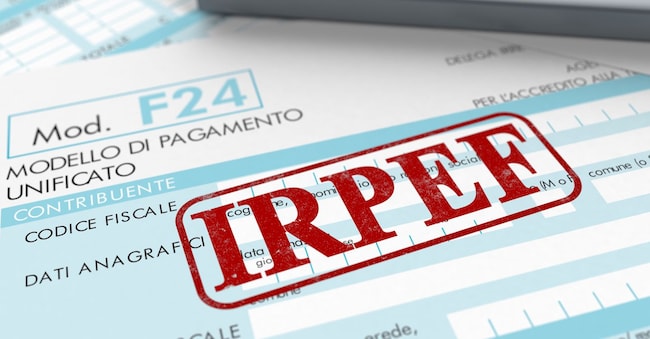
For now, it is a political commitment – a strong one. And a figure to be met: 2.7 billion. The 2027 budget, the one at the end of the parliamentary term, also aims to highlight a further reduction in personal income tax as one of its flagship measures.
Following the measures to tackle the tax wedge – the move from four to three tax rates (initially for one year and then made permanent), with the consolidation of the first tax bracket up to 28,000 euros and the reduction of the second tax rate from 35 per cent to 33 per cent – the aim is now to extend the bracket for the second tax rate (namely 33 per cent) from 50,000 to 60,000 euros.
Affected taxpayers
Let’s start with a premise: as long as this remains a technical hypothesis, we can only discuss it in general terms. So, how many taxpayers are potentially affected? Between 50,000 and 60,000 euros of declared income (it’s always worth pointing this out, given the prevalence of tax evasion in Italia); according to the latest tax statistics, there are just over a million taxpayers in the 50,000 to 60,000 euro bracket. However, given the structure of the IRPEF (personal income tax), taxpayers earning over 60,000 euros would also benefit from this further extension.
This means that, without a cap, up to 3.3 million taxpayers would benefit from the measure. In fact, even those earning over 60,000 euros would see a portion of their declared income (specifically, the portion between 50,000 and 60,000 euros) no longer taxed at the highest rate of 43 per cent, but instead taxed at the lower rate of 33 per cent.
How much can you save?
And now let’s turn to the aspect that matters most to Italian taxpayers. But how much can you save? Let’s take a look at the range of declared incomes, bearing in mind that, for the time being, this is a discussion without specific regulations to hand and without taking into account the ‘specific circumstances’ of individual taxpayers. These are therefore gross figures that do not take into account potential additional tax savings, which may arise, for example, from the use of tax deductions for eligible expenses.


