
Caserta restarts from its history of greatness: shared choices pave the way for the city's future
The Piazza Carlo di Borbone will be able to host temporary uses compatible with the monumental context, including cultural events, civic initiatives and territorial enhancement activities, which will give vitality and greater attractiveness to the city
by Alessandra dal Verme
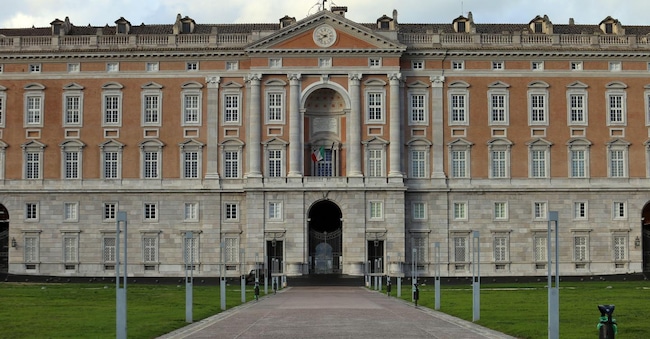
Piazza Carlo di Borbone is a strategic space in the city of Caserta with a powerful historical, identity and landscape value, an open-air museum. Designed by Luigi Vanvitelli in the second half of the 18th century at the behest of King Charles III of Bourbon, a unicum with the Reggia, it is an integral part of the UNESCO World Heritage site.
Despite their unified design, the Piazza and Reggia have experienced different paths. The royal splendour has remained crystallised in theReggia, which over the years has become one of Italy's most important cultural attractions. The Piazza has mainly been used as a gateway to the Reggia and, in recent years, for temporary events and initiatives.
Both owned by the State, management fragmentation has made it more difficult to build a shared strategy of valorisation and care between all the institutions involved. As a result, the City has not been able to enjoy the full potential of the Piazza. Today, a perfect synergy of intent is created to recover ties with the territory.
The Special Project Agreement Caserta, signed by the Agenzia del demanio, which promoted it, the Municipality of Caserta, the Royal Palace of Caserta, and the Superintendency, was born with the logic of sharing that is proper to the City Plan of public properties, a tool of the Agency of State Property for integrated planning with institutions and the territory.
The Reggia di Caserta will be the manager of the Piazza. This is a solution that is consistent with the unitary nature of the Vanvitellian project, effective because the Reggia Institution has given great proof of its managerial capacity, as an engine of development for Caserta, Campania and the Country, and functional for the activation of a project for the redevelopment of the Piazza in the monumental complex and for the regeneration of the City. After all, this is the value of the State's heritage: memory, identity and infrastructure of the future, this is the task of the Institutions that, with ethical responsibility, are active in its care, in order to respond to the community.

