Surveys

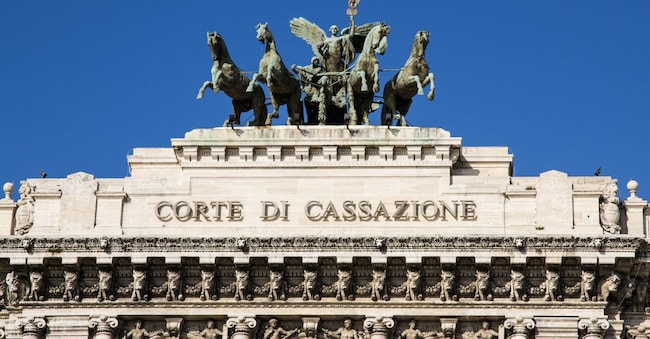
Migrants, the Court of Cassation has doubts about the constitutionality of the Italy-Albania agreement

Highlighted numerous critical aspects of the agreement, also explaining that 'the doctrine has expressed numerous doubts of compatibility with the Constitution and international law'.

by Rome Editorial Staff

4' min read

4' min read

A new lunge by the Court of Cassation against a government measure. After the criticisms expressed on the security decree, come the 'doubts of constitutionality' expressed by the office of the Supreme and the role (the same one that had criticised the security text) to the memorandum of understanding signed with Albania. In a voluminous report, the Supreme Court highlights numerous critical aspects of the agreement, also explaining that 'doctrine has expressed numerous doubts of compatibility with the Constitution and International Law, dwelling specifically on the relationship between the Protocol and EU law'. In the report drafted by the office of the supreme and role - which the Manifesto writes about today - the Supreme Court analyses the protocol, highlighting its critical aspects not only with the Constitution, but also with international and European Union law.

Anm: respect the role of the Supreme Court

A stance that together with the one on the security decree inevitably rekindles tension between the judiciary and the executive. One of the tasks of the office of the Supreme Court - the ANM recalls, however - "is precisely that of drawing up reports on new legislation, also highlighting any critical issues from the point of view of constitutional soundness", The National Association of Magistrates therefore calls for "respect in the democratic confrontation between the institutions of the State".

Loading...

Possible violations of constitutional rights

.

In the paragraph dedicated to the relationship between the Italy-Albania protocol and the Constitution, the report of the Supreme Court's supreme court office highlights numerous possible violations of constitutional rights, from the right to health to the right to defence. The agreement, for example," writes the Supreme Court, "fails to precisely identify the category of people to whom the agreement refers and by limiting itself to identifying them as 'migrants' ... generates an overall disparity of treatment between foreigners to be brought to Italy and 'migrants' to be transferred to Albania.

The obstacles to the right to asylum

.

According to the Supreme Court, then, the agreement would be an obstacle to the right to asylum by lacking an "analytical discipline of the procedural aspects". Indications that would be necessary - according to the judges - to neutralise "the legal unevenness resulting from the extraterritoriality, ensuring equal guarantees to migrants brought to Albanian sites compared to migrants on Italian territory". It was also observed that, according to the Protocol, "detention is no longer envisaged as the extrema ratio, as provided by the European discipline" but constitutes "the only alternative indicated by the legislator, in violation of the guarantees protecting personal freedom".

A further critical issue 'has been identified in the material impossibility, in the case of detention abroad, of releasing the individual, once the effects of the detention order have ceased. According to the protocol, in fact, the foreigner cannot be released in Albania and must be brought back to Italy, with the consequence that, considering the technical time required for the transfer on a ship or by air, it seems extremely likely that the foreigner will be detained sine titulo for several hours, or even several days".

The right to defence and health

.

With regard to the right of defence, the Court emphasised 'how the procedures for the exercise of the right of defence of foreigners detained in Albania are not governed by legislative provisions, but are entrusted to the discretion of the 'Italian person in charge of the centre''. Finally, it was observed that the Protocol - "in establishing that 'in case of health needs which the Italian authorities cannot meet ... the Albanian authorities shall cooperate with the Italian authorities in charge of the same facilities in order to ensure the indispensable and unavoidable medical care to the migrants detained there' - may result in serious prejudice to the right to health of 'migrants', protected by Article 32 of the Constitution, given that the level of Albanian health care is not comparable with the Italian one".

The doubts of the Supreme Court on the security decree


Only two days ago, it was the security decree that ended up in the crosshairs of the Supreme Court, which, in a 129-page report, had found critical aspects of 'method' and 'merit'. According to the Supreme Court, the decree 'reproduces almost verbatim' the content of the bill that the Chamber of Deputies, 'after a wide-ranging debate in the Assembly, had approved at first reading on 18 September 2024' and then forwarded to the Senate. The requirements of 'necessity and urgency' would therefore be lacking. The report recalls that the Constitutional Court has repeatedly stated that recourse to the decree-law cannot be based on an 'apodictic statement of the existence of the reasons of necessity and urgency'.

Added to this is the 'extreme lack of homogeneity of the contents' of the text. As for the provisions that 'determine the sanctioning treatment', intended to affect personal freedom, 'they must be considered susceptible to review' by the Court for 'any defects of manifest unreasonableness or violation of the principle of proportionality, since the risk of imposing 'a sanction not proportionate to the actual seriousness of the fact' must be avoided. On the merits, several problematic profiles are reported, such as in the case of aggravating circumstances for offences committed in the immediate vicinity of railway and metro stations or inside convoys carrying passengers, and for the new offence of road blocking. Doubts also exist on the provisions concerning mother and hemp convicts.

Majority criticism

.

The report prompted various reactions, starting with Justice Minister Carlo Nordio, who declared himself 'incredulous'. "I have given a mandate to the ministry's Cabinet Office to acquire the report of the Massimario office and to find out its ordinary disclosure regime," he adds. Also critical is the president of Forza Italia senators Maurizio Gasparri, who believes it is an 'invasion of the field'. 'While justice is being reformed, the Supreme Court gives us one more motivation to go in the direction of changing the rules,' Gasparri thunders, adding that the Court 'should help the Italian people to be more protected and safer. Instead, it should not sow doubts. They have produced 130 useless pages that respond more to a political impulse of the togato world than to an interpretation of the law. This encroachment by the Supreme Court is yet another provocation'. The president of the PDP senators, Francesco Boccia, considers those of the right 'serious remarks' and invites it to stop. While according to the 5 Star representatives in the Constitutional Affairs commissions, it is 'a very harsh indictment of the Security Decree'.

Copyright reserved ©

Brand connect

Loading...

Newsletter

Notizie e approfondimenti sugli avvenimenti politici, economici e finanziari.

Iscriviti