
Security Decree, roadblocks not punished if inconvenience is reduced
The Supreme Court's report on the new penal measures. At risk of unconstitutionality the cover for 007s at terrorist summits

3' min read
3' min read
From roadblocks to restrictive measures for mothers and pregnant women, from aggravating circumstances to protect the police to undercover actions of secret agents. The Supreme Court of Cassation has now intervened on the security decree, with a 130-page report by the Office of the Supreme Court, which is anything but merely compilative on the numerous novelties of substantive and procedural criminal law introduced since 12 April, the date on which the provisions came into force and which were then fully confirmed during conversion.
Partly admittedly in a plush manner, ascribing the critical issues to the analysis of doctrine rather than to the opinion of the Superior Council of the Judiciary or to the very first requests to raise a question of constitutional legitimacy, but partly also intervening by assuming the authorship of the doubts, the Court reviews the contents of one of the most controversial measures of this part of the legislature.
Roadblocks
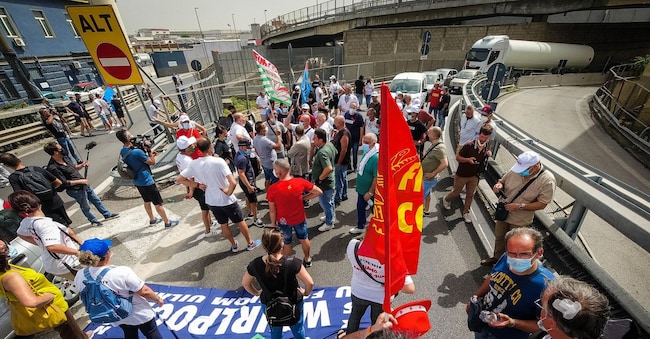
.Beginning with an absolute novelty, just a few days ago again at the centre of controversy on the occasion of the metalworkers' strike, such as the absolute ban, sanctioned on a penal level and no longer only on an administrative level, of proceeding with road or rail blockades as an expression of dissent, protest or form of union struggle.
The Supreme Court then observes first of all that the conduct must be suitable for preventing circulation on ordinary roads or railways. One must ask oneself," continues the report of the court of first instance, "whether, in order to realise the described case, a disturbance of the circulation such as to block it for an appreciable length of time must be necessary, or may also be sufficient conduct capable of merely making the passage of motor vehicles or trains more difficult.
It could be the case of a protest demonstration that slows down traffic considerably, without impeding the passage of vehicles, creating significant slowdowns or traffic jams; or, a single person standing in the middle of a road, forcing road users to slow down or even stop and thus manoeuvre to overcome the obstacle.


