
Castagna: 'BancoBpm is worth over 12 billion. Risk stopped at least until 2026'
The bank's CEO: 'Mps? There are no conditions. We want to continue to grow alone, through agreements with banks in the area or by acquiring networks of promoters"
by Luca Davi
5' min read
5' min read
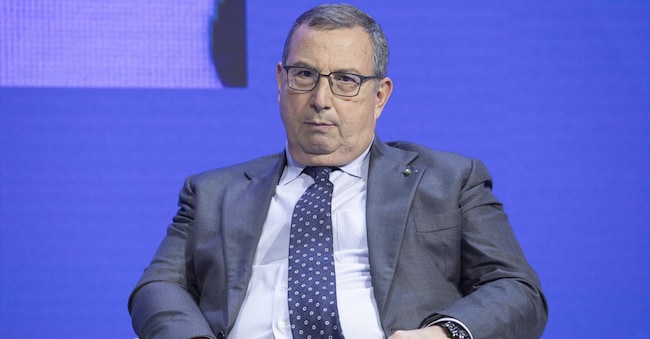
BancoBpm's prospects? "Continuing to grow on our own, perhaps by entering into agreements with local banks or acquiring networks of promoters to ground the potential of the product factories". Mps? 'The conditions are not there'. The banking risiko in Italy? 'It will stand still for at least 18-24 months'. Returning from an international road show, BancoBpm CEO Giuseppe Castagna reflects on the growth directions (and challenges) that await his bank. But at the same time, from his headquarters in Piazza Meda, in this interview with Il Sole 24Ore, the Neapolitan banker reflects on the outlook for the Italian economy and, above all, for the domestic banking sector. Which, contrary to some expectations, will not change its 'set-up', at least in the short term, says the manager.
Let's start with the context: the first quarter was a very good start for BancoBpm. However, the ECB is expected to start cutting rates in June. Is the peak in interest margin behind us? .
I wouldn't say that. On the interest margin we still have room for growth and we expect 2024 to be better than 2023. In 2025 and 2026 there will be a decline, and that is inevitable, but we have ample opportunity to offset the decline in interest income with fees. The trajectories of our business plan to 2026 are proving to be correct.
The potential problem of impaired credit remains for everyone. What signals do you have from the credit world, between stage 2 and secured credits?
Very comforting also thanks to the excellent quality of entrepreneurship in our territories. Today, the quality of credit is much better than in the past. There has been, it is true, a slowdown in disbursements that has made us project a 1% growth budget in loans over the next few years, compared to 3-4% in the past. Then we are much more selective, so there is a natural improvement in the quality of borrowers. In addition, we have a strong focus on monitoring to prevent possible deterioration.


