
Batteries, Catl pulls away from Byd: Chinese big players go head-to-head in charging
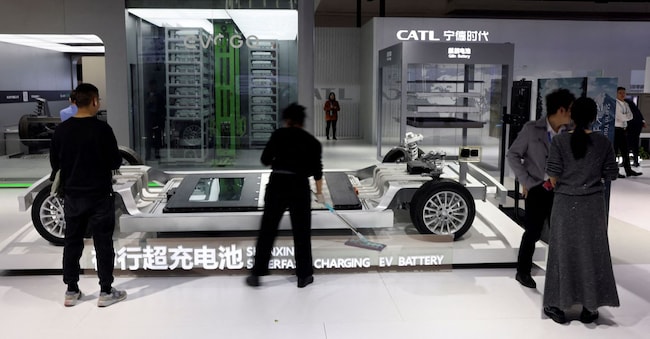
The new Shenxing fast-charger allows a range of 520 kilometres with just five minutes of charging, and goes from zero to 80 per cent capacity in just 15 minutes

3' min read
3' min read
Chinese giant Contemporary Amperex Technology Co. Ltd. (Catl), a global leader in the production of batteries for electric vehicles, unveiled the second generation of its Shenxing ultra-fast-charging battery in Shanghai, along with a host of new technology solutions. Catl intends to carry out an IPO in Hong Kong, aiming to raise USD 5 billion. The application was accepted on 10 April.
Meanwhile, during Tech Day, the chief technology officer, Gao Huan, illustrated the extraordinary capabilities of the new Shenxing: with just five minutes of charging, the range reaches 520 kilometres, while the battery can go from zero to 80 per cent of its capacity in just 15 minutes, even in adverse weather conditions. CATL has announced that more than 67 new electric vehicle models will adopt this technology by the end of the year.
Competition in the sector is fierce: just a month ago, BYD also unveiled its superfast charging technology, capable of providing 400 kilometres of range in just five minutes, thanks to peak power of 1,000 kW. This race for innovation among Chinese giants is giving an unprecedented acceleration to the development of fast charging. At the moment, the Western biggies can only chase.
At the same event, the company from Ningde (Fujian city, 900 km north of Hong Kong) also unveiled Naxtra, a new brand of sodium-ion batteries, which will enter the mass production phase from December. The new Naxtra battery offers, according to its manufacturer, an energy density close to the performance of lithium iron phosphate batteries. Robin Zeng, the billionaire founder and chairman of CATL (founded in 2011), emphasised that this new technology could come to replace up to half of the Lfp battery market, which is today largely dominated by CATL.
According to several experts, in addition to the economic advantage of the abundance of sodium, these cheaper batteries could significantly reduce the risk of fires in electric vehicles. This solution, tested under extreme conditions, also demonstrated zero power degradation at temperatures of -40°C, and could guarantee a range of up to 500 kilometres for electric vehicles.


