Government

From visits on Sundays to sanctions and bonuses, Cdm OKs rules to unblock waiting lists. Meloni on migrants: "Irregularities with the flows decree, complaint to the Antimafia".

The Prime Minister holds a briefing in the Cdm on the entry flows of foreigners for work reasons

by Redaction Rome

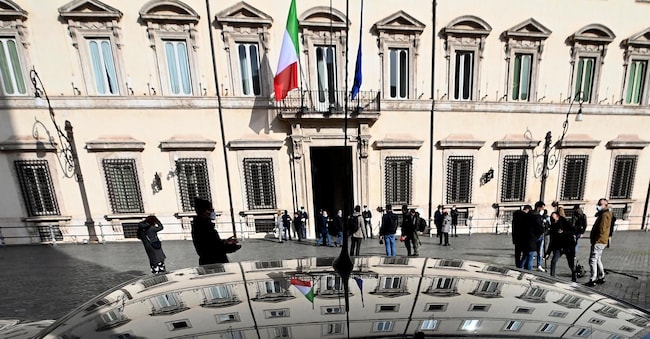
La facciata di Palazzo Chigi durante il Consiglio dei Ministri sulla proroga dello stato di emergenza Covid, Roma, 22 febbraio 2021. ANSA/RICCARDO ANTIMIANI

9' min read

9' min read

The Council of Ministers gave the go-ahead to a decree with urgent measures to reduce waiting list times and to a bill with guarantee measures for healthcare services. Doubts by the regions on funds. Meloni gave a briefing in the Cdm on the entry flows of foreigners for work reasons. In order to implement the Rome-Tirana agreement on migrants, the Viminale indicated the spending conditions: a maximum of 13.5 million euro to hire a ship for 90 days to transport people rescued at sea to Albania.

Exams over the weekend, in 7 articles from waiting lists

From a single regional or infra-regional Cup, the monitoring of waiting lists entrusted to Agenas, a general inspectorate to control healthcare, to the introduction of visits and examinations on Saturdays and Sundays. These are the main measures contained in the decree law against waiting lists, according to a seven-article draft of the measure. Article 1 of the draft decree-law establishes at Agenas a national platform for waiting lists with the aim of having for the first time a punctual and real monitoring of the time taken to provide healthcare services'. The platform will dialogue with the regional waiting list platforms (interoperability). In addition, if 'Agenas finds inefficiencies or anomalies in the control of the booking agendas, it can proceed with audits against healthcare companies. The aim is to overcome any difficulties encountered together. "This regulation has a positive impact on the regions because it helps to better manage waiting lists.

Loading...

The Single Regional Cup

.

Article 3 defines 'the obligation of a single regional or infra-regional Cup with all the services available from the public and private contracted providers, and it provides for the nullity of the contract with accredited private providers that do not include the services in the public Cups (it must be connected and interoperable); for those who are authorised but not yet accredited, the connection with the public Cups becomes a requirement for the granting of institutional accreditation (bonus)'. In addition, if the services are not provided within the timeframe envisaged by the priority classes in force, the companies guarantee the citizen the service in intramoenia or through the accredited private sector. The modalities are defined by a decree of the Minister of Health to be adopted within 60 days from the entry into force of the law converting the decree. It is forbidden for health authorities and hospitals to suspend or close booking activities (agendas). The Cup must activate a recall system to avoid the phenomenon of services booked but not carried out (a phenomenon that lengthens waiting lists and floods agendas). We are talking about 20% of cases. Citizens who do not perform the booked examination or test without prior notice will still have to pay the co-pay fee. Article 4 is dedicated to visits and diagnostic examinations also on Saturdays and Sundays, extending the time slot. To avoid abuses of intramoenia activity, to the detriment of institutional activity aimed at reducing waiting lists, the hours of free professional activity must not exceed the ordinary hours in each hospital, it states.

The personnel expenditure ceiling

.

As far as the ceiling on personnel expenditure is concerned, (Article 5), it is reported that the rule is still under review with the Ministry of Finance. The text states that it raises 'personnel spending by a total amount equal to 15 per cent of the increase in the health fund compared to the previous year. From 2025 it will be abolished and replaced by another mechanism that is not binding but linked to the planning of the companies on the basis of a standard requirement for healthcare personnel'. Article 6 deals with the purchase of services from private contracted providers, and here too the checks with the Mef are pending. 'It increases for the years 2025 and 2026 the share of the national health fund that the regions can use for the purchase of services from private contracted providers compared to what was already provided for by the 2024 budget law,' it reads. Furthermore, Article 7 'establishes a national artificial intelligence infrastructure for telemedicine'.

In bill on waiting lists 20% increase in hourly rates for doctors

A national register of citizens' reports on inefficiencies; a 20 per cent increase in hourly rates for staff to provide additional services against waiting lists with a 15 per cent tax cut; and EUR 100 million to make use of in-house outpatient specialists to make up for waiting lists. These are some of the measures contained in the draft bill consisting of 14 articles to complete the decree. No cuts in services, but priority classes will be indicated by the doctor when requesting visits or examinations.

Draft bill on waiting lists, sanctions for asl directors arrive

The regions will assign to the general directors of healthcare companies annual targets on the reduction of waiting lists. Failure to achieve them may result in suspension from the national list of directors for a period of 12 months. Residents will also be called upon to reduce waiting lists. The draft bill provides for greater involvement of young doctors with appointments of up to 10 hours per week. The measures to combat the phenomenon of tokenists are confirmed: possible recruitment with self-employment contracts.

Schillaci: end of personal expenditure ceiling from 1 January

"As of 1 January 2025, the spending ceiling for health personnel will be abolished," announced Health Minister Orazio Schillaci, presenting the anti-waiting-list decree approved by the Prime Minister's Office at a press conference at Palazzo Chigi. He then extended the hours for diagnostic and specialist visits on Saturdays and Sundays. "It is no longer acceptable that in so many realities there are closed lists, they must always remain open, and individual professionals must not perform more services in intramoenia than in the public sector: sample monitoring has dramatically shown that as many as 9 services are performed in the public sector compared to 90 in intramoenia,' Schillaci continued. "The measures, the Dl and the Ddl, approved today in the Cdm are the result of discussions with the regions, the professional Associations, and the citizens' associations, who are the real dissatisfied with the waiting lists," continued the minister.

"Visit booking to be confirmed 2 days in advance"

.

"Patients will be reminded two working days prior to the service of the appointment and will be asked to confirm or cancel the booking, also by remote mode," explained Schillaci. "This will certainly affect, above all, the management of chronic degenerative diseases, and oncological pathologies. And it will also take into account what happens in therapeutic care pathways with dedicated pathways'.

Migrants, Meloni: 60% fewer illegal arrivals

The Council of Ministers also addressed the issue of migration flows. "The commitment of the entire government" on irregular immigration "has so far made it possible to reduce illegal arrivals by 60% compared to the same period last year. A result made possible above all thanks to the cooperation with North African countries, Tunisia and Libya in the lead'. This is what Prime Minister Giorgia Meloni highlighted during a briefing on immigration during the executive meeting at Palazzo Chigi. "A very recent step forward," Meloni stressed, "is the work aimed at establishing a Tunisian SAR area: tomorrow the Italo-Tunisian Joint Working Group," she recalled, "will meet here in Rome to assist the maritime authorities of that nation in drawing up the relevant plan. The common prospect is to formalise the existence of a maritime area that provides for the intervention of Tunisian ships to carry out rescue operations and bring migrants back to the nearest safe port, i.e. Tunisia".

Migrants: Meloni, alarming data from flow monitoring

"After the formation of the government we had to quickly define the flows of legal entry into Italy", then "we issued the Dpcm implementing the planning for the three-year period 2023-2025" and "set up a technical table to monitor its application. Now alarming data emerge from that monitoring'. 'In some regions, above all Campania,' the Prime Minister stressed, 'we registered a number of applications for work permits for non-EU workers, during the click day, totally disproportionate to the number of potential employers, whether individuals or companies. On the seasonal work permits, i.e. for work in agriculture or tourism-hotels,' Meloni continued, 'in 2023, out of a total of 282,000 applications, 157,000 come from Campania, while 20,000 come from Puglia. Only, for example, in the agricultural sector, Puglia has about 12 per cent of Italian farms and Campania only 6 per cent. An even more worrying fact,' he added, 'is that in the face of the exorbitant number of nulla osta applications, only a very small percentage of the foreigners who have obtained work visas under the 'Decreto Flussi' have actually signed a work contract. In Campania, less than 3% of those who enter with a nulla osta then sign a work contract. A significant discrepancy between the number of entries into Italy for work reasons and the work contracts that are then actually signed,' he observed, 'is however a characteristic that many Italian regions share, albeit with less frightening numbers. The data therefore show that: 1. in some territories the number of applications is enormous compared to the absorption capacity of the local productive fabric, and therefore it is easy to see. 2. in almost all Italian regions there is a significant gap between those who enter for work purposes and those who actually then sign a work contract'.

Meloni: complaint to Anti-Mafia Prosecutor's Office on migrant flows

"This morning I went to the National Anti-Mafia and Anti-Terrorism Prosecutor Giovanni Melillo to deliver a report on the entry flows of foreign workers into Italy in recent years using the so-called 'Decreti Flussi'," the premier announced, pointing out that "regular flows of immigrants for work reasons are being used as a further channel of irregular immigration". If, therefore, Meloni pointed out, the regular flows of immigrants for work reasons are being used as a further channel of irregular immigration, 'it means that, reasonably, organised crime has infiltrated the management of applications and the 'flow decrees' have been used as a mechanism to allow access to Italy, by a formally legal and risk-free route, to people who would not have been entitled to it, probably against payment of sums of money (according to some sources, up to 15,000 euro per 'file'). The hypothesis of criminal infiltration,' he then pointed out, 'seems to be corroborated by the fact that the vast majority of foreigners who have entered Italy in recent years using the 'Flows Decree' come from a single state, Bangladesh, where the diplomatic authorities speak of the phenomena of buying and selling visas for work purposes. The Bengalis, I recall, are also the first nationality of illegal immigration in the first five months of this year, and this presupposes a strong connection between criminal organisations operating in the country of departure and criminal organisations operating in the country of arrival,' he said. "It is clear that if - as I imagine - on the one hand the judicial authority will open one or more investigations based on the elements provided and will follow up with the necessary investigation work for the past, on the other hand the solutions to stop this mechanism in the future are up to the government," the premier assured, adding that "the same technical working group that pulled out this data - which is coordinated by the Presidency of the Council - has hypothesised initiatives to be taken, both legislative and administrative" because "we are faced with a mechanism of fraud and circumvention of the dynamics of legal entry, with the heavy interference of organised crime, which we must stop and correct, just as we have done, and are doing, for the building super-bonus and the citizenship income". The aspects on which to intervene 'are those of the verification of applications for work permits, the click day mechanism, the definition of quotas, the strengthening of special entry channels, and more generally the collaboration with trade associations, in order to define labour needs'.

Meloni: tomorrow in Albania to verify realisation of centres

"Tomorrow (Wednesday, 5 June, ed.) with Minister Piantedosi we will go to Albania to verify, following the protocol signed in November with Prime Minister Edi Rama - to whom I renew the solidarity of the entire government for the attacks received - the state of implementation of the first reception centre in Shenjin and the permanence centre in Gjader," the premier added.

Migrants, Meloni: immediately after G7 measures in cdm

"We are working so that in one of the first Council of Ministers that we will hold after the G7 we will present, with the collaboration of all the competent ministries, a wide-ranging and detailed articulation to solve" the problem of illegal immigration and the frauds connected to it, also because of the infiltration of organised crime. This was announced again by Prime Minister Giorgia Meloni during the Council of Ministers meeting. "There will be a need for a dual intervention, regulatory and administrative," she explained, specifying that she wanted to "involve businesses and trade associations. I intend to promote a meeting with employers' organisations, because too often labour needs are expressed that are only partially reflected in the applications for work permits submitted in the click days. I think we need,' he added, 'more responsibility and a more serious investigation, understanding for example whether the associations have a system for monitoring applications on behalf of their members and make preliminary checks on them'.

Copyright reserved ©
Loading...

Brand connect

Loading...

Newsletter

Notizie e approfondimenti sugli avvenimenti politici, economici e finanziari.

Iscriviti