
CES Innovation Awards 2026, innovation accelerates between AI, robotics and digital health

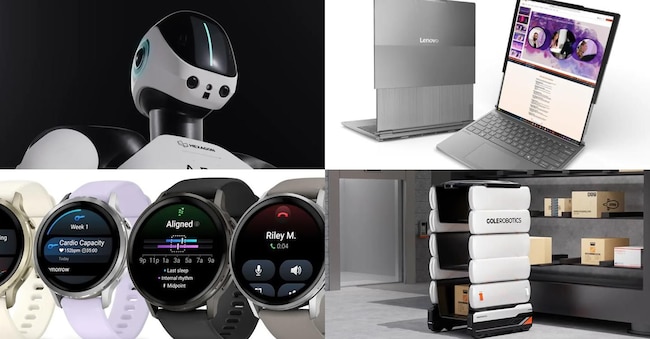
Technology is ready to take the stage in Las Vegas, with the 2026 edition of the Consumer Electronics Show, scheduled from 6 to 9 January. As per tradition, the eve of the show is an opportunity to sift through the features of the products that have won the CES Innovation Awards, which will be presented during a 'showcase' hosted in one of the gambling capital's most iconic locations, namely the Venetian Expo. the award winners from the jury set up by the Consumer Technology Association represent (as the protocol states) excellence in the design and engineering of tech devices, and this year a record has already been broken, that of the number of nominations, which has risen to over 3,600 for a total of 36 product categories. Five areas were introduced this year - EdTech, Enterprise Tech, Filmmaking & Distribution, Supply & Logistics and Travel & Tourism - and the winners (those with the highest score receive the 'Best of Innovation' designation) range from hardware to the world of mobility, from water sampling drones to fire-fighting robots. Artificial intelligence, as one can easily imagine, is a constant presence in the field of AI and robotics, arm in arm with the Digital Health and Sustainability & Energy divisions, is one of the areas that received the most nominations, underlining (this is one of the 'statements' of the CTA top management) the role of technology in building a smarter, more productive and inclusive future and how every company is a technology company.
Rockable PCs for business and humanoid robots for industrial spaces
Many well-known names have won an award (from Nvidia to Dreame, from HP to Msi Computer), including Lenovo, which was awarded in the Computer Hardware & Components category for its ThinkBook Plus Gen 6 Rollable, an artificial intelligence-powered roll-up display PC for professionals first presented as a concept two years ago and now in its final version ready to hit the market. Among the many robots receiving awards is AEON, from Swedish company Hexagon. AEON is a humanoid system developed to cope with labour shortages in industrial environments and to work safely alongside human workers and take on repetitive or dangerous tasks. Its design is based on psychological principles to encourage acceptance by people and to be perceived as a co-worker (or colleague) rather than a machine.
South Korea superstar with Samsung, LG and start-ups
Samsung is historically a very prominent brand at CES and this year the Korean company is once again among the protagonists of the Innovation Awards, placing visors (the Galazy XR), smartwatches, memories, foldable smartphones (the Galaxy Fold7) and the industry's first embedded security chip to integrate hardware-based post-quantum encryption, offering advanced protection against future threats arising from quantum computing-based applications among the award-winning products. The component (named S3SSE2A and a clear sign of the company's willingness to play as an all-round independent tech player) is designed to prevent the risk of breaches of sensitive personal and corporate information through technology that securely processes and stores data directly on the chip, using advanced cryptographic algorithms approved by the US National Institute of Standards and Technology (NIST). No less important in the economy of the Awards is the participation of LG Electronics, awarded in several categories for its 'smart life solutions' and winner of two Best of Innovation Awards (one of which went to the ava guardistico TV Signature Oled T). Also in Korean colours are the 14 companies that are part of the IFEZ, an acronym for Incheon Free Economic Zone, a free zone in the Asian country established in 2003 and already the protagonist in the past two editions of the CES Innovation Awards. As many as 17 honours went to the companies incubated at the Incheon Startup Park, including the 'Best of Innovation' in the Artificial Intelligence category for Deep Fusion AI, which presented a deep learning solution for autonomous driving based on 4D imaging radar technology. Among the most interesting companies were LBS tech and GoLe-Robotics. The former beat off competition in the Travel & Tourism category with 'MaaS-Bridge', an artificial intelligence-based last-mile information generation system that connects autonomous vehicle technology with transport and pedestrian paths; the latter was awarded in several categories for its intelligent robots for transporting materials and monitoring progress at construction sites, for managing lifts, and for last-mile delivery to premium housing estates
Smart robots and platforms to revolutionise people care
Well-being and digital health will be central themes at the four-day event in Las Vegas and the protagonists announced are smart wearable devices that monitor well-being in real time and AI-based tools that personalise treatment plans, under the banner of technology that puts health management directly in the hands of people and innovation that can be truly human-centred. Giving substance to this message emphasised by the CTA are 'inventions' such as Earflo, the first non-invasive medical device that treats negative pressure in the middle ear, the cause of ear infections in children from the age of two, offering a revolutionary alternative to tympanic tubes. Also dedicated to the little ones are Cosmo Robotics' exoskeletons, the world's first for walking on a flat surface with active ankle movement. Thanks to the two models, children from 2.5 to 12 years old with congenital or acquired neurological disorders can relearn the ability to walk or recover mobility after an injury through guided and natural movements. Clinical One Entry System, on the other hand, is an artificial intelligence-based contactless platform that transforms building entrances into real-time screening, prevention and response hubs, supporting hospital and clinic staff with automated workflows. Brain health is addressed by NeuroAnimation Therapy, a digital platform that combines neuroscience, motion capture and immersive gameplay/therapy to stimulate processing speed in executive functions and motor recovery. Finally, Garmin Venu 4 is a next-generation smartwatch that helps users better understand their bodies by monitoring their health status, lifestyle habits and sleep cycles, monitoring vital parameters 24 hours a day.

