
Ceuta: Spain levels new accusations at Italy: ‘Electoral considerations’
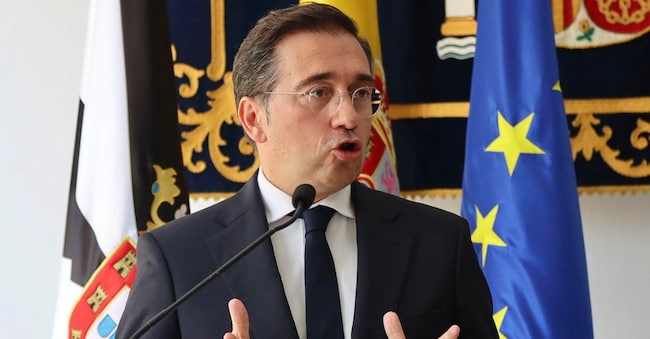
Spanish Foreign Minister Albares comments: “The Italian government has not shown the same solidarity as the vast majority of EU partners”

Key points
Madrid has levelled fresh accusations at Italia over the suspension of the Schengen Agreement. Spain claims that the Italian government’s stance following the Ceuta crisis “far from showing the solidarity demonstrated by the vast majority of EU partners”, was dictated by “self-serving interests and electoral considerations”. However, concerns are mounting over a possible new influx in the coming days. Spanish Foreign Minister Albares has warned: “Anyone entering illegally will be repatriated.” Brussels continues to mediate and assures: “The border controls between Italia and Spain are temporary; the situation will return to normal.”
Against this backdrop, following the mass influx into Ceuta of over 70,000 people from Morocco on 30 and 31 July, the Italian government decided to seal its borders by carrying out checks on ships and aircraft arriving from Spain, prompting a similar counter-measure from Madrid.
Italia is sticking to its hard line for now
Rome is maintaining its hard line for the time being, determined not to change its decision at least until mid-August. On Thursday 13 August, the Schengen Committee has summoned Interior Minister Matteo Piantedosi to a hearing at San Macuto, where he will reiterate the concerns that led the government to close the borders with Spain and to enter into a bitter diplomatic row with Madrid. However, as the Ministry of the Interior emphasises, this decision may be revoked once the threat has subsided.
The political divide between the two governments
Even if the suspension of the Schengen Agreement is lifted, it will take much longer to mend the rift between Rome and Madrid, which is marked by the profound ideological divide between the two governments – who are polar opposites – including on migration policy. Sánchez is convinced that Giorgia Meloni is exploiting the Ceuta crisis to counter internal divisions and stem the rise of Vannacci. Albares launched a blunt attack: ‘Italia’s attitude has not been one of solidarity and support, as has been the case with the overwhelming majority of European Union countries’, but rather a ‘probable response to partisan interests’ and ‘domestic electoral needs’. Far from there being an invasion of migrants in Spain, he pressed, Italia “records a higher number of irregular entries than Spain”, whilst secondary movements of irregular migrants from Spain to Italy are “minimal”, “below 1 per cent”, Albares added.

