
Champagne Experience kicks off in Bologna against the sales crisis
The eighth edition moves from Modena to the capital of Emilia: 7,000 visitors are expected to sample 700 labels. After the post-Covid boom and the price leap, falling sales (not only in Italy) for French bubbles

Key points
Champagne is still going through a difficult time, or at least settling down after the post-Covid boom.The year 2024 in Italy closed at -15% in volume and -12% in value after a 2023 that had already slowed down considerably and by now the number of bottles purchased is returning to the level of 2019 (while turnover is holding up thanks to the price increase of the past few years, estimated at an average of 35%).
A market in search of balance
.Already in pre-Covid the orientation of the Comité Champagne - the CIVC representing 16.300 vignerons, 90% of the vineyards, 390 maisons (covering more than two-thirds of the volumes), as well as 125 cooperatives - was to lower yields to sustain margins; a policy that has continued to the present day and that first contributed to the boom in quotations (partly because it was accompanied by a growth in demand and a climatically unfavourable vintage), while now it is helping to keep them from falling in the face of falling demand. We will probably have to wait until next year to see if the market is returning to equilibrium or if it has taken a really negative turn. The causes of the drop in consumption, however, are those that more generally afflict the entire world of wine, even if in other areas bubbles are often the exception: healthier diets, changing tastes of young people, declining purchasing power in the general economic downturn and the geopolitical context that certainly does not invite 'celebration'.
"The Italian market is following the same dynamics and problems as the European market," comments Luca Cuzziol, president of Excellence Sidi, a company grouping 21 wine distributors and importers, and organiser of Champagne Experience, which opens tomorrow at the Bologna Fair.
At the end of August - he continues - according to sales estimates (so these are not actual figures), there was a drop of about 9% in volume and a few points more in value. A sign that not only is less being bought, but that on average less is being spent on a bottle. "The high-end producers are suffering the most," explains Cuzziol, "as they register the greatest losses in value. But even the small ones, perhaps without a history behind them and arrived on the market after the boom, are struggling. Holding up better is instead the mid-range, in particular those proposing interesting labels closer to today's tastes, perhaps even containing prices. But these trends must be supported and told.
A fair for enthusiasts and professionals
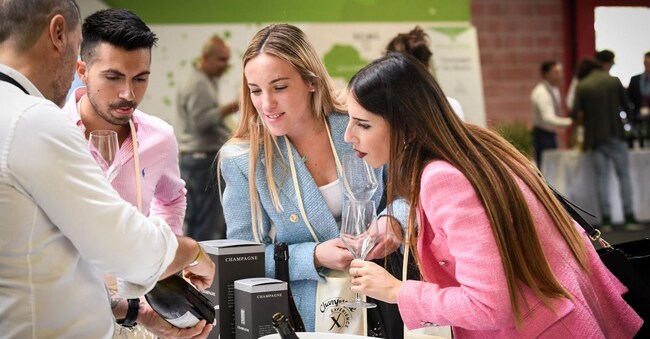
And this is the main aim of the event that this year (the eighth) hasmoved from Modena with the aim of exceeding the 6 thousand visitors of 2024 (pre-sales have risen by 20%, the organisers say).
There will be 145 producers present with 700 labels and a rich programme of tastings and master classes.
Economic trends aside, in fact,Italy remains an important market for Champagne, ranking fourth in value and fifth in volume. According to Comité Champagne figures, 8.4 million bottles were shipped to Italy in 2024 (out of a total of 271 million) for a production value of 235 million (far from the value generated by consumption) out of a global turnover of 5.8 billion.
"The objective of the Fair," emphasises Cuzziol, "is to bring a technical contribution that is accessible to both enthusiasts and insiders, also thanks to a rational division by production areas and by type of producer. We also offer hospitality to a selection of young operators to give them the opportunity to get to know all the nuances of champagne in greater depth,' he says. In addition, there is also an off-show exhibition with content and initiatives in the run-up to Champagne Experience, designed for the restaurant, hotel and high-end catering industry. Fundamental to sales is in fact the contribution of the sommeliers of the restaurants, which remain the main outlet for Champagne in Italy, but are also often 'under indictment' for the overpriced bottles (moreover, not only for Champagne).


