
Time change, Spanish Prime Minister Sanchez: 'Moving the hands twice a year no longer makes sense'
As Europe is about to return to standard time, Madrid brings the issue back to the European Council. The abolition had already been voted by the European Parliament in 2019 but then did not come into force

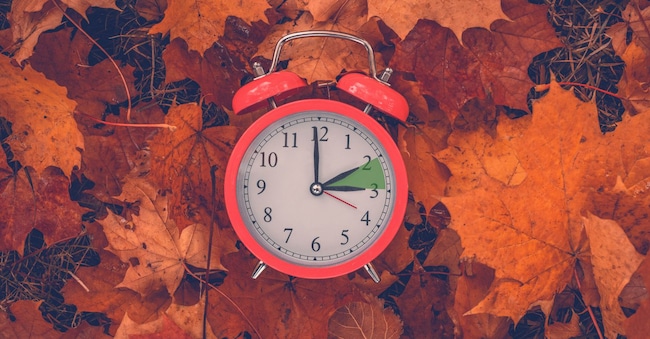
As every year, this weekend sees the return of the time change. On the night of Saturday 25 to Sunday 26 October, at 3 a.m., the hands will be turned back one hour, marking the transition from daylight saving time to solar time.
Just a few days before the change, Spanish Prime Minister Pedro Sánchez has relaunched the proposal to abolish the six-monthly change altogether. In a video posted on X, Sánchez made his position clear: "As you know, this week we are changing the time again. And frankly, it makes no sense
The Prime Minister explained that Spain intends to officially ask the European Union to eliminate the annual double exchange rate, with the aim of ending the practice by 2026.
The topic has been placed on the agenda of the EU Energy Council. The aim is to reopen the debate in view of the expiry of the current EU timetable, which sets the dates for the changeover for the period 2022-2026.
Sánchez recalled that the European Parliament had already voted in 2019 to abolish the time change, but the measure never came into force due to a lack of agreement between the member states. Portugal and Greece strongly opposed it and Italy also preferred to maintain the status quo.

