
Standard time: between Saturday 25 and Sunday 26 October, hands back one hour
On Saturday 25 and Sunday 26 October, Standard Time returns: at 3 a.m., the clock will turn back one hour

Key points
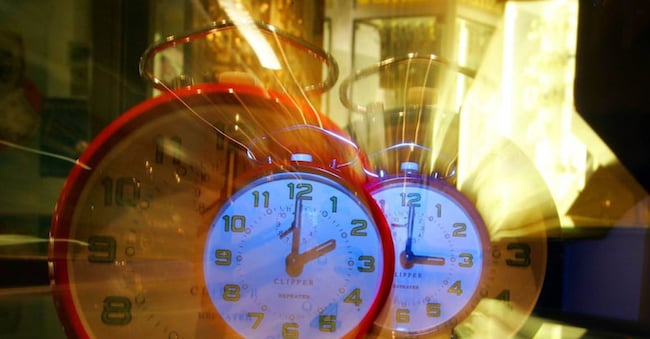
Goodbye daylight saving time, back to solar time. On the night betweenSaturday 25 and Sunday 26 October 2025, at 3:00 a.m., the hands of the clock will have to be moved back one hour. The main purpose of this solution is to make better use of the hours of daylight in the late afternoon and evening, thus reducing the need for artificial lighting and promoting energy savings.
How it works
In primavera (nell’ultima domenica di marzo), le lancette vengono spostate avanti di un’ora. Il che implica perdere un’ora di sonno, ma guadagnare un’ora di luce in più alla sera. In autunno (nell’ultima domenica di ottobre), torna l’ora solare: le lancette vengono spostate indietro di un’ora. la conseguenza è che si dorme un’ora in più e le ore di luce si concentrano maggiormente al mattino. Ogni anno viene messo in evidenza il fatto che l’adozione dell’ora legale tutto l’anno eviterebbe lo “stress da cambiamento” legato alla luce, il principale sincronizzatore naturale di tutti i processi dell’organismo, che si manifesta nelle persone con stanchezza, insonnia, irritabilità, mal di testa, sbalzi d’umore, difficoltà a concentrarsi e a mantenere alta l’attenzione. Una sorta di mini-jet lag. L’adozione dell’ora legale tutto l’anno
A bit of history
If the invention of daylight saving time dates back to the 18th century and bears the signature of Benjamin Franklin, in Italy daylight saving time was instituted in 1916 during the First World War precisely in order to save energy until 1920, returning during the Second World War between 1940 and 1948. After an initial switch in 1965, it was in 1966 that it was officially introduced in our country for the months between May and September. In 1980, an agreement between 14 countries, including Italy, brought forward the change, which has since been brought forward to coincide with Easter. The double change of time during the year, from daylight saving time to solar time, could however have repercussions on the sleep-wake cycle and has long been the cause of debate not only in Italy but also in the European Union. At the centre of it all is the difficulty of combining economic savings with the social and personal habits of each of us.
The debate on elimination (at EU level)
In 2018, the Jean-Claude Juncker-led European Commission had presented a proposal for a directive to stop the time change, justifying it with the overwhelming results of a public consultation, which had a record 4.6 million responses, 84% of which were in favour of stopping the six-monthly time changes. The Commission had also presented studies on the psycho-physical health damage caused by the time change and emphasised the lack of relevance of summer time in terms of energy savings. However, the proposal foundered, because no final decision has been taken on it. In fact, it requires the green light of both the Council and the European Parliament to be adopted.
Sima: 2.2 billion bill savings in 10 years, 100 million in 2025 alone
La Società italiana di medicina ambientale (Sima) pone l’accento sul fatto che il passaggio da ora legale a ora solare e viceversa non è indolore, ma produce effetti negativi su salute, energia, bollette, ambiente e tasche dei cittadini, al punto che già oltre 350mila italiani hanno firmato la petizione online per rendere permanente l’ora legale tutto l’anno. Assieme a Consumerismo No Profit Sima ha avviato una raccolta firme per chiedere al Governo l’ora legale permanente. Sul fronte energetico – spiega Sima - l’adozione dell’ora legale ha consentito in 10 anni, dal 2004 al 2024, un risparmio pari a 11,7 miliardi di kWh che, in termini economici, equivalgono ad una minore spesa sulle bollette dei cittadini per circa 2,2 miliardi di euro, cui si aggiungono circa 100 milioni di euro e 330 milioni di kWh di risparmio nei sette mesi di adozione dell’ora legale nel 2025 (dati Terna). Ciò equivale a un taglio alle emissioni climalteranti tra le 160.000 e le 200.000 tonnella

