
Chernobyl, Greenpeace raises the alarm: possible collapse of the 'sarcophagus'
The report: the first cover built in 1986, immediately after the accident, to try to contain the reactor and radioactive materials is at risk
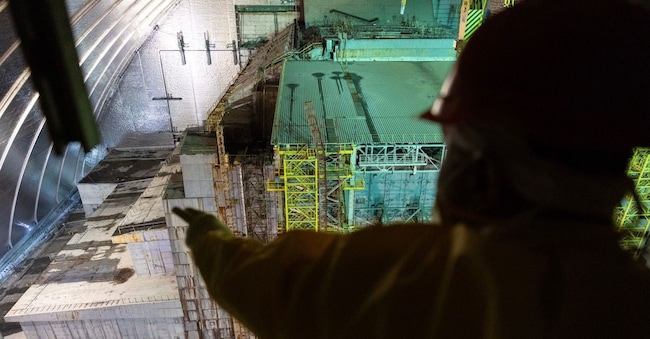
An act of war. No one, before the Russian invasion of Ukraine in February 2022, would probably have dared to think of a deliberate attack on the place that has become a symbol of the tragedies that occur when man loses control of what he has created. Yet, on 14 February 2025, a Russian-made Geran-2 drone hit the steel arch built to contain the radioactivity haunting the fourth reactor of the Chernobyl nuclear power plant, which exploded on 26 April 1986. The war broke this taboo too.
As we approach the 40th anniversary of the Chernobyl disaster, a report prepared for Greenpeace raises the alarm: the damage caused by the drone, which managed to pierce both the outer and inner structure of the shield - called the New Safe Confinement - could cause a collapse of the 'sarcophagus', the first cover hastily constructed in 1986, immediately after the accident, to try to contain the reactor and the radioactive materials released by the explosion.
The drone attack
Moscow denies having targeted the Ukrainian power plant with a drone equipped with a high-explosive warhead: but British military analysts quoted in the Greenpeace report are almost certain of a deliberate act by the Russian armed forces, on a night when 133 drones were launched over Ukraine. The gash caused on the steel arch is about 15 square metres. It is a breach of a cover designed to last at least a hundred years, intended to create a safe environment around the plant in which to stabilise the reactor, dismantle the 'sarcophagus' and dispose of the radioactive elements still present: the nuclear fuel and the 'elephant's foot' formed by the melting materials, the radioactive dust, and the ruins of the structure. A work of decades, of which the steel arch, concluded in 2016, had only marked the beginning.
A temporary repair applied on the outer structure of the steel arch, Greenpeace writes, was not enough to restore the functionality of the New Safe Confinement. In particular, the authors of the report point out the risk of a collapse of the 'sarcophagus' inside the arch, with serious consequences including radioactivity problems inside, additional costs, and radiation doses to which workers would be exposed. "A heavy consequence of the drone attack," writes Greenpeace, "is the loss of control over humidity, which in turn increases the risk of corrosion of steel components. The New Safe Confinement was designed to last 100 years, but in a low humidity environment'.
The Bers programme
The construction of the shield had been a project organised and financed by the EBRD, the European Bank for Reconstruction and Development in Europe, together with 45 countries. And now it is the same EBRD that has restarted a programme aimed at international donors to secure funding of EUR 500 million and re-establish security around Chernobyl. But now the biggest obstacle - concludes the Greenpeace report - is the war. 'The Chernobyl plant is on the front line and as long as the war continues, it is unlikely that construction activities will start internationally'. Despite the risk of a release of radioactivity, especially in the event of a collapse of the 'sarcophagus'.


