The study

Child material deprivation: more than one in 10 children in Europe is affected

This is the finding of the Eurostat report. These are the under-18s who do not have at least 3 of the items or goods necessary for an acceptable life

by Davide Madeddu (Il Sole 24 Ore) and Lena Kyriakidi (EfSyn, Greece)

6' min read

6' min read

In EU countries, in 2024, 13.6 per cent of children under the age of 16 faced material deprivation: they did not receive at least 3 of the 17 items - goods or services - considered necessary or desirable by people for 'an acceptable standard of living'. These items are part of everyday life and range from clothing to food to other factors such as services and socialising.

From clothes to food, what's missing

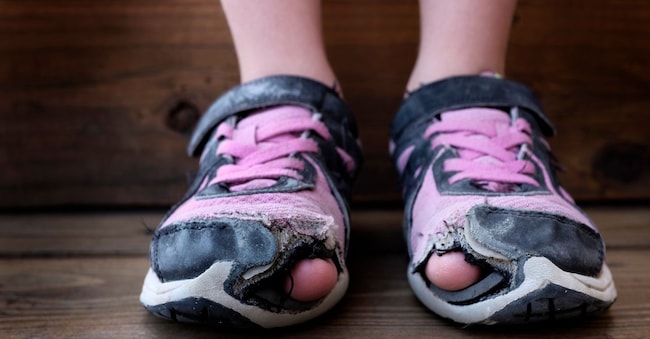
In the case of children, this means the possibility of new (not second-hand) clothes, two pairs of well-fitting shoes (one pair for all seasons). And then age-appropriate books at home, leisure equipment and indoor games. No less important is the diet, with a meal with meat, chicken or fish or a vegetarian equivalent at least once a day as well as fruit and vegetables. For a peaceful growth there are also celebrations on special occasions or the possibility of inviting friends over to eat from time to time, as well as a holiday away from home once a year. In addition to these elements, there are also those that affect families, such as replacing worn-out furniture, being able to meet overdue payments, or even having a 'properly' heated house or a car for family use. Internet connection is not irrelevant.

Loading...

Priviations for 13 children out of 100

.

Within this framework, according to the Eurostat report, 13.6 out of every 100 children had to cope with various deprivations on the lists.

The highest rates were recorded in Greece (33.6%), Romania (31.8%) and Bulgaria (30.4%). In contrast, the lowest rates were recorded in Croatia (2.7%), Slovenia (3.8%) and Sweden (5.6%).

Italy is in the middle of the ranking, with a percentage of 14.9%, and slightly above the European average.

"What we are reading is a sign that something is not working. Since 2021 we have been highlighting the problems that affect this age group and their families,' says Michele Carrus, president of Federconsumatori, the organisation that defends the rights of consumers and individuals. 'Acts such as and abolition of the citizenship income or other policies such as amnesties certainly do not help, since it is the poorest families and, in turn, children who pay the consequences.

Parental education is essential

.

One of the elements that has an impact on children's material deprivation, as the Eurostat report shows, is parental education. "Only 5.6 per cent of children whose parents had tertiary education faced material deprivation, compared to 39.1 per cent of children whose parents had at most lower secondary education," the report reads. The highest rates of children of parents with lower education who faced material deprivation were recorded in Slovakia (88.6 per cent), Bulgaria (84.1 per cent) and Greece (77.2 per cent). In contrast, the lowest rates were recorded in Poland (9.1%), Luxembourg (9.2%) and Sweden (12.2%)'.

Among households where parents had tertiary education, the highest rates of child material deprivation were recorded in Greece (17.6%), Spain (11.6%) and Bulgaria (8.1%). The lowest rates were recorded in Slovenia (0.6%), Croatia (0.7%) and the Czech Republic (0.8%).

For the president of Federconsumatori, there is one factor that must not be underestimated, and it concerns the entire scenario. "There are six million Italians who forego treatment," he adds, "and numerous families with children or adolescents who have to deal with this frightening situation. Carrus also identifies another element that 'must be monitored and cannot be underestimated'. Tomorrow's adults

Also because the children of today will be the adults of tomorrow. "These children live in a context that conditions them," he adds, "and there is a risk that, once they grow up, they may feed that irregular labour market. Moreover, when suffering does not find a solution, it gives rise to anger and discontent that, in the least hypothesis, produces disaffection and distrust in the State and Institutions'. Hence also a proposal: 'What is needed is a welfare policy in which projects are followed that do not change from time to time like the majorities that alternate in government. It is necessary to create paths of accompaniment and support precisely in the most critical and disadvantaged situations'.

Marco Rossi Doria, president of the social enterprise Con i bambini, a non-profit organisation operating since 2016, sees not only negatives but also positives. What one might call 'hope' because all is not lost.

"There are light and dark, and we also have many good things," he says. "There are some schools that do not work but many others that do a lot of good. We have educandi communities that bring together parents, teachers, social workers, parishes and the third sector'. In other words, a network capable of setting up tools and initiatives to involve and support both children and families. "With our organisation we reach 650,000 children in poverty together with their families,' he argues. 'Moreover, with our projects there are 10,000 public and private actors involved, 900 partnerships. The crises are there and are being addressed'.

Spain between territorial inequalities and systemic fragilities

In Spain, according to 2024 data from the National Institute of Statistics (INE), almost one in three children - around 27 per cent - are at risk of poverty or social exclusion. This is one of the highest rates in Western Europe, with 2.7 million children affected. Of these, 13.7% live in severe poverty. Child poverty in Spain manifests itself not only in insufficient income, but also in the lack of essential goods such as adequate meals, efficient home heating, school materials, seasonally appropriate clothing and opportunities for recreation or holidays.

The report of the Plataforma de Infancia shows an increase of 1.7 percentage points over the previous year, with more than 116,000 new minors affected. It is striking that more than half of the children and adolescents, precisely 54.9 per cent, say they have difficulty making ends meet. In rural areas, despite having a lower numerical presence, the relative poverty rates are even higher, at 34.7%. There are also strong regional disparities: Andalusia has the highest rate at 44.4%, followed by Murcia and the Canary Islands, while Galicia has a much lower figure (16%). In eight autonomous communities, including La Rioja, the situation has worsened over the last year, in some cases with double-digit increases, while in others, such as Galicia and the Balearic Islands, there have been significant improvements.

Certain factors significantly increase the risk of child poverty. Children with foreign parents are among the most exposed, with a risk rate of 67.9%. Single-parent families, particularly those headed by single mothers, are disproportionately affected, with a share exceeding 50%. Family size also has an impact: the risk is close to 49% in families with three children and exceeds 65% in those with more than three. All these elements point to a deeply rooted and structural situation that requires articulated and stable policy responses.

The case of Greece: a chronic crisis affecting children

.

In Greece, the percentage of children affected by material deprivation is more than double the European average, reaching 33.6 per cent. This situation is the result of a progressive weakening of household purchasing power, linked to persistent inflation and a general increase in the cost of living, particularly for essential goods such as food, energy and housing. Despite nominal wage growth, the real impact of Greek wages continues to decline. According to the GSEE Labour Institute's 2025 report, Greece is among the European countries with the lowest positive change in gross household income, far from the EU average.

The worsening of living conditions mainly affects families with children, who are worse off than the average population. The report of the Greek Anti-Poverty Network, compiled with the academic collaboration of the University of Athens, highlights an increasing difficulty in covering expenses that should be guaranteed by the public sector, such as access to health services - in particular dental services - or pre-schooling. The public supply of crèches is insufficient to meet demand, which pushes many families towards the private sector, resulting in additional expenses. In the field of child health, too, families have to bear many costs themselves, as state subsidies only partly cover the most frequent needs.

The testimonies collected by the network speak of families being forced to reduce the purchase of basic foodstuffs such as meat, give up outings and extracurricular activities, and even save on minimal goods such as fans or mosquito repellents. In this context, many children develop a sense of anxiety associated with their economic condition, perceiving as luxuries goods and activities that should be part of normality.

To address this emergency, the network proposes a profound change in public policies, starting with a fairer tax system that does not disproportionately burden the poorest households. Automatic indexation of wages and pensions, greater price controls on essential goods, guaranteed access to affordable electricity, and increased social spending in key areas such as health, pre-school education and social housing are seen as indispensable tools to halt the spiral of poverty and restore a minimum of social equity.

*This article is part of the European collaborative journalism project "Pulse".

Copyright reserved ©

Brand connect

Loading...

Newsletter

Notizie e approfondimenti sugli avvenimenti politici, economici e finanziari.

Iscriviti