

Childhood obesity: girls will be another 'glass ceiling' at work
Excess weight as a child can result in a lower level of education, lower wages and a greater likelihood of leaving the labour market earlier

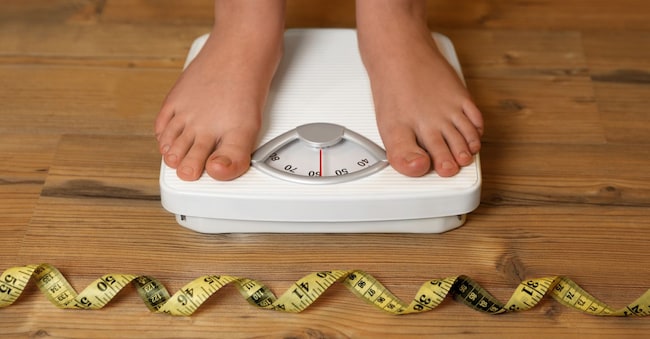
It is not just a health issue. Childhood obesity can leave a deep mark that drags on throughout life. And for girls it can also become an invisible obstacle to a career. A study by the Centre for Clinical Research and Prevention of the University Hospital of Copenhagen, conducted on more than 134,000 people, followed for decades, reveals an uncomfortable reality: excess weight as a child can result in a lower level of education, lower wages and, above all, a greater likelihood of leaving the labour market at the age of 50. The Danish research, funded by the Novo Nordisk Foundation, which will be presented at the forthcoming European Congress on Obesity (ECO 2026), analysed body mass index (BMI) trajectories between the ages of 6 and 15, comparing them with certain outcomes in adult life: years of study, income and work participation. The result? Those who fell into the obesity statistics as children, on average, have worse prospects on all these goals later in life.
But it is when looking at gender differences that the most critical point emerges.
Girls penalised twice
For women, the impact is harsher and more structural. Girls with obesity study fewer years than their peers with an average BMI, earn less as adults, and have a significantly higher risk of being squeezed out of the labour market at age 50. And perhaps the most alarming fact is that the association between childhood obesity and mid-career labour market exit is only observed in women, not men. In short, the consequences of childhood obesity are not just a temporary disadvantage. For many women, this uncomfortable legacy translates into an interrupted or never consolidated career path.
A new 'crystal roof'
In short, this study suggests that childhood obesity can turn into a sort of 'glass ceiling' in adulthood, an invisible barrier that hinders women's career advancement in the workplace. Another piece that adds to the stereotypes, discrimination and inequalities that already exist. And the paradox that emerged from this research is that these work penalisations, related to childhood obesity, are even more evident among those who come from families with a high level of education. As if social and cultural expectations amplify the gap, rather than narrow it. In the past, studies based on Swedish registers (BORIS and national cohorts) on thousands of young people had shown that only 56.7% of children with obesity complete at least 12 years of school, compared to 74.4% of normal-weight peers. Even removing the family socio-economic level bias, obesity remains an independent risk factor: the odds of completing school are almost halved in children and young people with this condition. Childhood obesity is thus a strong predictor of lower educational attainment even in a country like Sweden, which has one of the most equitable education systems in the world.
And overseas, things are no different. Data from Project EAT (USA) show that adolescent girls with obesity are 68% less likely to graduate from college and have lower incomes as adults. Again, obesity for girls is a much more severe mortgage than for their male counterparts.

