

Children's rights: outdoors or in groups, why playing is good for children's health
The National Medical Association's team of doctors and anti-fraud experts answers the most important health questions

Key points
Chasing each other, jumping, building huts, inventing stories with friends: playing is something children do every day, spontaneously. But beyond fun, is playing really good for health and development? The latest research confirms that yes, playing is good for you: it is a fundamental activity for physical, mental, emotional and social growth. And it is also a right. This is recalled by the International Day for the Rights of the Child on 20 November, which celebrates - among others - the right to play enshrined in Article 31 of the UN Convention. Play means learning, exploring the world, developing skills and building relationships. Guaranteeing time, space and freedom for play is therefore a way to respect not only a natural need, but an essential right of childhood. Here we try to understand how and why play is good for children, what types of play are important, and what to consider for the effect to be truly positive.
How does play help children's physical development?
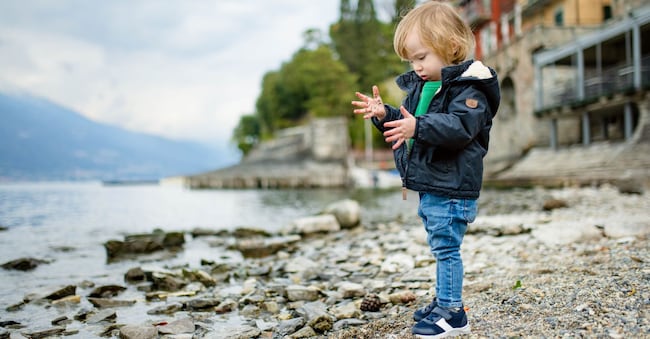
Active play - especially outdoor play - stimulates the body and contributes to the harmonious development of muscles, bones and joints. Jumping, running, climbing and even manipulating objects helps improve balance, coordination and strength. Play is also a useful tool for combating sedentariness and preventing childhood obesity, as well as promoting a good sleep-wake rhythm. According to the World Health Organisation (WHO), children up to the age of five. should devote at least three hours a day to physical activity, including unstructured play. Time spent outdoors has also been associated with a lower incidence of myopia in children, probably due to greater exposure to natural light and stimulation of long-distance vision.
Movement games are not mere pastimes, but real opportunities for physical and cognitive development. Motor skills are a multisensory learning channel: when a child jumps, runs or rolls, he or she is not only exercising, but also exploring the environment, measuring his or her limits, learning to react to stimuli and developing awareness of his or her body and space. These activities enable, for example, the acquisition of balance, orientation, coordination and even problem-solving skills through the body.
What benefits does play have on mental, emotional and social development?
Play plays an essential role in the development of cognitive skills, language and emotional self-regulation. During play, children learn to plan, solve problems and put themselves in the shoes of others. This also helps them build empathy, frustration tolerance and resilience, i.e. the ability to cope with difficulties. In particular, symbolic and imaginative play are crucial for creative thinking and the development of imagination. According to the American Academy of Pediatrics, play relieves stress and promotes psychological well-being. In addition, it encourages the construction of identity and strengthens self-esteem, because in play each child can decide on roles, rules and methods, experimenting with his or her own abilities in a safe environment. Play does not simply mean recreation: in Maria Montessori's pedagogical vision, for example, play is considered serious and important 'work'. When a child is absorbed in building, threading objects or moving things from one place to another, he or she is developing skills, coordination, autonomy. And the adult should respect this commitment, avoiding unnecessary interruptions. The spontaneous interest that arises in play generates concentration, and concentration promotes learning.
What types of game are particularly useful?
First of all, it is important that the play is age-appropriate, safe and that there is sufficient opportunity and space. But let us give some examples: Free play, which is not organised by adults, stimulates autonomy and imagination; physical play, such as chasing or jumping, helps motor development; symbolic play - such as 'pretending to' - allows children to explore emotions and situations from everyday life, but also to stage desires, fears and experiences, using objects as symbols and building stories. It is particularly important between the ages of 2 and 6; group games teach respect for rules, cooperation and negotiation, improving the ability to resolve conflicts and strengthening peer relationships; playing with an adult, present but not intrusive, helps strengthen the emotional bond and promote trust and security.

