Childhood

Norway: the rejection of smartphones at school and the resurgence of reading among children in Oslo

After the failed experiment with tablets, Oslo is relaunching reading with dedicated libraries, cultural programmes and children's literature that deals with real and difficult topics.

by Lara Ricci

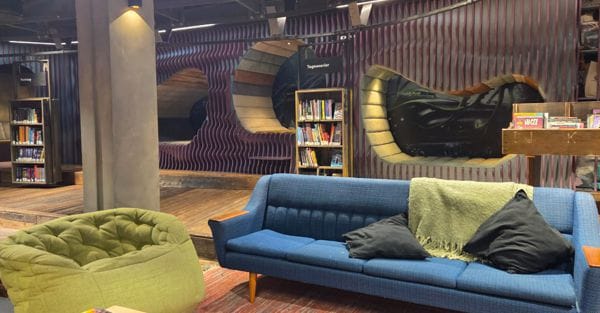
La libreria vietata agli adulti Biblo, nel quartiere operaio Tøyen di Oslo

6' min read

Translated by AI
Versione italiana

6' min read

Translated by AI
Versione italiana

"I wasn't interested in books but in going to the woods. I was always drawing on the edges of school books and not listening. Until a teacher came up to me. There, now she's scolding me, I thought. Instead she gave me a sketchbook to draw in. Since then I have been writing and drawing'. Øyvind Torseter is today one of Norway's best-known children's authors and illustrators. With his silent and stubborn characters - such as the protagonist of The Hole and The Hole² (Orecchio Acerbo the former, Beisler the latter), or the series Mule Boy (Beisler) - and his poetic and philosophical inventions, he has won numerous prizes, including the Bologna Ragazzi Award at the Bologna Children's Book fair, where he will be on hand from 13 to 16 April, together with other much-loved authors, also in Italia, Maria Parr and Maja Lunde. And Kristin Roskifte: her Everybody Counts (Emme), with over 60 versions, is one of the most translated Norwegian children's books. This year Norway is the host country, bringing 23 writers and illustrators to Bologna under the theme "What if".
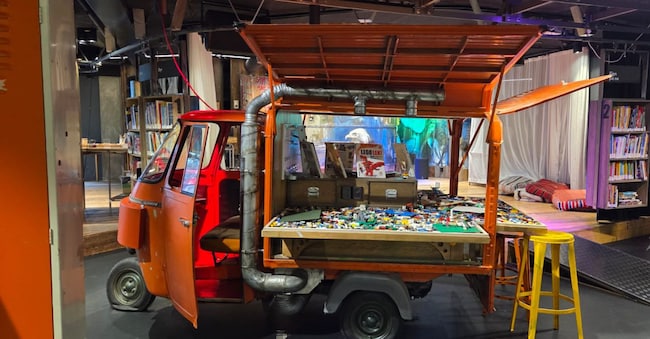
La libreria vietata agli adulti Biblo, nel quartiere operaio Tøyen di Oslo

Teachers like Torseter's are badly needed in Oslo at the moment. Ten years ago the government, believing it was promoting learning and avoiding a skills gap between rich and poor, decided to give every child, from the first grade, a tablet to use at school and take home. Not only that, they were unrestricted devices, and parents could not even control what their children did. "How naïve we were," Mariann Yourmans, the head of the children's programme at Oslo's largest municipal library, the Deichman, comments today.

Loading...

Today the situation is dramatic. Generously, representatives of Norwegian literary and publishing associations shared their experiences with a group of European journalists invited to Oslo to get to know Norwegian authors, authors and publishers for children, ahead of the Bologna Fair, the world's most important fair for children's literature.

She speaks very clearly Trine Skei Grande, CEO of the Norwegian Publishers' Association and former Minister of Culture and Equality, and of Education (for a month): her country, which used to be among the best performers in Europe in studies on learning and literacy (such as the Pisa tests) - or even in surveys assessing the pleasure of reading (such as the Pirls) - is now among the worst.

"For two years, no party has denied this. There are half a million Norwegians (10% of the population, ndr) who read so poorly that they cannot understand a text message or an instruction manual. Among the boys, one boy in five cannot even follow the subtitles of a film," Grande complains, adding that these boys have a vocabulary of only 17,000 words at their disposal, which is barely enough to express the ordinary ('kitchen language', he calls it).
Ontablets and smart phones the government has backtracked, the use of them at school by those under 16 years of age has been banned, and many actions have been taken to support reading and publishing.

For example the one launched in May 2024: Sammen om lesing: together for reading.

Or the Book act of 2023 which stipulated that for 12 months after publication one cannot lower the price of a book, ensuring more resources for publishing and removing arrows from the bow of companies like Amazon. Not only that, all writers have the same contract: the same advance, the same progression scheme of royalties, which start at around 20% and go up if the title is a success.

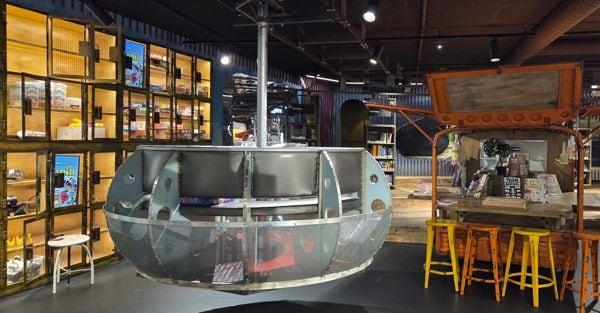
La libreria vietata agli adulti Biblo, nel quartiere operaio Tøyen di Oslo

"The Norwegian constitution not only protectsfreedom of expression, but also requires the government to support it. And that makes all the difference,' says Grande. No VAT is paid on books and newspapers, for example, and theState buys 1,500 copies of every book that meets minimum quality criteria and is written in the two official languages of Norway (not in the languages of the Sami, however, explains Alexander Løken, president of the Children's Writers' Association, "but we are working on it"). Enough to be distributed in every public and school library in the country.

Today, sales of children's books have picked up again, but this does not mean much: "the fact that billionaires are growing does not necessarily mean that there are fewer poor people," Grande notes, pointing out that only among elites reading and buying books is fashionable. "Literature plays a vital role for democracy and resilience" says Frode Solberg, deputy director of the Ministry of Foreign Affairs.

Fundamental then are the capillary actions to support reading: such as the Cartella Culturale programme, which finances book presentations in schools, even giving a copy to all students, or organises writing weekends in Oslo during the school holidays, or the reading competitions, which are organised during the summer holidays: competitions with points, where when you reach a certain number of books read you are entitled to a prize. Or the activities of municipal bookshops for children of all ages: from those just a few months old to the elusive teenagers.

"We realised that from the age of 13 the children disappeared from the library, only to return when they had children," Youmans relates. We were missing a generation. When we organised free pizza evenings in the library it was no use, nobody came. We therefore interviewed them, to find out what they wanted, and then some hired them.

In Oslo we have thus created ten 'youth councils': they meet two hours a week (paid 18 euros each) and with our help create a programme for their peers. We looked for different personalities: book lovers but also those with a street culture. Today, they organise whatever they want in the library: from music or roller-skating evenings to meetings with writers, chess games to rap lyrics writing sessions or cleaning trainers. We organised a thousand of them last year and 6,000 young people participated in some activities. Slowly, book loans are also starting to grow.

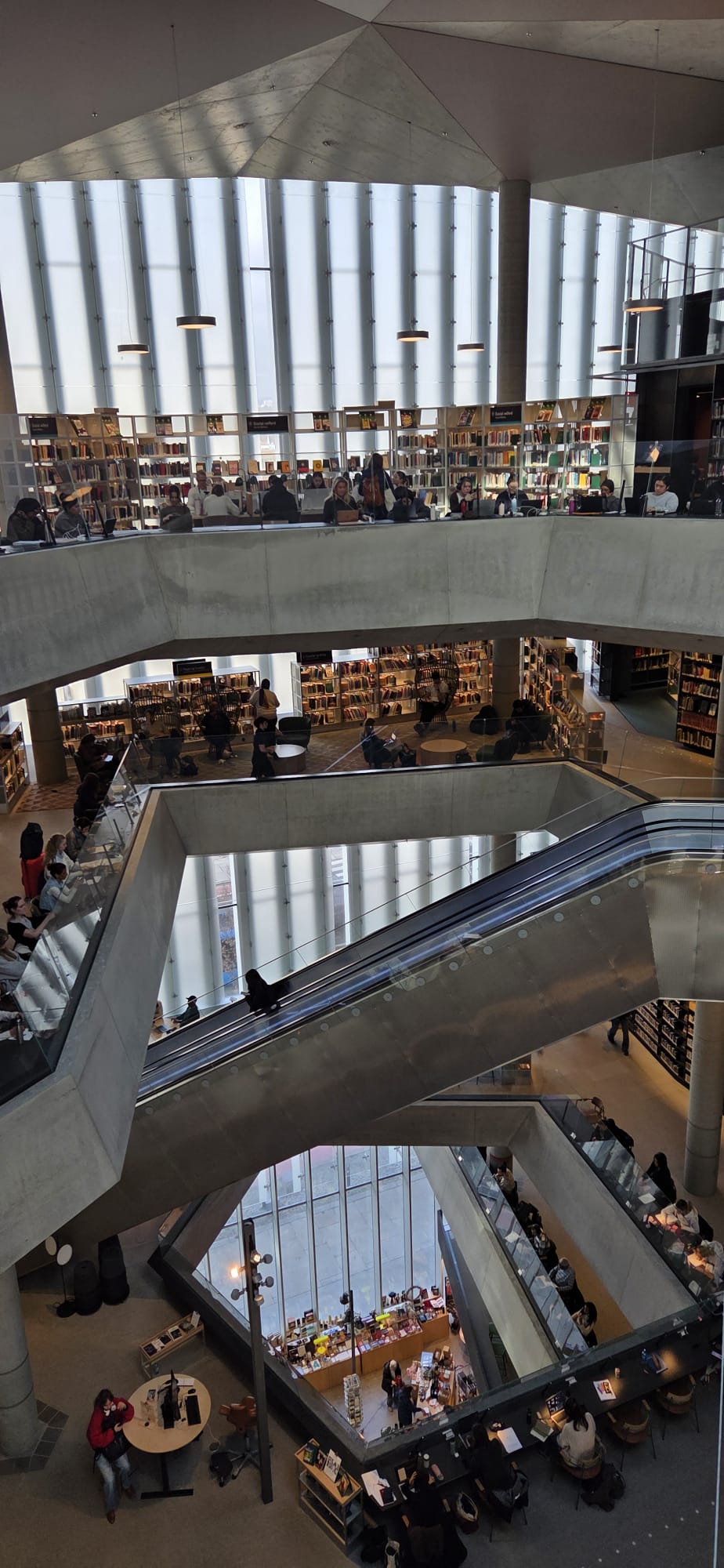
Of the 2.2 million books lent by Oslo's municipal libraries last year, half were children's books. When they finished building the beautiful Deichman library, airy and playful, facing the sea, next to the even more beautiful National Opera Oslo, it was the school children who put the books in their backpacks and moved them into the new building. A success, when we visit it, a midweek afternoon, many of the thousand chairs are full, and there are many young people.

La principale biblioteca pubblica di Oslo, la Deichman situata nel quartiere Bjørvika

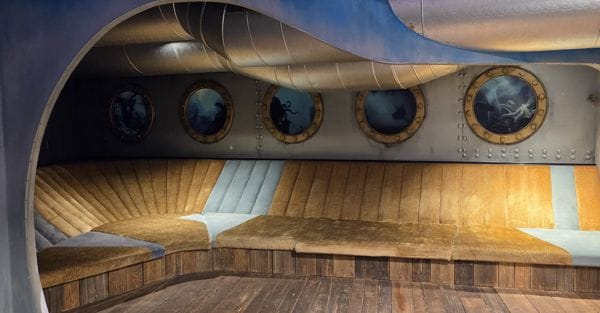
Not only that, in Oslo there are also two adult forbidden libraries, where 10-15 year olds leave their mobile phones at the entrance and then play, play, chat, sometimes even read... The Biblo, for example, in the working-class neighbourhood of Tøyen. The headmistress, Ida Blixt Teige, says that the children are happy that they have to leave their phones at the entrance, so they can talk to each other.

In Norway, children's literature has the same status as adult literature. "Children must be taken seriously!" is the phrase one hears repeated by writers and publishers.

"Ours is a courageous literature, which is not afraid to deal with taboo subjects, subjects that make adults uncomfortable. We do not think it is right to hide the reality of the world from children,' says Løken. 'We talk to them about inner life, loneliness, vulnerability, domestic violence, identity, exclusion and racism. But there is also Norwegian literature that does not challenge, but comforts and makes one feel recognised. It is only right that there is that too'.

La libreria vietata agli adulti Biblo, nel quartiere operaio Tøyen di Oslo

"Sometimes I think: the world is on fire and here I am writing about children fighting over who gets the top bunk. But then I think that we need to read about everyday life to think about what really matters to us,' says Maria Parr, talking about growing up, like her characters, in nature, between sea and forest, on the west coast of Norway, where she still lives.

To those who ask her what is the most beautiful thing about writing for children, she replies: 'To know that the stories you tell them can deeply influence them. At that age they are at the mercy of the context they are born into, they have no power over their lives, it is only in stories that they can be free! Literature makes the world bigger'.

© REPRODUCTION RESERVED

Copyright reserved ©
  • Lara Ricci

    Lara Riccivicecaposervizio curatrice delle pagine di letteratura e poesia

    Luogo: Milano e Ginevra

    Lingue parlate: Inglese e francese correntemente, tedesco scolastico

    Argomenti: Letteratura, poesia, scienza, diritti umani

    Premi: Voltolino, Piazzano, Laigueglia, Quasimodo

Loading...

Brand connect

Loading...

Newsletter

Notizie e approfondimenti sugli avvenimenti politici, economici e finanziari.

Iscriviti