Technology

China censuses humanoid robots, they will have an identity card

Presented a system that introduces a digital ID, assigning each machine a 29-digit identity code to enable traceability

by Rita Fatiguso

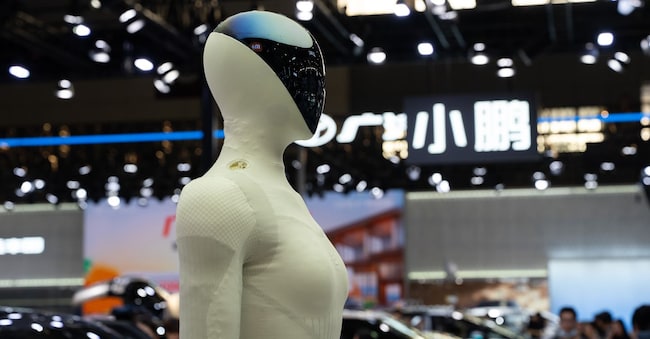
Un robot umanoide in mostra durante il Salone Internazionale dell'Auto tenutosi il 31 maggio 2026 a Shenzhen. (Reuters)

2' min read

Translated by AI
Versione italiana

2' min read

Translated by AI
Versione italiana

Blade Runner and the story of Tyrrel corporation's replicant Roy Batty aware of his timed destiny inscribed in a code is reality. China has unveiled a pioneering national system that introduces a valid digital ID to the rapidly expanding humanoid robotics sector, assigning each machine a 29-digit identity code to enable traceability and, of course, secure governance.

Standards and Security

The initiative establishes a unified framework to ensure safety, accountability and standardised governance and runs on a national platform of comprehensive life-cycle management services for humanoid robots, launched in Beijing.

Loading...

The platform, led by the standardisation body of the Ministry of Industry and Information Technology (Miit), serves as the operational backbone for the new regulatory specification, which requires each humanoid robot to be assigned a unique identity code.

Developed by leading national standardisation bodies, this digital identifier serves as a complete ID card for each machine. It enables end-to-end traceability throughout the life of the robot - from production and sale to daily use and final recycling.

The 29-digit code is meticulously structured in four segments: a 2-digit country code, a 4-digit company code, a 6-digit model code and a 17-digit serial number.

An expanding industry

Together, these elements form the basis of a traceability system, allowing for accurate identification and tracking.

The move is designed to address fundamental safety, management and governance issues, ultimately accelerating the practical application of humanoid robots. The regulatory update comes at a critical juncture: China's humanoid robot industry has experienced explosive growth, with over 500 companies concentrated in national centres. This rapid expansion has also triggered problems, including fragmented coding between different manufacturers.

The new standard imposes a strict 'no code, no market access' rule. All robots sold or distributed nationwide must be registered and manufacturers obliged to recall products if common defects are found, while the refurbishment and resale of scrapped robots is strictly forbidden.

China moves first

The platform creates a closed-loop governance mechanism. Covering R&D, production, maintenance and recycling, the system - according to Beijing regulators - ensures that risks can be prevented and responsibilities clearly traced back to the source.

The high-quality globalisation of humanoid robots requires a standardised management system with unified rules. More than 100 companies have enrolled in the programme, issuing complete life-cycle codes to more than 28,000 units spread over 200 product models.

The initiative not only provides the technical basis for international mutual recognition and cross-border movement, but also strengthens China's role in setting global standards and competitiveness in the industry.

Copyright reserved ©
Loading...

Brand connect

Loading...

Newsletter

Notizie e approfondimenti sugli avvenimenti politici, economici e finanziari.

Iscriviti