
China launches a plan to acquire unsold houses and finish building sites
Beijing has announced an ambitious plan to support the real estate sector in deep crisis, which will enable local governments to buy empty flats, facilitate mortgages and conclude stalled projects

3' min read
3' min read
China announced 'historic' measures to stabilise the crisis-hit real estate sector, allowing local governments to buy 'some' flats, relaxing mortgage rules (in particular, reducing the minimum contribution required for the first real estate purchase to 15 per cent) and committing to hand over unfinished houses.
The measurements
."In cities where there are a large number of housing units, the authorities will be able to order and purchase some of these units at reasonable prices for use as affordable housing," Chinese Vice Premier He Lifeng was quoted as saying by the state-run Xinhua news agency at a press conference following a meeting with real estate players in Beijing. On the minimum contribution rate for the first purchase. "Minimum contribution rates for mortgages to individuals will be lowered to a minimum of 15 per cent for the purchase of the first home and 25 per cent for the purchase of the second," the state-run China News agency reported, citing the Central Bank and the National Financial Regulatory Administration.
Analysts had long been calling for government intervention with its own purchases to support a sector that at its peak accounted for one fifth of the national GDP and remains a major drag on the world's second largest economy. However, investors and real estate operators had hoped the measures would mark the start of more decisive government intervention to offset falling demand for both new and old flats, slow the decline in prices and reduce a growing stock of unsold homes.
Will it be enough? To assess, we will have to see how powerful the impact will be, who will finance the purchase and how much will ultimately be financed.
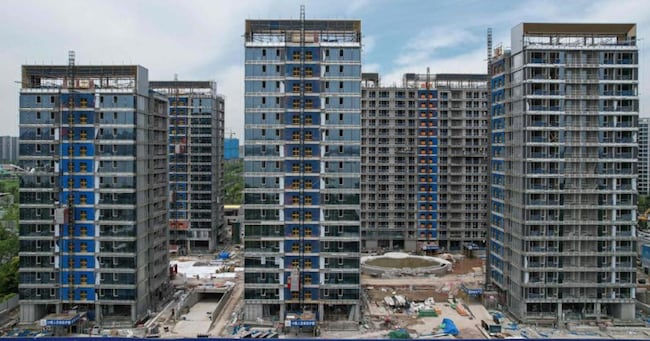
Since the property market began its sharp downturn, in 2021, real estate development giants - from Evergrande to Country Garden - have gone into default, leaving behind dozens of idle construction sites and undermining confidence in what has been the Chinese population's favourite savings tool for decades. After support measures, launched in waves over the past two years, failed to put a stop to the crisis in the real estate sector, Vice Premier He Lifeng therefore announced this additional set of measures. The houses would be used to provide affordable housing, he said, but without providing a timeline or target for the purchases, or detailing how they would be financed. He also said that local governments - already some USD 9 trillion in debt - could buy back land sold to developers and promised that authorities would 'fight hard' to complete stalled projects.
The rate cut and the sales 'game'
.Separately, the Chinese central bank, for its part, declared that it will lower mortgage interest rates further. Following the announcement, China's CSI 300 Real Estate index jumped nearly 9 per cent
Goldman Sachs estimates that the saleable real estate inventory will be 13.5 trillion yuan ($1.87 trillion) at the end of 2023 and since some of their construction had not been completed, 5 trillion yuan of capital investment would be needed to complete them. In the January-March period, there were 395 million square metres of new homes for sale, up 24% year-on-year, the latest official figures show.

