
China: Stock market crash casts a shadow over the Fifth Plenum
The committee is expected to appoint new executives and prepare for the next steps

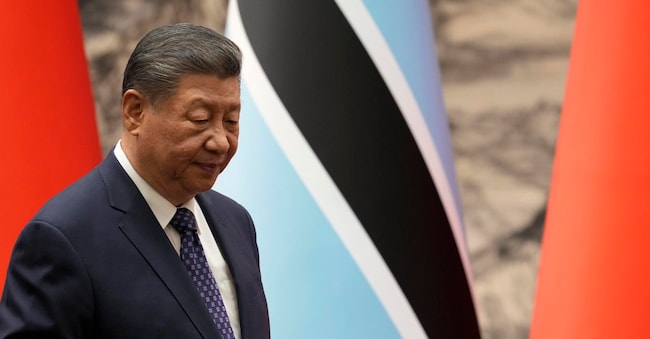
Beijing is celebrating the 90th anniversary of the Red Army’s Long March, but the echo of the crash on the Chinese stock markets reverberates heavily within the walls of the Great Hall of the People, whilst the core leader Xi Jinping reminds the three thousand guests of the four great lessons bequeathed to the people by that momentous event.
The current leadership under Xi has declared war on systemic financial risks, which, however, recur cyclically due to unresolved fundamental problems in the real economy, including the effects of the property bubble (perhaps, in the future, those arising from artificial intelligence may also lie in wait), exacerbated by an economic model that remains tied to import-export rather than domestic consumption.
And yet, apparently, it is not the economy that is the focus of the event due to take place from Monday behind closed doors at the Soviet-style Jinxi Hotel, where members of the Fifth Plenum of the Central Committee of the Communist Party of China – elected during the 20th Congress in 2022 – are arriving.
What to expect
With Deng Xiaoping in 1978, the Fifth Plenum launched China’s economic reforms, setting in motion the country’s transformation into the world’s second-largest power. Therefore, in theory, the meeting could still serve as a catalyst for significant changes.
From 26 to 29 October, however, the Committee’s approximately 300 full and alternate members will be working on issues relating to the so-called ‘comprehensive and rigorous self-governance of the Party’, with the aim of strengthening discipline, obedience and efficiency amongst officials and consolidating the authority of Xi Jinping’s leadership as he approaches his new five-year term.


