
Chinese ‘copycat’ cars, from the BYD modelled on the Defender to the Rolls-Royce-like Yangwang
From the legal battle between Jaguar Land Rover and BYD to Xiaomi cars that bear a resemblance to Porsche and Ferrari, the ‘copy and paste’ trend continues. Chinese cars now have the technology, quality and performance to compete with – and even outperform – European brands. But when it comes to design, they still seem to be looking elsewhere for inspiration.

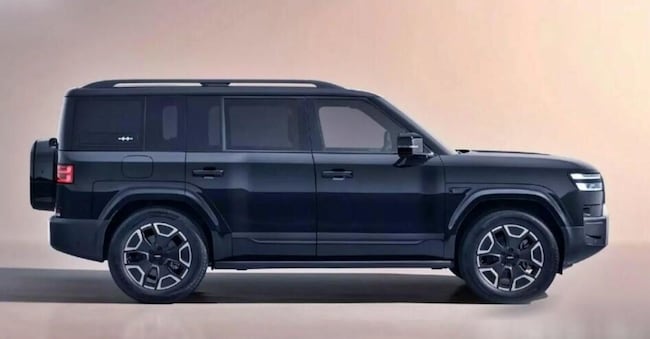
To copy, simply press Ctrl+C and Ctrl+V. On a Mac, the keys are different, but the result is the same. It’s a shortcut that seems to work rather well even in some of the Chinese car industry’s design centres, where the line between inspiration and outright copying remains decidedly thin. Platforms are changing, ranges are increasing, and quality and performance are improving, but certain body styles remain all too familiar. This is precisely the paradox: whilst Chinese manufacturers have now proven they can produce technologically competitive cars, when it comes to designing them, their gaze often continues to turn towards Europe.
Byd and Defender: when copy-and-paste ends up in court
The latest case involves Jaguar Land Rover and BYD. The British manufacturer has brought legal proceedings over alleged intellectual property infringements relating to the Fang Cheng Bao Ti7, a Chinese SUV that bears a striking resemblance to the Land Rover Defender. The case led to the seizure of digital documents from two of BYD’s Dutch offices in August, whilst a preliminary hearing is scheduled for 11 November in The Hague. Jaguar Land Rover suspects that certain technical features of the Defender have been replicated through reverse engineering. These allegations have yet to be proven and will be decided by the courts. Aesthetically, however, one need only place photographs of the two vehicles side by side to understand the basis for the comparisons. The boxy bodywork, vertical surfaces, proportions and overall design are reminiscent of the British off-roader. Of course, a few similar lines are not enough to claim plagiarism, but nor does it take a particularly trained eye to recognise the source of inspiration. And this would not be the first time that Jaguar Land Rover has found itself grappling with a Chinese version of the Range Rover. In 2019, a Beijing court ruled in favour of the British group in its case against Jiangling Holdings over the Landwind X7, acknowledging the copying of five distinctive features of the Range Rover Evoque. The ruling ordered a halt to the production and sale of the model. In that case, the ‘copy and paste’ was more than just a mere impression.
Xiaomi: when Porsche and Ferrari become sources of inspiration
The most telling example, however, is perhaps that of Xiaomi. For whilst it used to be mainly little-known manufacturers offering cars with suspicious similarities, today the phenomenon involves brands capable of developing products of the very highest standard. Xiaomi is one of these. Its electric cars boast high performance, sophisticated technology, well-finished interiors and electronic solutions that several European manufacturers might view with interest. It’s a pity that, when looking at the SU7 saloon, the first thing that springs to mind is the Porsche Taycan. With the YU7 SUV, the point of comparison changes, but the result is similar. This time, it’s the Ferrari Purosangue that springs to mind, with its elongated bonnet, sporty proportions and the contours of the bodywork. The similarities have sparked debate even in China, where nicknames combining Xiaomi with Porsche and Ferrari have appeared on social media. A resemblance that might raise a smile, but which risks diverting attention away from the cars’ actual qualities. And this is the real paradox; Xiaomi has proven it knows how to build extremely interesting cars, capable of competing with far more established models. It would have no need whatsoever to copy the styling of Porsche or Ferrari to get noticed. And yet, when faced with two cars packed with original technical features, we inevitably end up talking about their similarities to existing models. It’s almost as if, to prove you can build a good car, you have to make it look like one that’s already famous. It’s a shame, especially as Xiaomi has everything it takes to come up with something truly distinctive.
Yangwang: when a Rolls-Royce seems to speak Chinese
The ‘copycat’ effect doesn’t even spare the luxury sector. Yangwang, BYD’s high-end brand, unveiled the new Altior on 7 November in Abu Dhabi – an electric flagship measuring approximately 5.6 metres in length that appears set to challenge Rolls-Royce not only in terms of size and features, but also in terms of styling. A monumental bonnet, a three-box body, large vertical surfaces, rear-hinged rear doors and even umbrellas built into the doors. In short, the reference to the grand Rolls-Royces is evident, even if the badge on the bonnet is a different one. More than mere inspiration, in several details it almost seems like a particularly generous homage to British style. Under the bodywork, however, there is no lack of substance. Four electric motors, advanced batteries, sophisticated electronic systems and an interior designed to compete with the world’s finest flagship models. It’s all very interesting, but the question remains as to why a manufacturer with such industrial capabilities should seek its aesthetic identity in a British product. Why create a Chinese Rolls-Royce when one might have the capability to invent a new benchmark in luxury? A similar argument applies to Jaecoo, a brand belonging to the Chery Group. The Jaecoo 7’s side profile and various details are reminiscent of Range Rovers, particularly the Evoque and Velar. The seemingly floating roof, retractable door handles and body proportions once again bring to mind familiar models. Here too, the technology – especially in the plug-in hybrid versions – offers some interesting features. But the impression is always that of having seen something very similar before, just with a different badge on the grille. And when the aesthetic reference is so obvious, it becomes harder to forge an identity of one’s own.
From cars to smartphones, Honor is following the same path
Copy-and-paste isn’t just limited to cars. Even in consumer electronics, the temptation to take inspiration from the most famous products seems hard to resist. Just look at the Honor 600 Pro, a technically advanced smartphone that bears a striking resemblance to the iPhone 17 Pro. The camera module, the arrangement of the lenses and the design of the rear panel are immediately reminiscent of the Apple phone. The brand and some technical specifications may differ, but the sense of familiarity remains. And in this case too, there is no shortage of performance, build quality and competitive technological solutions. What continues to be lacking, above all, is the desire to truly stand out. Because if a product is genuinely good, it shouldn’t need to look like something else to win over the public.

