
China's import-export galloped in September: +7.4% and +8.3%
US-China bilateral negotiations on the brink of collapse, but Beijing Customs reports an increase in exports (+8.3%) and imports (+7.4) in September thanks to the substitution effect on demand from North America

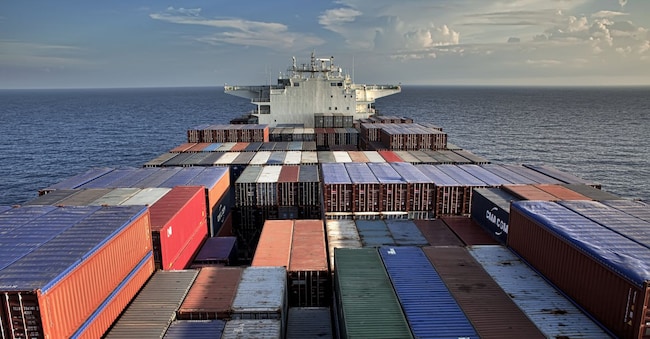
China's most effective weapon in its negotiations with the US, dramatically in the balance of trade after the weekend's frictions, is its trade balance. Beijing Customs shows that Chinese exports are galloping, rising 8.3% in September in US dollar terms from a year ago, beating Reuters estimates of a 7.1% increase and picking up pace after slowing to a six-month low in August. Imports rose 7.4% last month from a year ago, far exceeding Reuters estimates for 1.5% growth, the strongest pace in a year.
Bilateral tensions and threats
Beijing and Washington have been at loggerheads in recent days, threatening to derail bilateral trade talks. US President Donald Trump has threatened an additional 100% levy on Chinese exports and tighter controls on critical software exports. Beijing, meanwhile, has expanded restrictions on rare earth exports effective next month and lengthened its blacklist of "untrustworthy entities" to include chip consultancy TechInsights. China has also opened a new antitrust investigation into American semiconductor firm Qualcomm. The contenders have threatened to impose reciprocal tariffs on ships docking in China.
The request to return to the table
The US accounts for only 0.1 per cent of global shipbuilding, compared to China's 53.3 per cent, according to the Center for Strategic and International Studies. Chinese customs spokesman Lyu Daliang told a press conference that Beijing hoped the US would realise it was taking the wrong approach by raising port fees and urged Washington to return to dialogue and negotiation.
Lyu added that new tariffs introduced by several countries this year have hurt businesses and disrupted the global economy, saying China remains committed to supporting multilateral trade.
The reluctance of China - the world's largest soybean importer - to resume purchases of US crops has further dimmed hopes for a trade deal. Trump said earlier this month that he hoped to pressure the Chinese president at a meeting scheduled for late October to end the months-long moratorium on US soybean purchases.


