

Bombs, chlorine and cover-ups: US allegations regarding Sudan’s secret chemical programme
The Sudanese Armed Forces are at the centre of an escalation in tensions, triggered by investigations published in the US press, which have pointed the finger at the army, accusing it of being involved in the production and use of chemical munitions in the conflict against the Rapid Support Forces. An urgent independent inquiry is needed to shed light on a conflict that appears set to escalate

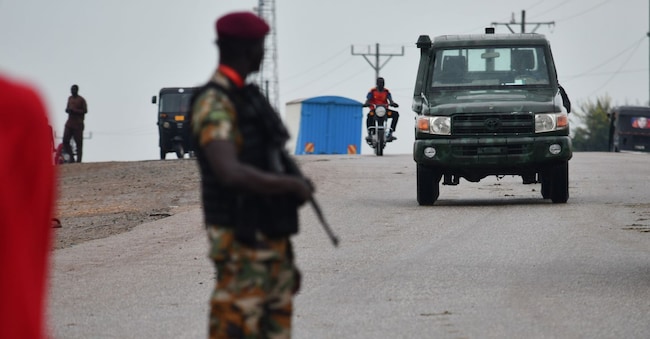
The Sudanese Armed Forces (SAF) are at the centre of escalating tensions, triggered by investigations published in the US press, which have pointed the finger at the army, accusing it of being involved in the production and use of chemical munitions in the conflict against the Rapid Support Forces (RSF). The New York Times and The Washington Post have published their investigations, both based on intelligence material, which reportedly includes around 150 documents, photographs, video clips and intercepted communications, as well as thousands of text messages extracted from the mobile phones of Sudanese officers. The evidence reportedly points to an alleged programme, established in 2024 for the production of chlorine-based munitions, which included bomb designs, accounts of operational tests and a coordinated cover-up strategy, launched after the United States had uncovered the plot. The documents also contain plans to divert chlorine gas from a civilian water treatment plant, which had originally received the chemical from an international aid agency. These allegations reignite long-standing suspicions regarding the use of chemical weapons that have been hanging over the leadership of the SAF since last year, and significantly increase international pressure on the military command. The United States, which had previously imposed sanctions on Sudan in May 2025 over allegations regarding the army’s alleged use of chemical weapons in the 2024 conflict – sanctions which came into force on 20 July 2025 – are now faced with a refusal from the authorities in Port Sudan, who, whilst maintaining that they do not produce, stockpile or use chemical weapons and emphasising their compliance with the Chemical Weapons Convention (CWC), have consistently rejected these allegations.
International attention
According to The New York Times, the SAF are said to have used chemical weapons in early 2024, when RSF militiamen, who retained control over much of the capital Khartoum, had created a strategic stalemate. According to documents cited by US media outlets, Brigadier General Tariq Hussein is said to have proposed the use of chlorine to give the armed forces a tactical advantage in the battle for Khartoum. He is said to have distributed prototype designs for an explosive warhead containing approximately 15 kilograms of chlorine gas. On 22 July, an Antonov cargo aircraft is said to have taken off from Merowe airport, situated approximately 320 kilometres north of Khartoum, to carry out a test launch, following which Hussein reportedly stated that the experiment had been a “100 per cent success”, attaching a video of an explosion in the desert and confirming that the munition “hit the target and released the gas.”
Technical risks and signs of fatality
According to the allegations, the communications reveal that the programme, which was plagued by serious technical faults, suffered from recurring chemical leaks; on one occasion, workers found dead insects and scorpions on the floor of a hangar following overnight exposure to the leaked gas, an incident that highlighted the volatile nature of the agent being handled long before it reached the battlefield. According to The New York Times, 20 cylinders of chlorine gas were reportedly smuggled across the border from a neighbouring country as early as the end of August 2024. Hussein is said to have subsequently sought internal sources by tapping into local civilian infrastructure, in breach of international regulations. Specifically, the Al-Manara water treatment plant in Omdurman, one of the few plants still operational during the war. This is an extremely sensitive matter if further confirmed: the chlorine at the plant, intended for water purification during cholera epidemics, was donated by the International Committee of the Red Cross (ICRC). In early September, Hussein reportedly sent a message to a colleague in which, describing an attack on RSF militiamen at the Al-Jaili oil refinery north of Khartoum, he wrote: “They drank the gas.” This message is said to be consistent with the allegations made by the RSF on 13 September, when the paramilitary group issued a statement accusing the army of firing “toxic” missiles at the refinery.
The U-turn
The New York Times finally suggests that the programme would probably have been shut down once US officials had discovered its existence and proceeded to impose targeted sanctions. During a subsequent round of measures in June, the United States sanctioned Hussein for importing explosives for bomb-making, although that specific designation did not explicitly mention chemical weapons. Although proving the use of chemical weapons in conflict zones remains difficult, the weapons experts consulted by *The New York Times* agreed that the available evidence strongly suggests their use in the Sudanese conflict, whilst emphasising the need for an independent on-the-ground investigation. Meanwhile, articles of the opposite nature have appeared in the international press – and in one instance even in the Italian press – aimed at dismantling and discrediting the parallel investigations by the two American newspapers. This reflects a situation of extreme tension, not only at a local level but, above all, at an international level. It is clear that, at this stage, an independent investigation into the matter is necessary. This is all the more urgent given that the tensions in Sudan are being fuelled by foreign actors.

