
Food waste at Christmas costs 90 euros per family
The problem is not only exaggerated purchases of food to put on the table but also industrial inefficiencies: here are some circular economy solutions to reduce environmental impact

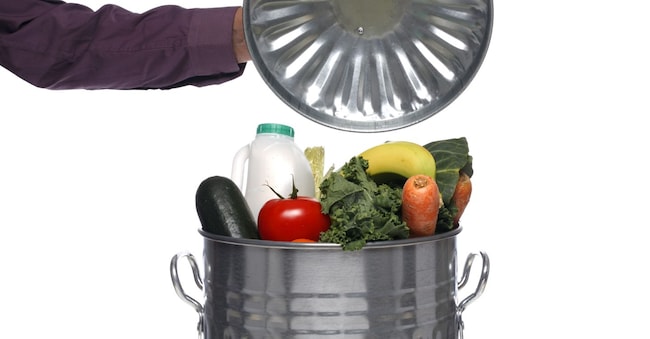
With the Christmas holidays approaching, food waste is back in the spotlight. According to estimates, between Christmas and New Year, the 'invisible' cost of food waste can be as high as EUR 90 per family. That is, a loss of 575 thousand tonnes of food, with an overall economic impact of 9.6 billion euro (Source: Coldiretti/Ixe).
To experience a zero-waste Christmas, Too Good To Go has therefore launched an anti-waste guide for consumers: from conscious shopping to the creative reuse of leftovers, many suggestions for rethinking the Christmas season in a more careful and responsible way.
"These data," says Mirco Cerisola, country director of Too Good To Go Italy, "remind us that food that ends up in the rubbish is not only an economic loss for families, but also a damage to the environment and society. Food is not an ornament to be displayed on the table and then thrown away, wasting it means losing value, resources and opportunities for sharing. At Christmas we can choose to avoid this hidden cost and celebrate with awareness. The choice is in our hands'.
But also for companies rethinking business strategies through sustainable products and innovative packaging becomes not only an ethical imperative, but also a market opportunity to be seized throughout the year.
80 thousand tonnes of packaging thrown away
On the packaging front, estimates by the Italian Society of Environmental Medicine indicate that during the Christmas period (8 December-6 January) in Italy, an average of 80,000 tonnes of paper and cardboard waste is produced, equal to over 3 kilograms per family. Seeking a concrete solution comes FoodSeed, the AgriFoodTech acceleration programme of the Cdp Venture Capital National Network, with the support of Fondazione Cariverona and UniCredit, managed by Eatable Adventures. The programme selected three Italian start-ups committed to transforming these challenges into high impact, concrete, scalable and sustainable solutions. Mama Science has developed bio-based coatings and films that replicate the properties of plastic, extending the shelf-life of products with less environmental impact. Alkelux proposes a natural antimicrobial additive derived from liquorice waste, which can be integrated into packaging to extend the shelf life of fresh produce.AgreeNET has created a biodegradable Pod for insertion into packs that releases natural substances capable of extending the shelf life of products by up to 20 days.

