

Chronic lymphocytic leukaemia: a new targeted ‘combination’ for first-line treatment
AIFA has given the go-ahead for acalabrutinib in combination with venetoclax. The drug has also been given the green light, in combination with chemo-immunotherapy, for the rarer mantle cell lymphoma

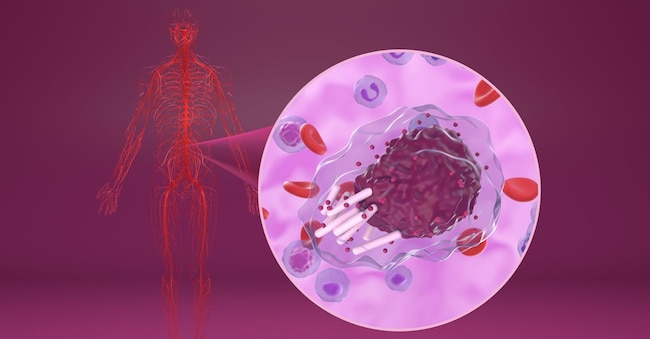
When we talk about leukaemia in adults, around three in ten cases refer to chronic lymphocytic leukaemia, which is therefore the most common form of the disease. B lymphocytes – a specific type of white blood cell – accumulate in the bone marrow and, indeed, in the lymph nodes and lymphatic organs. This condition, which is more common in older people, often presents no specific signs or symptoms and is suspected following a blood test – the standard complete blood count – which reveals abnormal results. In some cases, symptoms such as swollen lymph nodes, fatigue, low-grade fever, night sweats and unexplained weight loss may occur. Meanwhile, changes in the bone marrow lead not only to an increase in lymphocytes but also to anaemia and a reduction in platelet count, which are the main manifestations of the disease.
What’s changing
Treatment must be tailored to each individual case: however, whilst the first-line therapeutic approach was once based largely on chemo-immunotherapy, the situation has now changed. This is highlighted by Paolo Ghia, Director of the Strategic Research Programme on Chronic Lymphocytic Leukaemia at the IRCCS San Raffaele Hospital in Milan and Full Professor of Medical Oncology at the Vita-Salute San Raffaele University, who points out that this approach ‘has now been superseded by targeted therapies, consisting of BTK and BCL-2 inhibitors’. And it is in this context that an important development has taken place: AIFA, the Italian Medicines Agency, has approved acalabrutinib in combination with venetoclax as a first-line treatment. Studies show that, thanks to this new fixed-duration therapy, 90 per cent of patients do not require further treatment after three years.
The value of the association
“In chronic lymphocytic leukaemia, acalabrutinib plus venetoclax has achieved deep and durable overall responses, with a high tolerability profile,” commented Ghia, referring to the findings of the AMPLIFY study, published in the New England Journal of Medicine. In particular, according to the research, the 36-month progression-free survival rate was 76.5 per cent with acalabrutinib plus venetoclax, a BCL-2 inhibitor, compared with 66.5 per cent with chemo-immunotherapy. “The new regimen is of fixed duration, comprising 14 cycles of 28 days each: 2 with acalabrutinib, followed by 12 with acalabrutinib plus venetoclax,” continued Ghia. Deep and durable overall responses were observed, reaching 92.8% with acalabrutinib plus venetoclax, compared with 75.2% with chemo-immunotherapy. Another crucial aspect is the high tolerability profile of acalabrutinib plus venetoclax, which helps to preserve patients’ quality of life. Side effects, particularly cardiovascular ones such as atrial fibrillation, high blood pressure and bleeding, occurred in a very small proportion of patients; these were mild in nature and easily managed. These findings are particularly significant, given that patients with chronic lymphocytic leukaemia are, in most cases, elderly and often have comorbidities associated with advanced age.”
Progress in mantle cell lymphoma
Significant progress has been made in the treatment of mantle cell lymphoma, a much rarer cancer of the lymphatic system with an estimated 800 new cases in Italia. AIFA has approved acalabrutinib in combination with chemo-immunotherapy (bendamustine and rituximab) for the treatment of patients with previously untreated mantle cell lymphoma who are not eligible for autologous stem cell transplantation. “Mantle cell lymphoma is a form of B-cell non-Hodgkin’s lymphoma, characterised by a particular resistance to treatment,” explains Enrico Derenzini, Director of the Division of Oncohaematology at the European Institute of Oncology (IEO) in Milan and Associate Professor of Haematology at the University of Milan. “The median age of onset is around 70 years, but it can also affect younger people. It can present in various forms, for example as an enlarged lymph node in the neck, armpit or groin, and can be localised in the bone marrow and the gastrointestinal tract. Historically, it has been one of the most difficult lymphomas to treat, because the standard first-line treatment—consisting of chemo-immunotherapy with bendamustine and rituximab in patients over 65 or those ineligible for autologous stem cell transplantation—allows for complete remissions, but the disease remains characterised by multiple relapses.”
The ECHO study has shown that adding acalabrutinib to first-line chemo-immunotherapy (bendamustine and rituximab) substantially improves clinical outcomes in these patients who are not eligible for autologous haematopoietic stem cell transplantation.
Finally, AIFA has also approved the reimbursement of acalabrutinib as monotherapy for the treatment of adult patients with relapsed or refractory mantle cell lymphoma who have not previously been treated with a Bruton’s tyrosine kinase (BTK) inhibitor. ‘In mantle cell lymphoma, relapses can occur even 6–7 years later,’ concludes Derenzini, ‘and so we will continue to see patients with relapsed disease who have not previously been treated with a BTK inhibitor. For this reason, it is important to have a second-generation BTK inhibitor, such as acalabrutinib, which is characterised by high efficacy and tolerability, available.”

