

Chronic pain: supplies of medical cannabis under threat in Italia
Following the collapse of the Dutch firm Bedrocan, it has become strategic to rely on new and reliable channels: the Department of Health is working to rewrite the rules

Key points
Italian patients may face new challenges in the supply of medical cannabis. The European market is, in fact, undergoing a period of profound reorganisation, partly as a result of the collapse of the Dutch company Bedrocan, which makes it even more crucial to be able to rely on diversified, well-structured and reliable supply channels. Alternatives do exist, but it is also a matter of regulations.
Operators active in Italia
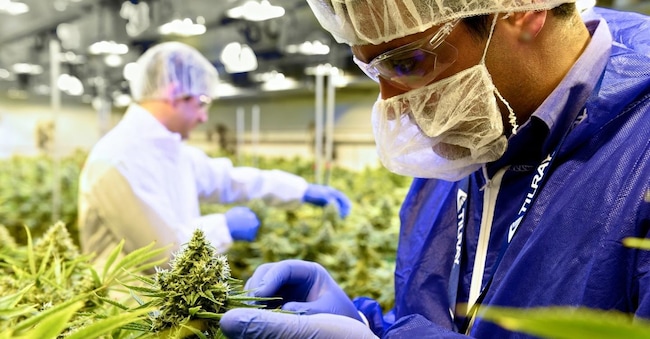
In Italia, the number of operators can be counted on the fingers of one hand: they are mostly wholesalers who buy and resell medical cannabis produced by private operators. Then there is the Canadian multinational Tilray, which is capable of producing up to 30 tonnes a year in Europe – already authorised to produce in Portugal and Germany – and which distributes medical cannabis to Italian pharmacies through Tilray Medical Italia: a model that combines industrial capacity with distribution.
And, finally, there is the linchpin of it all: the Military Chemical and Pharmaceutical Plant in Florence, identified by the national scheme launched in 2015 for the production of cannabis for medical use. Yields, however, amount to around 200 kg per year – and even less in certain seasons – falling far short of the estimated demand of around 2–3 tonnes per year, a figure that is constantly rising.
“The project, launched in 2015, represented an investment in a pilot scheme aimed at meeting production requirements,” explains Alessandro Pastorino, General Manager of Tilray Medical Italia. “ “Today, more than ten years on and with a market that has evolved significantly, I believe the conditions are right to take a further step, complementing the state’s role with structured and reliable European supply channels.”
Compounded medicines
There is a second issue on which practitioners are calling for consideration: the 2015 decree provides for a model based primarily on the use of the active plant substance for the preparation in pharmacies of magistral preparations intended for patients. “The current magistral model inevitably assigns significant roles and responsibilities to the prescribing doctor and the dispensing pharmacist,” continues Pastorino. “I believe it is worth considering whether, at least for certain standardised and frequently used formulations, this model could be complemented by different regulatory approaches, whilst ensuring ever-greater quality, safety and clinical appropriateness.”

