The interview

Ciafani (Legambiente): Italia accelerates on renewables

President Ciafani: 'Spain in the last five years has gone from 40% of electricity produced from renewable sources to 60%, while we are still stuck at 40% and produce 50% of our electricity from gas'
by Pietro Menzani

Adobe Stock

3' min read

Translated by AI
Versione italiana

3' min read

Translated by AI
Versione italiana

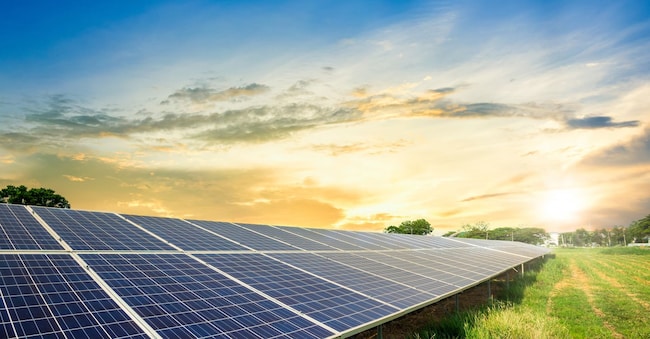
On the front of energy production from renewable sources "we must go much faster, calling the regions and ministries to their responsibilities and following what other European countries have done". This was pointed out by Stefano Ciafani, president of Legambiente, on the occasion of World Environment Day.

According to Ciafani, Italia lags behind other EU members in this respect: 'Spain in the last five years has gone from 40% of electricity produced from renewable sources to 60%, while we are still stuck at 40% and produce 50% of electricity from gas'. And precisely because of this we are 'much more exposed to gas speculation that drives up the bills that businesses and families pay: this is frankly no longer tolerable'.

Loading...

High utility bills

For the president of Legambiente, the high bills are a 'resounding emergency'. Indeed, Ciafani says that today we find ourselves in a 'new phase of speculation by gas producers at an international level due to the events linked to the closure of the Strait of Hormuz. We have come to yet another bill madness'.

The crisis dictated by the complex international situation therefore makes it necessary to 'implement regulatory and authorisation measures that will make it possible to unblock projects on renewable plants and sources, on the development of networks, on storage, as well as on energy efficiency'.

Climate Change

The president of Legambiente also renews his commitment to combating the climate crisis, pointing out that it is the 'problem of Italy's problems and not only'. According to Ciafani, "we continue to spend public money to deal with emergencies after they have occurred. So we continue to employ resources, but we spend them on 'post-disaster' interventions, while we could much more usefully use them for prevention interventions. I am referring, for example, to the EUR 1 billion we spent to deal with the emergency caused by Cyclone Harry in Sicily, Sardinia and Calabria, or the EUR 9 billion used to repair the damage caused by the 2023 flood in Emilia-Romagna'.

Ciafani emphasises that the problem lies in our country's regulatory framework: 'We have ineffective adaptation policies. The Meloni government has finally approved the National Climate Adaptation Plan, which had been missing for several years, but it has not provided for any appropriations: there are no economic resources to implement the Plan's priority actions'.

Crisi climatica: Italia sempre più fragile

The EU Directive

On the defence of the ecosystem, on the other hand, with reference to the legislative decree with which the government transposed the European directive for the criminal protection of the environment, we have taken 'one step forward when we could have taken five'.

The legislative decree has been in force since 2 June and adopts the 2024 directive with which the European Union introduced new crimes against the environment and toughened penalties. As Legambiente's president says, until the European provision was approved, "in Italia, thanks to Law 68 of 2015, which included ecological offences in the Criminal Code, we had one of the most advanced - if not the most advanced - regulatory frameworks in Europe. That law was also the result of the work we did for 21 long years. We were anxiously awaiting the approval of the European directive, because the law on ecological offences did not address all environmental issues. I am thinking, for example, of the production and trade of illegal plant protection products: unfortunately, some are still being sold in Italy, as the investigations of the judiciary have shown. But I am also thinking of crimes that have to do with protected species, a worldwide business that also concerns our country'.

However, according to Ciafani, 'the European directive addresses a number of new offences that should have been transposed into Italian law. Instead, unfortunately, the legislative decree that came into force on 2 June has holes and does not faithfully reflect the directive. It is an opportunity that we have missed. The transposition was 'one-sided': we could have continued to excel in Europe on the criminal protection of the environment and instead the leadership we had on this issue we have, unfortunately, not maintained'.

World Environment Day

Precisely because of the critical issues highlighted, Ciafani reiterates that World Environment Day is "an important event, because it allows us to raise the level of attention, but it remains equally important to ensure that World Environment Days are also remembered on the other 364 days of the year".

The president of Legambiente therefore concludes that 'it is right to take advantage of these anniversaries, although it is not enough to limit the commitment to that day, but it is necessary to reactivate the commitment for the following year'.

Copyright reserved ©
Loading...

Brand connect

Loading...

Newsletter

Notizie e approfondimenti sugli avvenimenti politici, economici e finanziari.

Iscriviti