Interview

'Cinema, companies need to grow in size'

Interview with Alessandro Usai, new president of Anica: "Consolidation necessary". On tax credit: 'Politics should give certainty on resources and timing'.

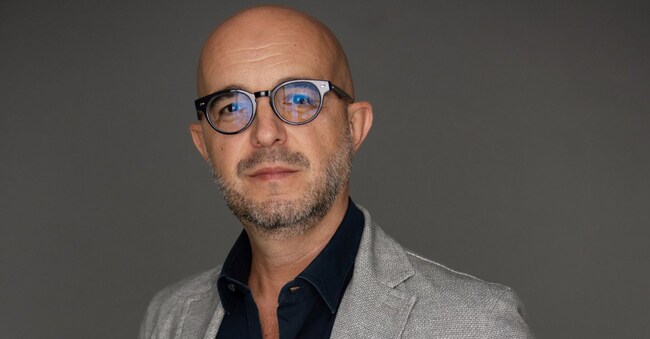
Alessandro Usai, neoeletto presidente di Anica

3' min read

3' min read

'It is clear that there is a lot of room for improvement. But Italian cinema is the second national cinema in Europe after French cinema. We can and must start from this'. Alessandro Usai, 53, was a professor at Bocconi University, consultant to the then Minister Urbani, director of Cinecittà, CEO of Mikado Film and for 14 years ceo of Colorado Film. And as of yesterday he is to all intents and purposes the new president of Anica, Associazione Nazionale Industrie Cinematografiche Audiovisive Digitali. He succeeds Francesco Rutelli at the helm of an association that has changed so much over the years, just as the reference market has changed: the cinema goes well beyond the theatres, embracing also the whole world of platforms that Anica has decided to consider more partners than adversaries.

You get to lead the association representing a world that is struggling after Covid for four years. Is there a risk of an implosion of the cinema market in Italy?

Loading...

I wouldn't say that. It is clear that pre-Covid levels have yet to be regained, but there are positive signs. I am convinced, and it could not be otherwise given the role I have accepted to play, that cinema has a future. It has been given up for dead many times. That is not the case. There is one aspect that is often overlooked.

What are you referring to? .

Cinema manages to make the most of eventualisation. Creating events around a film is a strength. As for on-demand video-streaming platforms, they too are beginning to realise a little more the importance of the theatrical passage in the cinema, which then also gives value to subsequent passages.

For more than a year and a half, the discussion has focused on a tax credit reform that has come to a head, but after an evidently long period of time in which everything has come to a standstill. The tax credit reform has been in the process of being reformed.

I think it was necessary to have a cut-off phase for the tax credit. On the other hand, I believe we must not fall into the error of drawing general conclusions on particular cases. If there have been cases of abuse, they must be considered as particular cases. In any case, there is a clear indication that emerges and that I would like to follow in my term as president.

Which one?

Bringing productions and audiences closer together in the market. This is also the key to accelerating internationalisation. Which is one of the necessary developments for the Italian market.

With which others?

I would add the need for dimensional growth of production companies, facilitating the creation of national 'champions' capable of competing in the world, as has happened in other European countries.

What could politics do?

It has a very important role. First and foremost in creating the conditions for there to be certainty on timing and resources on measures such as, for example, tax credit, but not only.

If we talk about tax credit, there remains the issue of productions that sometimes don't even make it to the theatres.

In the meantime, it should be remembered that under the regulations we are talking about, in the absence of a theatrical release, the work cannot benefit from the tax credit cinema. An adequate narrative of the sector must undoubtedly be reconstructed. This whole tax credit affair has produced a distorted narrative that does not do justice either to Italian cinema, which has great quality, or to a market that has great value both from a cultural point of view and from an economic and employment point of view.

Copyright reserved ©
Loading...

Brand connect

Loading...

Newsletter

Notizie e approfondimenti sugli avvenimenti politici, economici e finanziari.

Iscriviti