
Ciocan: 'I love Russian culture and language, but Moldova has long been colonised'
The author of 'And in the morning the Russians will come' talks about Moldova and its fears

2' min read
Key points
- The European Army is a wonderful proposal
- Ancient Bessarabia (present-day Moldavia) was subjected to colonisation
- An identity clash is underway
2' min read
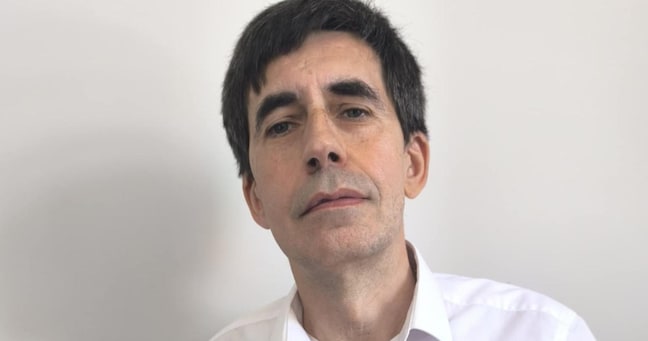
Writers almost always prefer to stay out of electoral contests. Iulian Ciocan, 56, is no exception. He arrives early at the 'Creme de la Creme' café in the centre of Chisinau; with the affable manner of someone who grew up in the serenity of classical studies, he welcomes questions, provocations and suggestions. Starting from his latest novel 'E al mattino arriveranno i russi', published in Italian by Beg (Bottega errante edizioni), which he himself describes as 'dystopian', he recounts a hypothetical transition of Moldavia, squeezed between Romania to the west and Ukraine to the east. Poised between the European Union and Russia. Although with the argumentative elegance of someone with a degree in philology, Ciocan after a few minutes throws in that 'the European Army is a wonderful political proposal'.
Dr Ciocan, do these presidential elections and the albeit narrow victory of the 'yes' votes in the referendum on Europe open up more definite scenarios for Moldova ?
It is very difficult to answer because the history of this land is complex: it was known as Bessarabia, a region slightly larger than present-day Moldova. Russification was always strong and relations with Moldova were characterised by a kind of colonisation. Russian culture was urban, Moldovan culture rural. And again, shortly before the disintegration of the Soviet Union, Moldovans in Moldova who spoke Russian less well than others were discriminated against at work.
So a very conflictual relationship.
Let's be clear, I love the Russian language and literature. Of course I speak Russian. But after the invasion of Ukraine, I lost many Russian-speaking Moldovan friends. It was painful, but it was a real tear. Their arguments 'they are our brothers', 'the US wants to buy Moldova and Ukraine, they want to divide us from Russia', 'everything works well in Russia', are not mine.
An identity clash
.Yes, and I can even concede to my former friends that we are facing two forms of imperialism, the American and the Russian. But there is a distinction: the American one, it doesn't change your language, it doesn't imprison you, it doesn't oppress you. Italy is in the American sphere of influence but every Italian can preserve his pride and his Italian-ness.
Between Russian-speaking Moldovans and Romanian-speaking Moldovans, there seems to be no dialogue. Is that so?
Indeed, this is now the case. Some totally deny the history of Moldova. Yet our roots are also Latin. Our 'La revedere' is much closer to your 'arrivederci' than the Russian word 'Dasvidania'.

