
Moldova, Sandu confirmed as president but for the pro-Russian opposition she is 'illegitimate'
The incumbent wins with 54% of the votes in the runoff, Stoianoglo at 45%.
from our correspondent in Chisinau Roberto Da Rin
 Aggiungi Il Sole 24 Ore
ai preferiti su Google
2' min read
Key points
- The votes of Moldovans living abroad are decisive
- The two souls of the country make the mandate complex
- EU membership includes conditions that cannot be met for now
2' min read
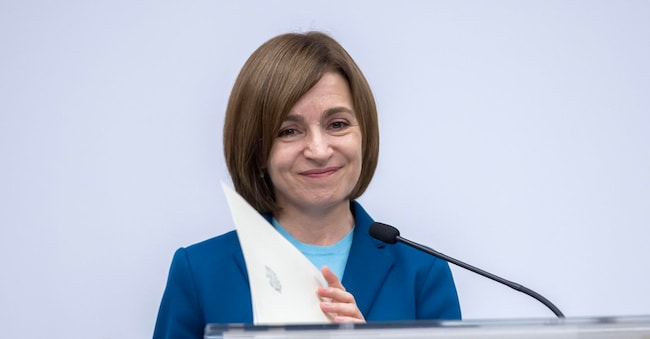
Another photo-finish victory. Maia Sandu, 52 years old, incumbent president, centre-right, pro-Western, is reconfirmed at the head of Moldova: he beat Alexandr Stoianoglo, 57 years old, former prosecutor supported by the pro-Russians, by a narrow margin: 54% versus 45%. The votes of Moldovans living abroad were again decisive this time, just as in the referendum on Europe a fortnight ago. The turnout in Moldova stood at 54.08% (1.7 million people). Over 310,000 Moldovans voted abroad, a historic figure, compared to 240,000 people who voted in the first round of the elections. But Sandu's confirmation was disputed: the pro-Russian Socialist Party of Moldova said it did not recognise the result of the vote abroad and called Sandu 'an illegitimate president'.
A country split
.The two souls of the Moldavia, the Russian and the Romanian, contradict each other on everything, but converge on one point: the difficulty Sandu will have in the political management of a victory achieved by such narrow margins. A small country, of 3.5 million inhabitants, the poorest in Europe, half unknown until the start of the war between Russia and Ukraine. Since then, relations between Chisinau and Moscow have soured, due to Moldova's application to join the European Union. Mutual accusations between Russian-speakers and Romanian-speakers.
Each blames the other for submitting to imperialist, Russian or American logic. The Moldavian authorities have accused Russia of having paid EUR 15 million to Russian-speaking citizens to vote 'no' in the referendum.A split that is also anagrammatic: the elderly and the less well-off wish to strengthen relations with Moscow, the young and the upper classes look to Brussels and dream of EU membership.
A difficult accession
.Which, however, seems distant and fraught with difficulties. The year 2030, a date already set, seems too close. The first requirement from Brussels is border certainty, which Chisinau certainly cannot present. Firstly because of the war in Ukraine, with which Moldova borders, and then with Transnistria, the self-proclaimed independent region. Not only that: Moldova has turned into a base of operations for the war.
There are logistical activities, Ukrainians who have opened current accounts in Moldovan banks, airport support, a massive presence of security services. Critical factors that are not conducive to rapid entry into the European Union. Then there is a cultural issue, which beyond the actual external meddling in the Moldovan vote, is contemplated by all observers. That of identity, of two populations, Russian-speaking and Romanian-speaking, with diverging visions of society.

