Green economy

Circular economy, recycling that turns waste into raw materials

From plastic to graphite, via textiles and glass. Italian companies among the world leaders in the circular economy sector

by Davide Madeddu

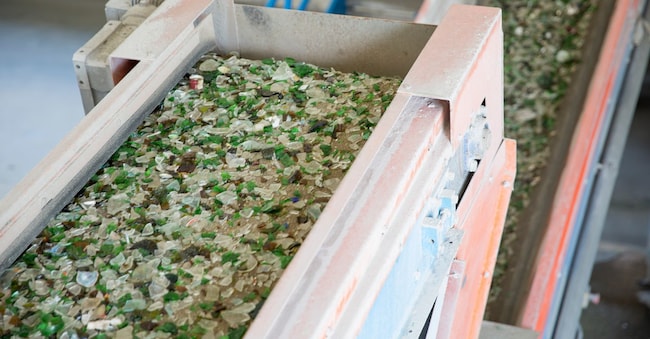
Alcune fasi di riciclo del vetro (Adobe Stock)

3' min read

Translated by AI
Versione italiana

3' min read

Translated by AI
Versione italiana

Recycled fabrics that become bags and other high-fashion components. Pet that is reborn as a fabric for furniture, glass bottles that are transformed into design items. Then the transformations of graphite scraps, rubber that becomes flooring or gym furniture. And glass that 'dies and is reborn' in a virtuous circle. It is a vast panorama in which the companies involved in the circular economy operate following processes marked by sustainability.

Design from recycling

Loading...

"Bringing waste materials back to life and transforming them into design objects is at the heart of Regenesi's values," emphasises Maria Silvia Pazzi, managing director of Regenesi, a Bologna-based company that also founded the starup regenstech srl sb, an "innovative women's start-up and b>benefit company that transforms civil and industrial textile waste into a second raw material thanks to a unique patented technology"

All items are made from recycled materials, following an innovative production process that guarantees the same quality as the raw materials.

"We continuously aim to improve and innovate in order to be the best version of ourselves and to make the world a more beautiful place to live in," says the manager. "The project was born in 2019 with a clear objective: to become the technological solution of reference for transforming industrial and civil textile waste into a second raw material with plastic properties. Through the Respetto technology, we are able to accelerate the sustainable transition of the design sector through the use of an innovative textile waste transformation system with multiple potential applications: from textile to non-woven'.

Plastics, paper, textiles to be processed

Recycled Pet is used by Italvipla (a company that offers technical fabrics, faux leather and accessories for nautical upholstery) to produce yarns used to make furnishing fabrics with a variety of textures, softness and performance. "In our Verdeamare collection," the company writes on its website, "we have three lines of sustainable products: eco-leather, 100% natural fabrics, and 100% recycled fabrics from used plastic bottles that are largely recovered from the sea (certified 'Seaqual' origin)".

Among the companies involved in transforming waste into second raw material, there are also those who transform paper and dust from textile recycling into invisible matter. This is the case of Pulvera, a Brianza-based company founded in 2024 by Eleonora and Beatrice Casati, the third generation of the historic Casati Flock & Fibers company. "Through a process of mechanical pulverisation, textile scraps, coming from production, inventories or post-consumption, are reduced to very fine particles," emphasise the company representatives. "These 'powders' are not a point of arrival, but a starting point: a new second raw material to be used in different sectors and can be integrated into plastic (for 3D printing or injection moulding), paper (to create sustainable packaging), composite materials (for furnishing elements or decorative surfaces) and customised design projects.

The Precious Graphite

There is not only plastic or textiles. Among the discarded materials are also graphite scraps that become new raw materials. Processing them is Alisea, a benefit company founded by manager Susanna Martucci, based in Vicenza. The company has developed a supply chain that recovers graphite from various industrial sectors, from aerospace to automotive, and transforms it into g-upgraded recycled graphite, a material with enhanced performance and stability characteristics compared to virgin graphite.

"Very different products and solutions are born from this raw material, but they share the same basic logic," the manager emphasises, "which is to enhance the material before the final product. This is the case of Perpetua, the pencil made of recycled graphite, now also distributed in the MoMA bookshop in New York, and of Dionisio passive acoustic loudspeaker for smartphones made of zantech, a technical compound based on the same regenerated graphite".

Also on the route is rubber from end-of-life tyres that are turned into raw material for making gym mats, flooring for sports or road facilities and rubber barriers for guard rails. And then the line of glass that can be endlessly recycled.

Glass Recovery Consortium results

In 2024, as underlined by the Consortium for the Recovery of Glass, the national collection of glass packaging waste reached approximately 2,383,000 tonnes, the national average per capita was 40.4 kilos with peaks of 62.6 kilos in Valle d'Aosta.

"To produce 1 kilogram of new glass, 1 kilogram of recycled glass is enough, while 1.2 kilograms of raw materials are needed, not to mention energy consumption and emissions," emphasises Elena Ferrari, the consortium's communication and marketing manager. Italy is the world's third largest producer of hollow glass after the United States and China with a production of about 4.5 million tonnes of packaging glass, a large part of which is exported thanks to Italian-made food & beverage".

Copyright reserved ©
Loading...

Brand connect

Loading...

Newsletter

Notizie e approfondimenti sugli avvenimenti politici, economici e finanziari.

Iscriviti